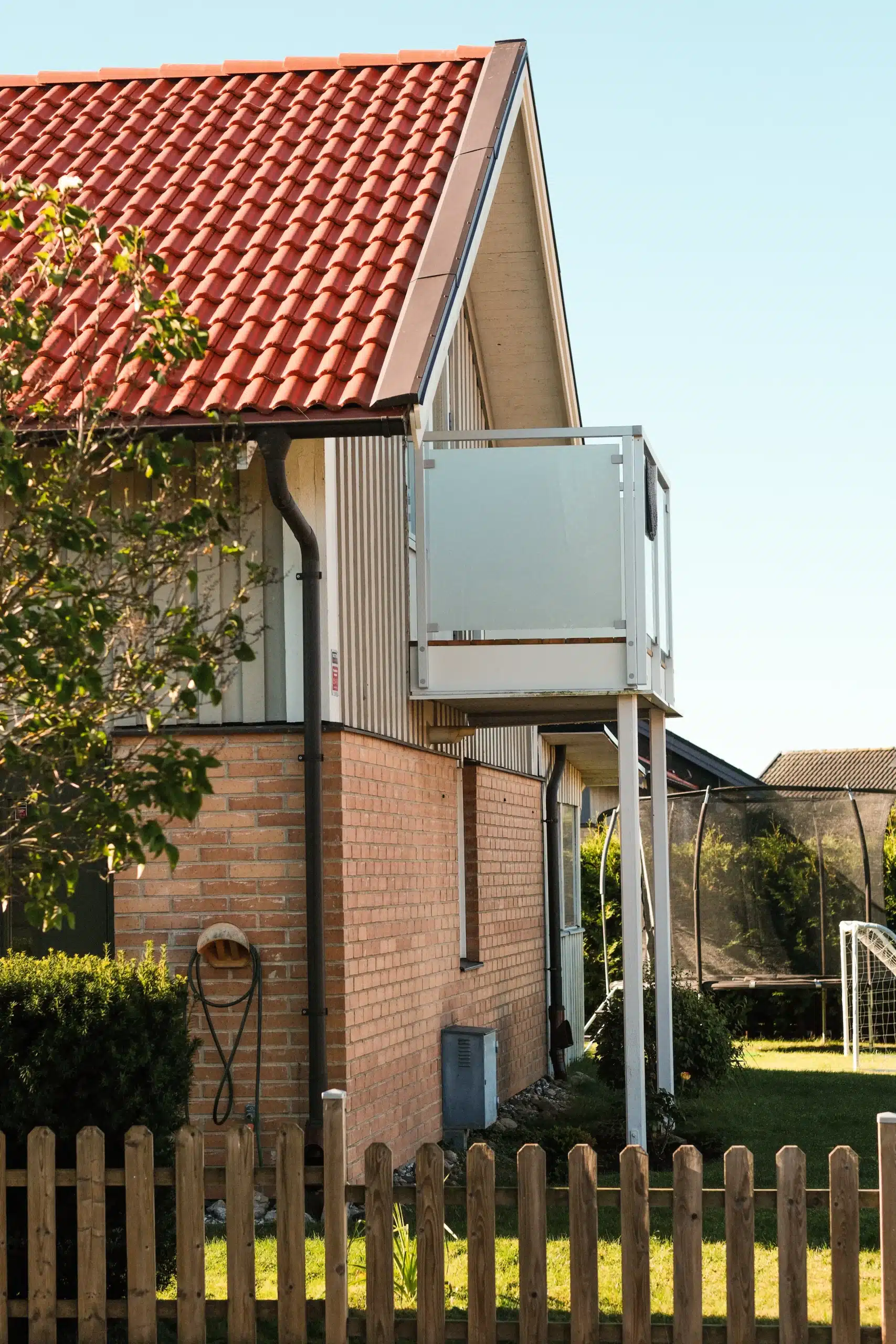
Compare glass, aluminium, stainless steel and wire balustrades
The choice of material affects the balustrade’s appearance, cost and maintenance requirements over time.
- Glass – preserves views and helps shelter from the wind. The glass needs cleaning as required. The highest price per metre, particularly for frameless systems.
- Aluminium – powder-coated in a choice of RAL colours and does not normally need repainting. Often offers a lower total cost over time.
- Stainless steel – offers a refined metallic finish. Marine-grade stainless steel can be a good choice for coastal areas, jetties and pool surroundings when the appropriate grade and maintenance are considered.
- Wire – creates an unobtrusive look where preserving the view matters most. Horizontal wires may offer footholds for climbing, so glass or vertical slats are often preferred where young children are present.
Choose materials to suit the location
A balustrade that works well in a sheltered courtyard may not be the right choice by the sea. Salt and chlorine affect materials near the coast, jetties and pools, where marine-grade stainless steel or powder-coated aluminium may be appropriate. On a wind-exposed deck or roof terrace, glass can help reduce wind exposure. Balcony balustrades must account for the potential fall height, while stair balustrades need to provide protection and follow the slope. Indoors – around lofts, stairwells and landings – appearance and light are often more important considerations.
Our balustrade systems at a glance
Vista is a frameless glass balustrade with an aluminium base profile; Arcus is a glass balustrade with aluminium posts; and Prime is a glass balustrade with marine-grade stainless steel posts. Forma combines aluminium and glass in a timeless design, while Flex features height-adjustable glass panels. Tenso and Linea are wire balustrades in stainless steel and aluminium respectively. Linea Step follows the angle of a staircase, and Flow has horizontal stainless steel bars. Retro offers a wrought-iron-inspired design in aluminium, while Color allows you to choose a colour. Lumo is available for Juliet balconies, Core for existing supporting frames, and Lira for handrails.
Safety glass and certified manufacturing
Our glass balustrades (except Simple, which is a glass divider) use laminated safety glass with a plastic interlayer that helps hold fragments together if the glass breaks. The manufacturing process is certified to EN 1090-1. Production is regularly monitored by RISE with a focus on traceability, quality and the manufacturing process.
How much does a balustrade cost?
The price per metre depends on the material, system and number of corners. Aluminium systems are generally at the lower end of the price range, glass systems at the higher end, with stainless steel often in between. Our balustrades are supplied as complete kits with made-to-measure profiles, fixings and installation instructions. The configurator updates the price as you design your project.