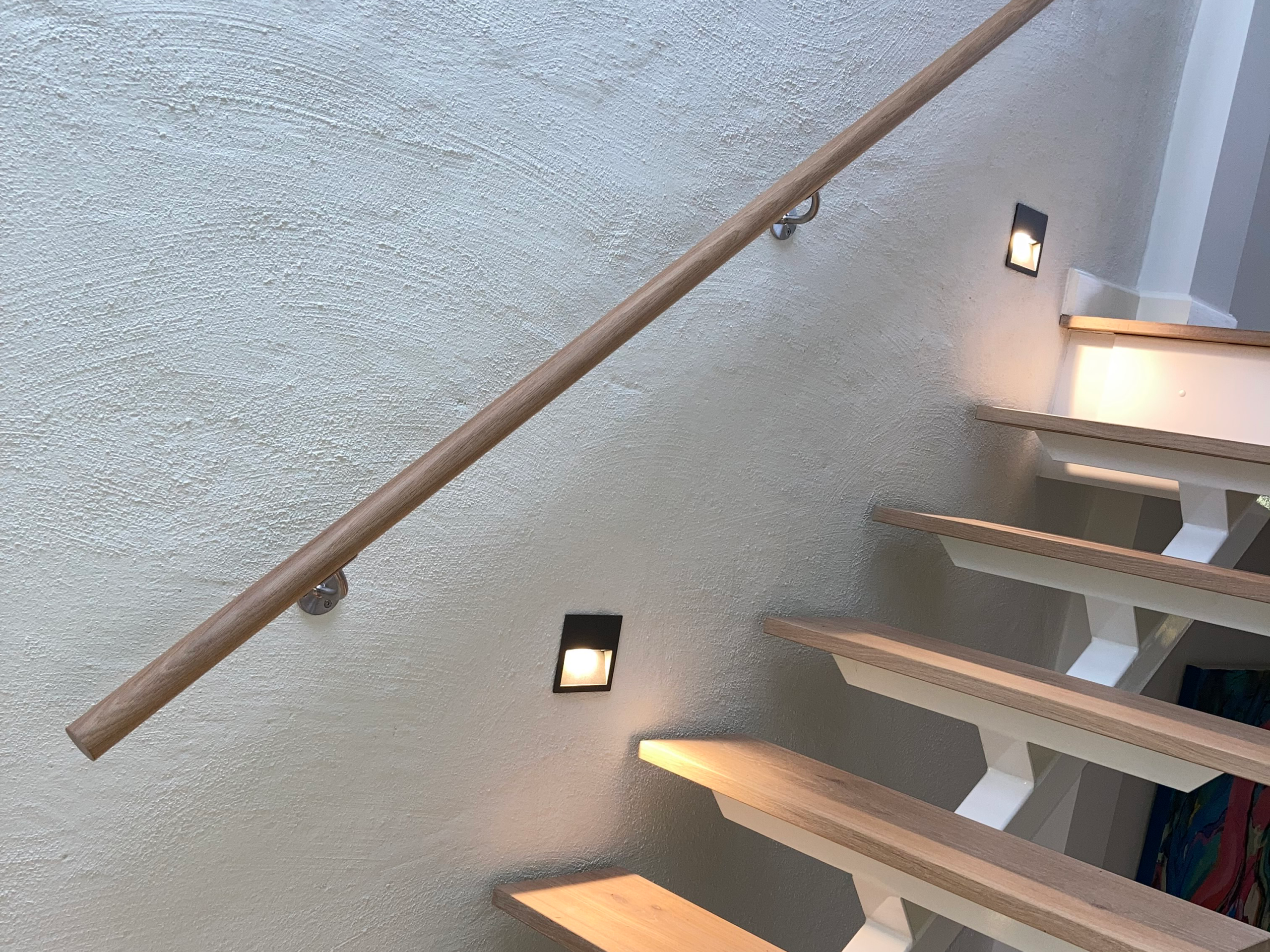
That's why an handrail in oak is a good fit for a bright indoor staircase
A wall-mounted handrail provides the staircase with secure support without altering its open design. Here, a round handrail made of oak runs along the wall next to a floating staircase with white structural elements and timber steps. The stainless wall brackets are discreet, and the wood finish matches the staircase’s existing material.
This solution works particularly well when the staircase already has a distinct character. Handrail is easy to grasp as you move between floors, but doesn’t visually dominate the room. The lighting beneath the steps simultaneously highlights the staircase’s direction and enhances the bright, minimalist overall look.
Oak, stainless steel, or aluminium—which material is best for handrail?
The material affects both the feel underfoot and the style. Oak is a natural choice when stair treads, floors, or other woodwork already have a warm wood tone. stainless steel creates a more minimalist look, while powder-coated aluminium can be paired with black or white accents, for example.
| Materials | A Feeling on the Stairs | Particularly well suited for when |
|---|---|---|
| Oak | Warm and soft to the touch | The staircase has timber steps or a light, minimalist design |
| stainless steel | Minimalist and modern | Metal fittings or other stainless details should be repeated |
| Powder-coated aluminium | Clear and in colour | Handrail should match black, white, or coloured details |
Handrail or stair railing—what's the difference?
A handrail and a balustrade serve different purposes. The handrail is an easy-to-grip support that helps maintain balance while walking up or down the stairs. A balustrade or other fall protection is needed where an open side poses a fall risk. A wall-mounted handrail therefore does not replace a staircase balustrade if the staircase lacks protection on the opposite side.
| Needs | Common solution | Check before choosing |
|---|---|---|
| Support along a wall | Wall-mounted handrail | Grip, position, length and secure fixing |
| Protection on the Open Side of a Staircase | Staircase balustrade or other fall protection | Height of fall, design, and child safety |
| Both support and fall protection | Balustrade with a handrail, or a combined solution | That both features are suitable for the staircase's intended use |
How do wall mounts and lighting affect the overall impression?
The handrail’s rounded profile provides a natural grip, while the fixings also influence the overall look. The stainless steel brackets form a subtle modern detail against the white wall without adding a heavy visual line beside the stairs.
The stair lighting is not part of the handrail itself, but it demonstrates how multiple functions can work together. The light makes the location of the steps clearer when the room is darker, while handrail provides steady support along the walking path. Together, they address the need for safety on an indoor staircase without compromising the minimalist design.
What should you measure before ordering a stair handrail?
Design a custom-sized handrail based on the actual layout of the staircase, not just the number of steps. Once you know what features you need, you can choose from our handrails.
Check these three points
-
How long is the route that handrail will follow?
Decide where the handrail should start and end so that it provides support along the entire distance you walk.
-
What is the wall's surface like?
Check the surface and any corners, and determine how the fixings can be placed without interfering with moldings or lighting.
-
What material is best for the stairs?
Decide on the material early on. Oak is a good choice when you want handrail to complement the timber stairs and floors. Metal creates a more distinctive look and can be coordinated with other hardware or details in the home.
Made-to-measure handrail for a modern indoor staircase
This solution demonstrates how a handrail can become a practical part of everyday life while complementing the room’s material choices. The warm tone of the oak, the stainless brackets, and the lighting along the stairs create a cohesive staircase environment where every detail serves a clear purpose.