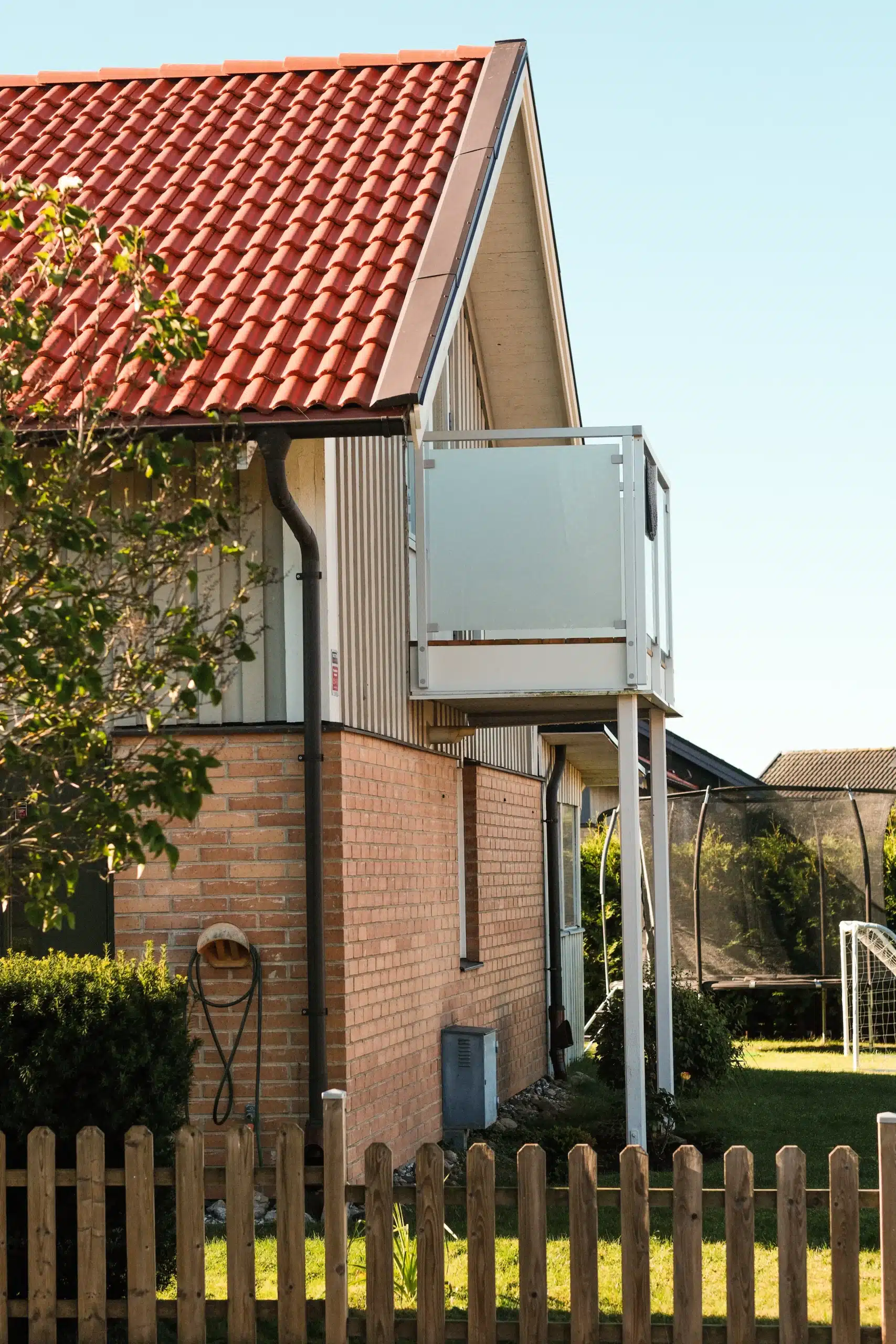
Winter-resistant railings are primarily designed so that water can drain away, and the materials and surfaces can withstand moisture, salt, snow, and recurring temperature fluctuations.
Sub-zero temperatures in and of themselves are rarely the biggest problem. Instead, the risk increases when water pools and freezes in joints or fixings, when salt remains on surfaces, or when snow is packed against the railing.
Two railings made of the same material can therefore age very differently over the winter. The location, construction, and maintenance can be just as important as whether the railing is made of aluminium, stainless steel, or glass.
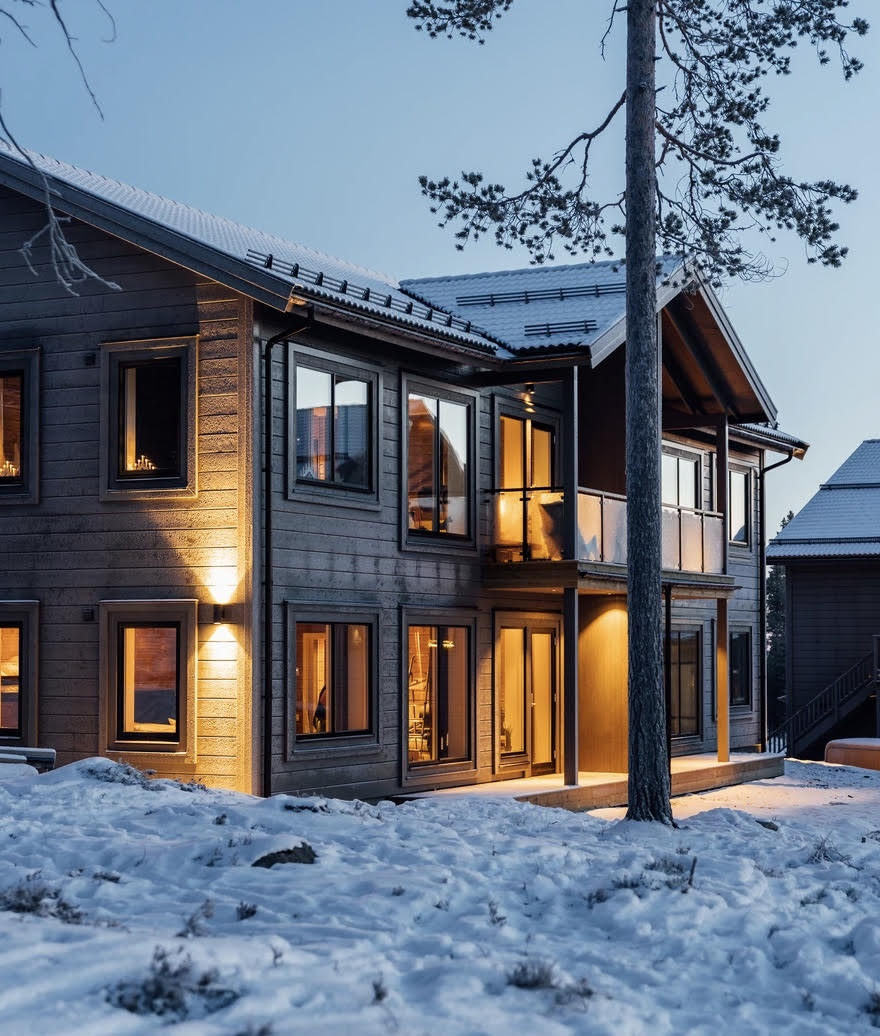
What can damage a balustrade in winter—cold, salt, or snow?
Sub-zero temperatures themselves have a much smaller effect on aluminium, stainless steel, and glass than one might easily think. It is primarily freezing water, salt, and packed snow that can cause problems during the winter.
Water that stands still can freeze in joints and fixings
Water that remains in a joint and then freezes expands and can force joints and fixings apart. This is the same basic mechanism that can cause frost damage in concrete, for example.
Road salt and sea salt are more corrosive than regular water
Road salt and sea salt can locally break down the protective passive layer on stainless steel and penetrate areas where a painted surface has been damaged. Therefore, coastal and salt-exposed environments require greater consideration in both material selection and maintenance.
The problem isn't the snow on top – it's the snow that gets packed against the railing
The weight of snow is rarely the main source of stress on a railing. The risk arises when snow is shovelled and packed against a glass panel or balustrade with bars, because the pile of snow then exerts lateral pressure across a large portion of the railing’s surface.
Which balustrade material withstands winter, frost, and salt the best?
Powder-coated aluminium balustrades, stainless steel and glass withstand cold well, but the materials react differently to moisture, salt, and damage. Therefore, the environment around the railing is more important than the temperature when choosing materials.
| Materials | Can withstand winter | Things to Keep in Mind |
|---|---|---|
| Powder-coated aluminium | Very good | Does not rust. Repair paint damage early. |
| Acid-resistant stainless steel, 316L | Best with salt | The right choice for environments particularly exposed to salt, such as coastal areas and salt-treated roads. |
| Stainless steel AISI 304 | For indoor environments | Salt increases the risk of localised corrosion and pitting. |
| Laminated glass | Very good | Avoid metal scrapers and localised heating. |
| Wood | Requires the most maintenance | Moisture can penetrate end grain and contribute to cracking when temperatures fluctuate. |
Can glass balustrades break due to cold and frost in the winter?
Laminated glass withstands frost and normal temperature fluctuations well. What you need to avoid above all is scratching the glass surface or exposing a small section of a freezing-cold glass panel to rapid heating.
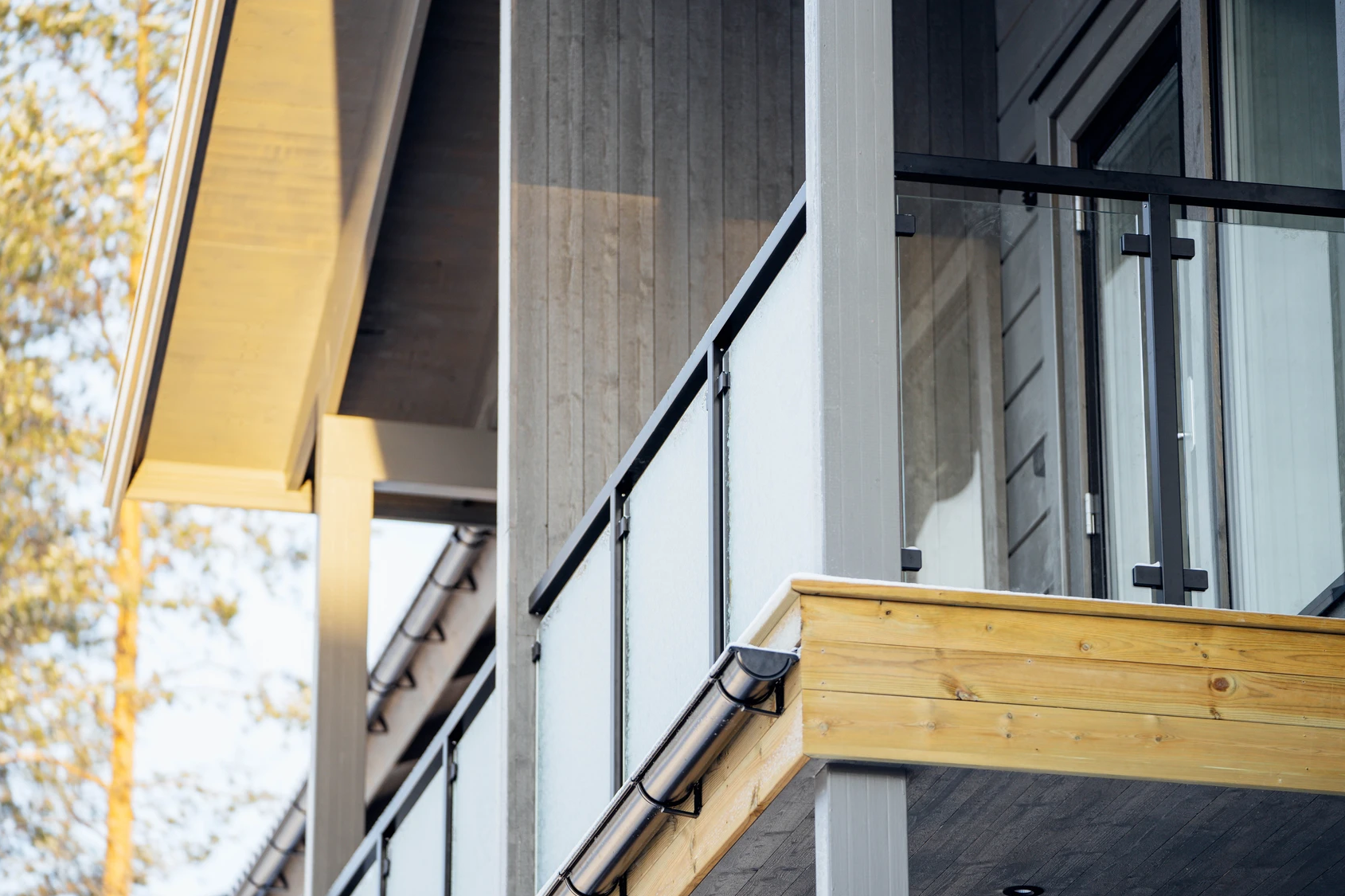
Do not scrape ice with metal tools
A scratch on the glass surface is permanent and can also become a starting point for stress cracks. It’s better to use a soft plastic scraper or let the ice come off gradually.
Avoid pouring hot water onto ice-cold glass
Localised heating can create a large temperature difference across a small area of the glass. It is this type of temperature difference that can cause cracks. Use lukewarm water and give the ice time to thaw.
Frost is not usually a problem for a glass balustrade. What matters is how you remove ice when it forms.
Why is drainage important for balustrades in the winter?
A railing that allows water to drain away reduces the risk of moisture pooling and freezing in joints or fixings. This applies regardless of whether the railing is made of aluminium, stainless steel, or glass.
Pay special attention to post bases, corners, and joints between profiles. If water remains there after rain, it can freeze and expand as the temperature drops.
Moisture does not remain around the fixings
A small air gap under the post base can allow water to drain out and reduce the risk of moisture accumulating right where the railing is attached.
The same spot becomes a freezing point when the temperature drops
Water that collects around a post base or in a joint can freeze when the cold sets in and create pressure within the structure.
How do you maintain a balustrade during the winter without damaging it?
To maintain a railing in the winter without damaging the glass, paint, or stainless steel, you should remove snow with soft tools, clean it with a mild detergent, and rinse off salt once the salt season is over. Hard tools and aggressive cleaning can damage the railing’s surfaces more than the cold itself.
On balconies, decks, and rooftop terraces, it is especially important to keep an eye on the areas around glass panels, joints, and post bases. Snow, dirt, and salt can accumulate there for long periods of time, while the railing is exposed to recurring moisture and temperature fluctuations.
Brush away the snow with a soft tool
Use a soft brush for loose snow and avoid using shovels, metal tools, and brooms with stiff bristles near the railing. This reduces the risk of scratches on the glass and paint, as well as damage to the railing components.
Wash the railing gently – not aggressively
Use a mild, pH-neutral cleaner along with a soft cloth, sponge, or brush. Avoid steel wool and chlorine-based cleaners, which can affect or damage the railing's surfaces.
Rinse off the salt when winter is over
Rinse the railing with clean water when the salt season is over. Be especially thorough at joints, post bases, and other areas where salt and dirt can accumulate and continue to affect the surface throughout the spring.
What should you check on your balustrade before and during the winter?
Make sure that fixings are securely fastened, that water can drain away, and that painted surfaces are intact before the frost sets in. During the winter, it’s especially important to handle snow and ice with care and make sure that salt doesn’t remain on the railing’s surfaces or in the joints.
Seven checks before, during, and after winter
-
Make sure all fixings are securely fastened
Check the condition of the railing at fixings before the frost sets in, and fix anything that’s loose while it’s still easy to work outdoors.
-
Check to see if water is pooling
Pay special attention to post bases, corners, and joints after it rains. If water collects there, drainage must be improved before the temperature drops and the water freezes.
-
Check that painted surfaces are intact
Repair paint damage while the weather is dry. A damaged surface is more vulnerable to moisture, dirt, and salt during the winter months.
-
Shovel the snow off the railing
Shovel away from the railing or parallel to it. Do not pile snow against glass panels or slatted railings, as the snow may then exert prolonged lateral pressure on the structure.
-
Use a soft tool when removing snow
Borsta bort lös snö med en mjuk borste. Undvik metallredskap, skyfflar och hårda strån nära glas, lack och andra ytor som kan repas eller skadas av slag.
-
Remove ice from glass without using metal or hot water
Do not scrape the glass with metal tools. Use a gentle tool and let the ice come off gradually, using lukewarm water instead of hot water if necessary.
-
Rinse off the salt when the salt season is over
Rinse the railing with clean water when winter is over so that road salt, sea salt, and dirt do not remain on the surfaces, at the base of the posts, or in the joints during the spring.
The railing is better maintained when water can drain away, fixings and surfaces are intact, snow isn't packed against the structure, and salt and dirt don't remain on it longer than necessary.
Which balustrade is best suited for winter, frost, and snow?
A railing exposed to winter conditions must be able to withstand moisture, frost, snow, temperature fluctuations, and, in some environments, salt as well. The materials, finish, and design must therefore be chosen based on both the location and the extent to which the railing will be exposed.
Frequently asked questions about balustrades in winter
Here are brief answers to common questions about railing materials, frost, glass, snow, salt, and winter maintenance.
Which balustrade material holds up best in winter?
Powder-coated Aluminium performs very well in most environments. In areas particularly exposed to salt, such as near the coast or on salt-treated roads, acid-resistant stainless steel 316L is a better choice.
Can glass balustrades crack due to frost or cold?
Laminated glass withstands frost well. The risk arises primarily when there are large local temperature differences, such as when hot water is poured onto a section of glass that is freezing cold.
How do I remove ice from a glass balustrade?
Do not use metal. Scratches on the glass surface are permanent. Use a soft plastic utensil or lukewarm water and let the ice thaw gradually.
How do I shovel snow around a balustrade?
Shovel away from the railing or parallel to it. A packed pile of snow against a glass panel or balustrade with bars can exert lateral pressure that the railing is not normally designed to withstand.
How does salt affect a balustrade in the winter?
Salt can locally break down the protective passive layer on stainless steel and penetrate areas where a painted surface is damaged. Therefore, environments exposed to salt are more demanding than those exposed only to rain and moisture.
What should I check on the balustrade before winter?
Make sure that fixings are securely fastened, that water can drain away from the post bases and joints, and that painted surfaces are intact before the frost sets in.
Do aluminium balustrades need maintenance in winter?
Powder-coated Aluminium typically requires little winter maintenance. Keep the railing clean, rinse off salt after the salt season, and repair any paint damage as soon as you notice it.