Price
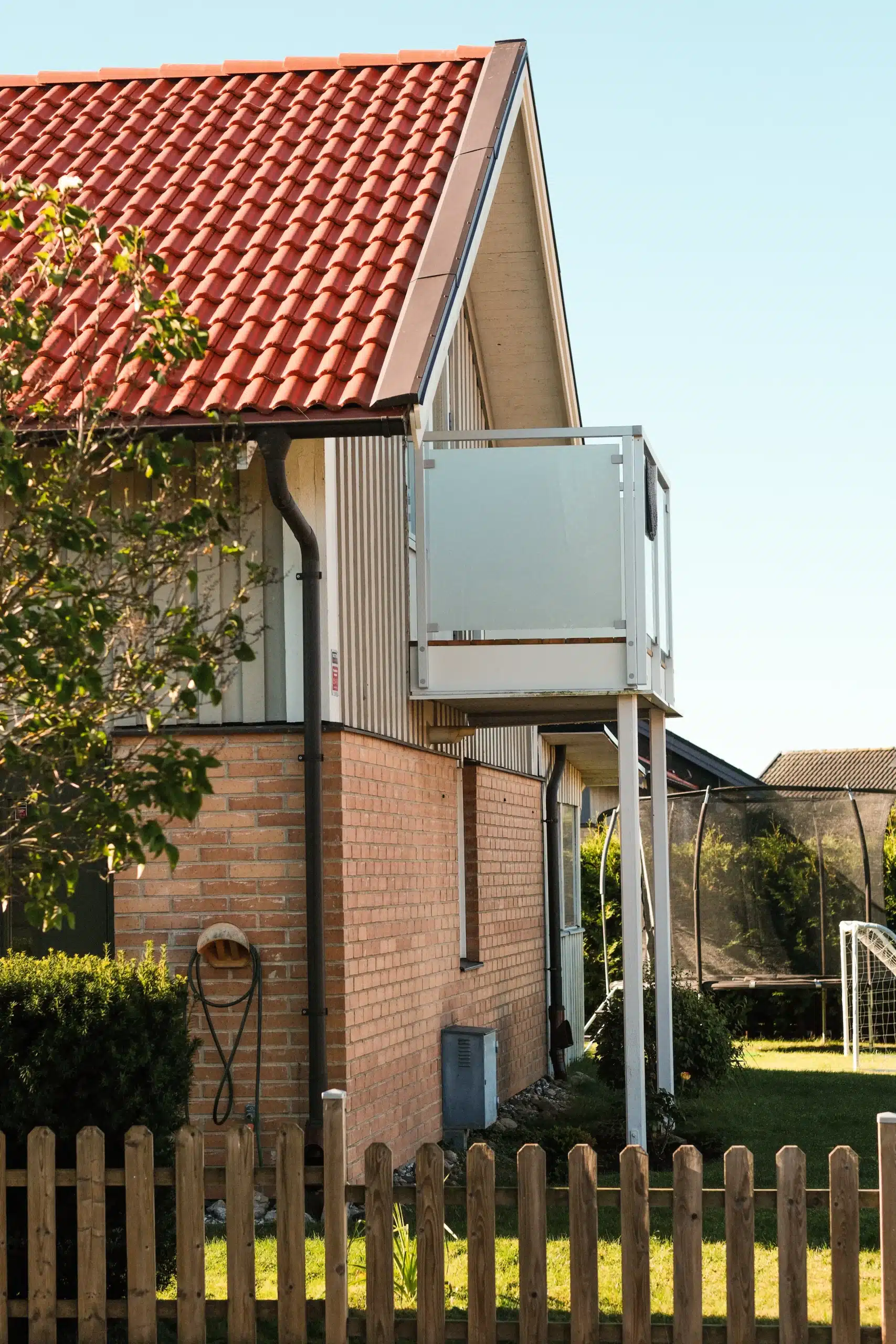
The price is based on a 10-metre railing and our standard options for aluminium balustrade. The actual price per metre may be higher or lower depending on the options you choose and the size of the railing you purchase.
Production time
The time indicated is our estimated production time, i.e., when we will be ready to ship the goods. Depending on how the product is customised, this time may be longer, as indicated in the price quote.
You can always see the estimated production time and date for the order at checkout before placing your order.
NOTE: The times refer to weekdays, not business days.
Express Production
Express production is an optional service. The turnaround time for express production is fixed, but this service is not available for all products and designs. You only pay for the service if we meet the turnaround time requirement.
The service is ordered at checkout.
NOTE: The times refer to weekdays, not business days.




See how others have designed their stair balustrades, glass balustrades for terraces and frameless balustrades for balconies. Find inspiration in modern, classic and discreet solutions, each with its own character.
Browse our frequently asked questions and answers, or contact one of our specialists, who are happy to help.
The best material depends on whether handrail will be used indoors or outdoors, how much maintenance you’re willing to put into it, and what kind of feel you want in your hand. Wood provides a warm, natural grip, while stainless steel and aluminium are low-maintenance and have a more minimalist feel.
Oak and ash are best suited for indoor use, and jatoba is a hard wood for those who want wood even in more exposed locations. Stainless steel handrails is available in AISI 304 for indoor use and AISI 316 for outdoor use. Powder-coated aluminium can be matched to the railing. Wood requires maintenance as needed to preserve its surface, while metal primarily needs to be cleaned.
The height of a handrail depends on local building requirements and the staircase or ramp. It should be positioned where your hand naturally seeks support, be easy to grip and provide support throughout its length. Check the requirements that apply where the handrail will be installed.
The handrail should follow the slope of the stairs at a consistent height and normally run without interruption. Measure the height vertically from the front edge of each step to maintain a consistent position along the staircase. In areas used by children or older people, an additional lower handrail may make the stairs easier to use. Follow the installation instructions for your chosen system.
We recommend leaving about 50 mm of clear space between the wall and the handrail. This gives your fingers room to grip the handrail and move along it without hitting the wall or bracket fixings. The clearance helps make the handrail comfortable to use along its full length.
What matters is the clear distance between the outside of the handrail and the wall, not how far the bracket projects. A thicker handrail may therefore need a bracket with greater projection to provide the same grip clearance. Mouldings, panelling and other protruding features can reduce the available space, so check the entire length before choosing a bracket.
A wall-mounted handrail is secured using brackets fixed to a sound part of the wall. The appropriate fixings depend on the wall material and its construction. Once installed, the handrail should be firmly secured and should not move when a load is applied. Choosing the correct fixings is essential.
For timber-framed or plasterboard walls, it is generally best to secure the brackets to studs or suitable reinforcement behind the surface. For concrete walls, use fixings designed for concrete. Mark the handrail position, align the brackets and check that the handrail follows the staircase before tightening the fixings. Longer handrails may require additional brackets to provide adequate support.
Yes. A handrail can be made to measure for the length, slope and angles of your staircase. Our handrails mainly use straight sections cut to length, with angled connectors and adjustable joints to follow stairs that turn or change direction. This helps create a handrail that fits the staircase layout.
Measure the required handrail length along the wall and the staircase slope so that the components can be prepared before delivery. Longer handrails can be joined with connecting sleeves to run along the stairs or hallway. Choose from flat end caps, rounded ends or returns towards the wall. Consider the length, joints and end details together.
The price of a handrail is primarily determined by the materials, length, profile, and the brackets required. A short, standard solution costs less than a long, custom-made handrail with many attachment points. In the configurator, you’ll see the price based on your specific measurements and selections. A proper comparison provides an accurate picture of the price.
Wood, aluminium, and stainless steel have different price points, and a longer handrail requires more material and more brackets. The profile—whether round or square—affects both material usage and hardware. Custom dimensions, corners, and angle connectors can also affect the final price. Therefore, compare the entire solution—including materials, length, and hardware—not just the price per metre.
Your shopping cart will be emptied if you switch to a different country.
Lira is a made-to-measure handrail that can be configured for your preferred style and the needs of the space. Choose the material, fittings and finish for a comfortable handrail suited to the location.
Lira is a round handrail that provides support along stairs, walkways or an entrance wall. Its easy-to-grip shape feels secure in the hand, whether you install it indoors or outdoors.
You can choose between wood, stainless steel, or powder-coated aluminium—depending on the look you want and how much maintenance you’re willing to put in over time. All handrails are custom-made to your measurements and come complete with hardware, screws, and end caps.
Lira is often used as:
Lira provides a simple, durable solution for everyday use, without unnecessary complications or bulky fittings.
Installing Lira is easier than many people think. Everything needed is included in the delivery, and the instructions make it straightforward to install, even if you have not done it before.
Here's how it works:
In the configurator, select " fixing "—depending on where handrail will be located:
All fixings are stainless steel and have been tested to provide secure support, regardless of material or position.
After ordering, you will have access to our installation videos. They show you how to fit the handrail step by step, based on the options you have selected.
Lira is manufactured at our production facility in Ängelholm. By designing and manufacturing our products in-house, we control quality, strength and the safety requirements relevant to different settings.
The manufacturing process is certified in accordance with EN 1090-1 and complies with the Eurocodes applicable to load-bearing aluminium building products. Production is continuously monitored by RISE (Research Institutes of Sweden), which is responsible for external verification of traceability and process compliance.
Each order is customised according to your selections and comes with a declaration of performance.
Here you'll find technical specifications, dimensions, assembly instructions, and performance declarations for our handrail Lira.
The documents are available as PDFs and will help you determine the correct measurements, choose fixing, and see how the different variants are constructed.
Stainless handrail
Stainless steel pipes with a diameter of 42 mm. Supplied in full lengths up to 2.4 metres. Can be ordered in lengths up to 4.4 metres for an additional charge. If your stainless handrail is to be installed indoors, use a stainless variant designated as AISI 304. If, however, it is for outdoor use, we use AISI 316 instead, a acid-resistant stainless steel.
, painted aluminium handrail handrail, round, painted aluminium, with a diameter of 42 mm. Available in full lengths up to 2.4 metres. Can be ordered in lengths up to 4.4 metres for an additional charge.
Ash Handrail
Round ash handrail handrail with a diameter of 43 mm, available either untreated or with a clear gloss finish (gloss level 10). Supplied in full lengths up to 2.4 metres. Can be ordered in lengths up to approximately 3 metres for an additional charge. When ordering handrails longer than 3 metres, the pieces are prepared for splicing, and of course, everything needed for this is included.
Oak Handrail handrail, round oak handrail with a diameter of 43 mm, available either untreated or with a clear gloss finish (gloss level 10). Supplied in full lengths up to 2.4 metres. Can be ordered in lengths up to approximately 3 metres for an additional charge. When ordering handrails longer than 3 metres, the pieces are prepared for joining, and of course, everything needed for this is included.
Jatoba Handrail
Round handrail made of jatoba with a diameter of 43 mm. A hard wood with properties and an appearance similar to teak, available either untreated or with a clear gloss finish (gloss level 10). Supplied in full lengths up to 2.4 metres. Can be ordered in lengths up to approximately 3 metres for an additional charge. When ordering handrails longer than 3 metres, the pieces are prepared for joining, and of course, everything needed for this is included.
Black and white wooden handrail
Black- or white-lacquered wooden handrail with a gloss level of 10 and a diameter of 43 mm. Supplied in full lengths up to 2.4 metres. Can be ordered in lengths up to approximately 3 metres for an additional charge. When ordering handrails longer than 3 metres, the sections are prepared for splicing, and of course, everything needed for this is included. Our lacquered wooden handrails are not suitable for outdoor use.
Start and End Pieces at handrail
We offer three different end pieces for our handrails. For handrails in stainless steel and painted aluminium, you can choose a flat end cap, a round end cap, or a 90-degree end bend, all in stainless steel. For handrails in wood, you can choose between a natural finish without an end cap, a flat end cap, or a 90-degree end bend in stainless steel.
Stainless Round bracket, gentle bend
Mounted with three visible screws. For indoor use: stainless steel AISI 304 and for outdoor use: stainless steel AISI 316. Distance from wall to centre of handrail: 75 mm.
Stainless Round bracket, sharp bend
Mounted with a concealed M8 screw stud. For indoor use: stainless steel AISI 304 and for outdoor use: stainless steel AISI 316. Distance from wall to centre of handrail: 73 mm.
Stainless Round bracket, flush mounting
Mounted with a concealed M8 screw stud. For indoor use: stainless steel AISI 304 and for outdoor use: stainless steel AISI 316. Distance from wall to centre of handrail: 75 mm
Stainless Square bracket, straight mounting
Mounted with a concealed M8 screw stud. For indoor use only. Distance from wall to centre of handrail: 89 mm
Post
Post stainless steel, made of steel, round with a diameter of 42 mm and with a base for top mounting. The total height of post and handrail can be adjusted between 855 and 935 mm. For indoor use: stainless steel AISI 304 and for outdoor use: stainless steel AISI 316.
Made to the millimetre
When you provide your measurements, please be as precise as possible—down to the millimetre. We’ll craft your railing to the millimetre so that it fits perfectly in the spot where you want to install it.
Screw for timber fixing
If you choose to fix into timber, screws for this purpose are included. The screw is made of hardened steel and, for outdoor use, is also surface-treated with Corrseal—Corrosivity Class C4. The screw features a milled groove along the shank and one at the tip. This results in a very low tightening torque when driving the screw into harder wood and minimizes cracking. The screw is 75 mm long for laminated glass and 100 mm long for toughened laminated glass and is driven in using a 13 mm wrench, which is, of course, included with your order. When fixing installing in materials other than wood or concrete, we recommend contacting your local hardware store.
Everything is included with your order
Our shipment includes everything you need for assembly. In addition to posts, hinges, and top rail, it also includes all screws, drill bits, and any special tools. If you have a screwdriver, a wrench, a folding rule, and a spirit level, you really don’t need anything else.
Assembly Videos and Instructions
The videos show various steps to help you with your assembly. Our assembly tips and videos are customised for each order. In other words, these are not general descriptions but are tailored specifically to your order.
Stainless Steel Components
Since stainless steel, despite its name, is not corrosion-resistant, all stainless components must be maintained and cleaned 1–3 times a year. If the railing is installed in a coastal environment, cleaning and treatment may need to be performed more frequently. Clean the surfaces with lukewarm water and a mild detergent using a soft cloth.
Wooden Handrail
If handrail is to be installed outdoors, we recommend cleaning handrail and then sanding it with fine-grit sandpaper. Treat handrail with a wood preservative such as wood oil or a similar product, depending on the prevailing conditions. For indoor installation, only cleaning and light sanding are required. Treatment with wood oil or a similar product can be applied if desired. All oak contains tannic acid in varying amounts, depending on the wood’s moisture content. This is because tannic acid helps prevent the wood from rotting. When your timber top rail or handrail is exposed to moisture for the first time in an outdoor environment, tannic acid is released, which can cause discoloration on the surface. Therefore, we recommend oiling the wood or, alternatively, applying oxalic acid during installation to minimise the release of the acid. Oxalic acid can also be used to clean up discoloration on the surface. Consult your paint supplier before using oxalic acid. To keep the wood looking its best, we also recommend oiling it once a year.