

A good balcony screen (privacy screen) should block the line of sight that is causing a disturbance without blocking out more light, air, or the view than necessary. The right solution therefore depends primarily on where the view is coming from and how the balcony is used.
Start by inspecting the balcony while sitting and standing. Visibility from a street below, a balcony across the way, or a neighbour on the side requires different placements and heights. Once the line of sight is clear, it becomes easier to determine how much of the balcony actually needs to be screened.
In this guide, we’ll go over which privacy screen are suitable for different situations, how glass, aluminium, wood, and simpler materials differ from one another, and what you need to consider regarding installation, regulations, and requirements for elevated and enclosed balconies.
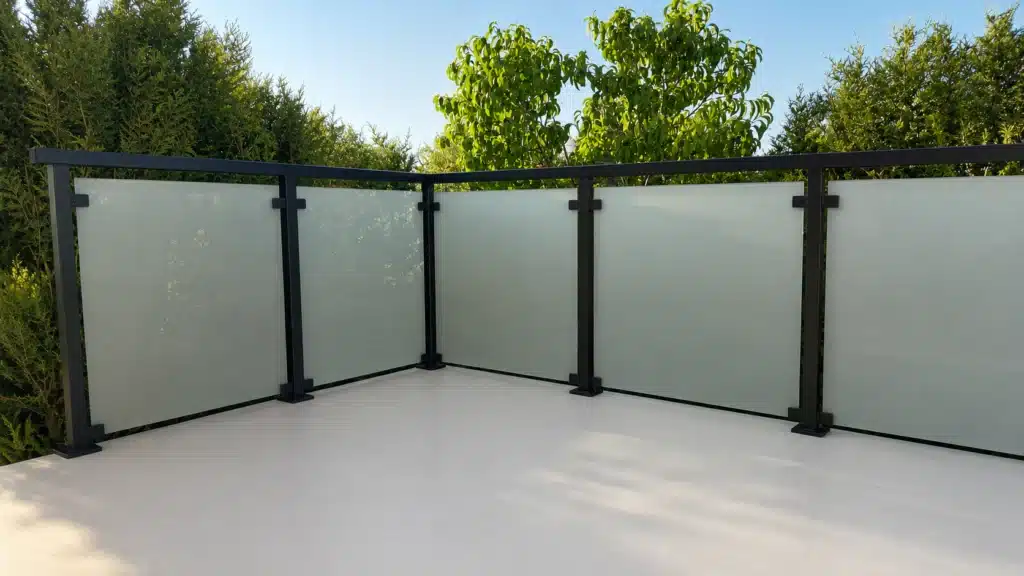
Which privacy screen is right for your balcony?
Start by identifying where people can see into your space from. Overlooking from below, straight ahead, and from the side require different placements, and you rarely need to screen off more of the balcony than the obstructing line of sight.
A balcony privacy screen should therefore be chosen based on which area needs to be screened off and how much light and view you want to preserve.
| Situation | Where does the overlooking come from? | A starting point |
|---|---|---|
| Balcony facing the street | From below or at an angle from ground level. | Protect the lower part of the line of sight, for example with frosted glass. |
| Balcony across the way | Directly in front of neighbours or another building. | Block off the part of the front that is in the obstructing line of sight. |
| Overlooking from the side | From an adjacent balcony or a nearby residence. | Place the screen on the short side where overlooking actually occurs. |
| High balcony | From opposite balconies, windows, or other floors across the way. | First, assess the line of sight, and then adjust the placement and height to match the existing structure. |
| Glazed balcony | Through glass panels or at an angle from the side. | Use an interior screen that is designed to fit the glazing structure. |
| Temporary need | Overlooking is only a problem at certain times or during particular seasons. | Freestanding screen, fabric, or other solution that does not require permanent screening. |
What material is best for a privacy screen on the balcony?
Frosted glass is suitable when you want to reduce overlooking while retaining plenty of daylight. A solid panel provides more screening but also blocks more light, while slats, bamboo and fabric can create a more open or flexible screen. Choose the material according to how much privacy, light and view you want to retain.
| Materials | Privacy Protection | Light transmission | Care | Suitable for |
|---|---|---|---|---|
| Frosted glass | Blocks a direct line of sight through the glass. | Allows diffuse daylight to pass through. | Clean as needed. | You want to reduce overlooking without making the balcony unnecessarily dark. |
| Solid aluminium panel | Provides a solid visual barrier. | Blocks the light where the panel is installed. | Clean as needed. | Privacy is more important than light and the view through the enclosed area. |
| Wood and slats | The level of privacy depends on the width and spacing of the slats. | Allows light to pass through between the slats. | It depends on the type of wood and the finish. | You want to combine privacy with a more open and softer look. |
| Bamboo | The level of privacy depends on how dense the screen is. | Varies depending on density and construction. | It is affected by the weather and needs to be monitored over time. | You are looking for a simple screen and accept that the material will change when exposed to the outdoors. |
| Textiles | The level of privacy depends on the density of the fabric. | Varies depending on the material and weave. | Cleaning and care depend on the material. | You want a lighter or more flexible solution. |
How do the privacy screen on the balcony affect the light, the view, and privacy?
Balcony privacy screens affect how private the space feels, how much daylight reaches it and how much of the view you retain. A solid panel provides the most screening but also blocks more light and the view. Frosted glass reduces overlooking while allowing daylight through. More open slats or flexible solutions retain more of the view but provide less privacy.
Therefore, start by determining which feature is most important on your balcony and how much of the line of sight actually needs to be blocked.
- Privacy First When you want to block out as much as possible
-
A solid panel provides the most visual privacy where it is installed. Frosted glass may be an option if you want to reduce direct overlooking while still allowing daylight to pass through the protected surface.
Start by determining how much of the line of sight actually needs to be blocked.
- Light First When the balcony shouldn't feel any darker
-
Frosted glass retains diffuse daylight better than a completely solid panel. Even slats with larger gaps can let light through, but the privacy screen then becomes more open at the same time.
Start by considering how much light you're willing to sacrifice to gain more privacy.
- Flexibility First When needs vary throughout the day or year
-
A fabric screen or a freestanding screen may be a good option when the need is not permanent. In that case, the screen can be placed where overlooking is most intrusive without having to remodel the entire balcony.
Start by determining when and from which direction the visibility actually occurs.
How do you install a privacy screen on a balcony?
The installation depends primarily on whether the privacy screen will be a permanent part of the balcony's structure or placed as a lighter screen inside the existing railing.
First, check the balustrade, posts, height, corners, level differences, and possible mounting points. Do not assume that the balcony has standard dimensions or that the same installation method works for all railing types. Even lighter privacy screens need to be positioned and secured so that they remain stable in windy conditions.
How do privacy screens differ on high-level and glazed balconies?
On a high balcony, people may still be able to see in from other balconies, windows, or buildings across the street. On a glass-enclosed balcony, the line of sight may instead pass through or past the glass panels. In both cases, you therefore need to identify where overlooking is actually coming from before choosing the location, height, or materials.
Height above the ground does not always solve the issue of overlooking
Overlooking can come from balconies and windows in buildings across the street or on other floors. Therefore, the actual line of sight is more important than how high above the ground the balcony is.
Consider where you are actually visible when sitting or standing. If privacy screen is to be installed in or above an existing balcony balustrade, structural considerations, fixing, and wind loads must also be taken into account.
The glass does not block all lines of sight
Glazing can reduce direct overlooking while still allowing unobstructed sightlines from the side, diagonally from the front, or through the existing glass sections.
Start by determining which glass section or direction allows people to see inside and what the glazing’s design permits. If you are not personally responsible for the glazing or the building, you need to check what is permitted before attaching anything to or making any changes to the glazing.
When are standard sizes appropriate, and when do you need a custom-made privacy screen?
Standard sizes can work when the dimensions, placement, and fixings already fit the balcony. A custom-sized privacy screen becomes more relevant when the solution needs to fit a specific opening, post spacing, or line of sight without unnecessarily large gaps.
| Compare | Standard sizes | Made to measure |
|---|---|---|
| Fit | Works when the balcony's dimensions match those of the finished solution. | Can be adapted to the required length and post spacing. |
| Gaps and coverage | May leave larger open areas if the final dimensions do not fit perfectly. | Provides greater control over how much of the line of sight is covered. |
| Location | The placement needs to be adjusted to fit the solution's existing dimensions. | The screen can be designed to suit its intended position on the balcony. |
| Planning | It's easier when you already have the right size and fixing. | Requires careful measurements before ordering. |
| Best suited for when | The existing dimensions are suitable and little adjustment is needed. | The dimensions are determined by the fit, line of sight, posts, or a specific opening. |
In short
Base your decision on the line of sight and the balcony’s actual dimensions, not on a standard size per se. If a ready-made solution covers the right part of the balcony and fits fixing, it may be sufficient. If posts, corners, or a specific opening dictate the placement, custom sizing becomes more relevant.
How do you choose the right privacy screen for your balcony?
Start by identifying where people can see in from and how much of the balcony actually needs to be screened off. Then check the amount of light coming in, the balcony’s construction, regulations, and dimensions before you decide on the material, height, and installation method.
Check before ordering
Review these six points
-
Where does the overlooking come from?
Check the balcony while sitting and standing. Note whether people can see in from below, directly from the front, from the side, or from a higher level.
-
How much of it actually needs to be screened off?
Start with the obstructing line of sight. You don't need to cover the entire balcony balustrade if the overlooking only occurs from a specific direction.
-
How much daylight and how much of the view do you want to retain?
Choose materials based on the balance between privacy and openness. Frosted glass, solid panels, slats, and textiles affect light and visibility in different ways.
-
What does the balcony's design allow for?
Check the railing, posts, corners, and possible mounting points before deciding on a permanent installation or a lighter-weight screen.
-
Do regulations or approvals need to be reviewed?
Check the applicable requirements before installing anything on a railing, façade, or glass enclosure. If you are not responsible for the building or balcony, you also need to check what is permitted before installation.
-
Have you carefully measured the whole space?
Measure the length, height, spacing between posts, corners, and differences in level. Do not assume that the balcony has standard dimensions.
Brief summary
Start by determining the line of sight and deciding how much of the balcony needs to be covered. Once you’ve also checked the lighting, structure, regulations, and dimensions, it will be easier to choose the right material, height, and installation method.
Which privacy screen is right for your balcony?
Once you know where people can see in from, how much of the balcony needs to be screened, and what your dimensions are, you can compare privacy screen based on light, materials, and installation methods. If you need help before placing an order, customer service can assist you further.
Frequently Asked Questions
What should you know about balcony privacy screens?
Here are brief answers to common questions about daylight, height, regulations, glazing, and installing a privacy screen on a balcony.
Which privacy screen lets in plenty of daylight?
Frosted glass is an option when you want to reduce direct overlooking while still letting in natural light. The glass diffuses the light rather than providing the same complete privacy as an opaque panel.
How high does a privacy screen need to be on the balcony?
There is no single height that works for all balconies. Check the line of sight while both sitting and standing, and choose a height that blocks unwanted overlooking into your space without blocking out more light or the view than necessary.
What should I check before installing a privacy screen on my balcony?
Check what requirements apply to the building and whether the railing, façade, or glazing may be altered. If you are not personally responsible for the building or the balcony, you also need to check what is permitted before you drill, attach anything, or make any other permanent changes.
Does a high balcony require a privacy screen?
It depends on whether there are unwanted sightlines from other balconies, windows, or buildings. Therefore, do not base your assessment solely on the height above ground level; instead, check from which locations the balcony is actually visible.
What should I consider when adding a privacy screen to a glazed balcony?
Start by identifying which glass panel people can see through, or from which direction they can look in. Then check what the glazing’s design allows before attaching film, a screen, or other shielding to or next to the glass panels.
Can I fit a privacy screen without drilling?
This can be achieved, for example, with certain fabric solutions or a freestanding screen inside the railing. However, the solution must be positioned and secured in a manner that is appropriate for the material, the balcony, and the conditions at the site.

