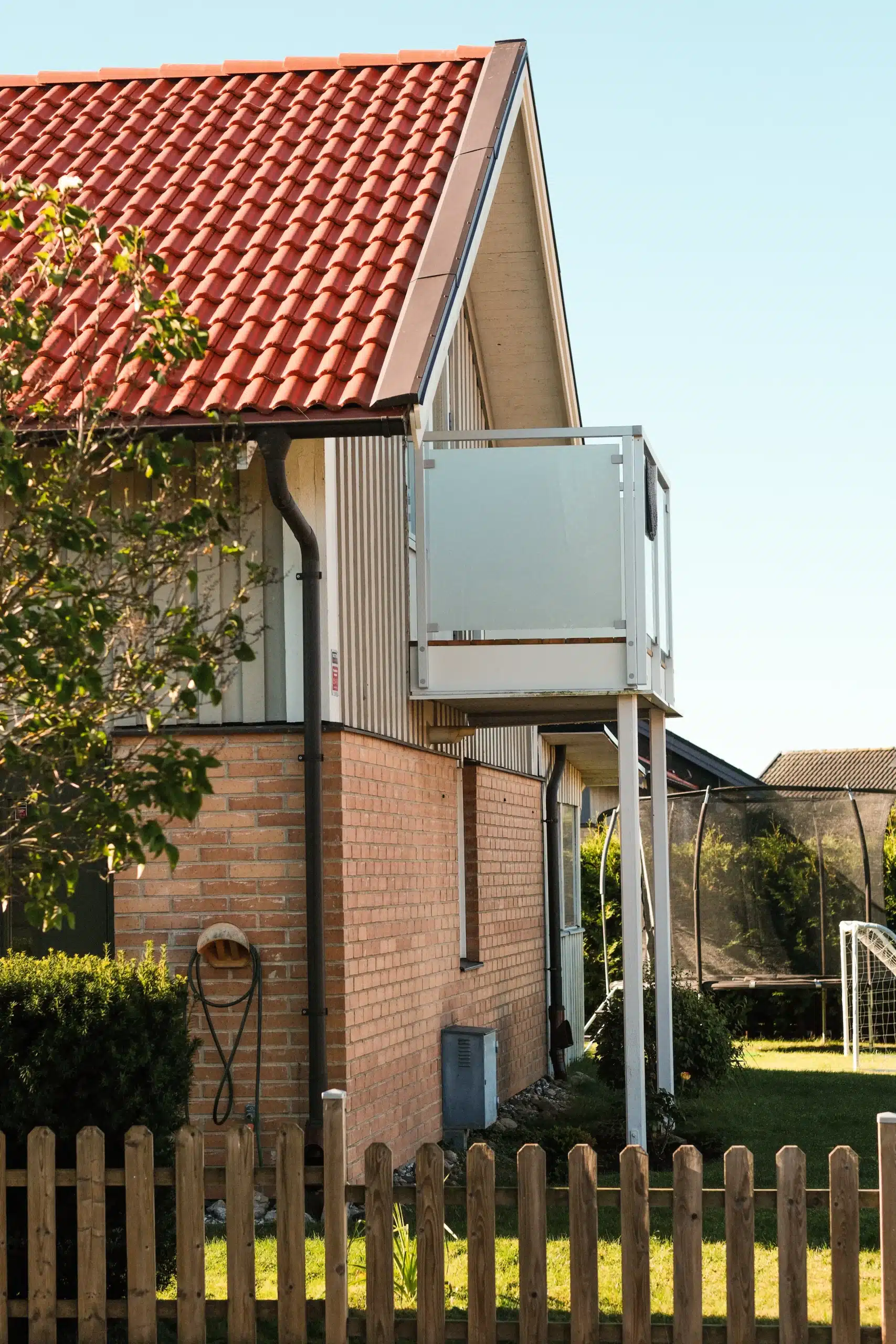
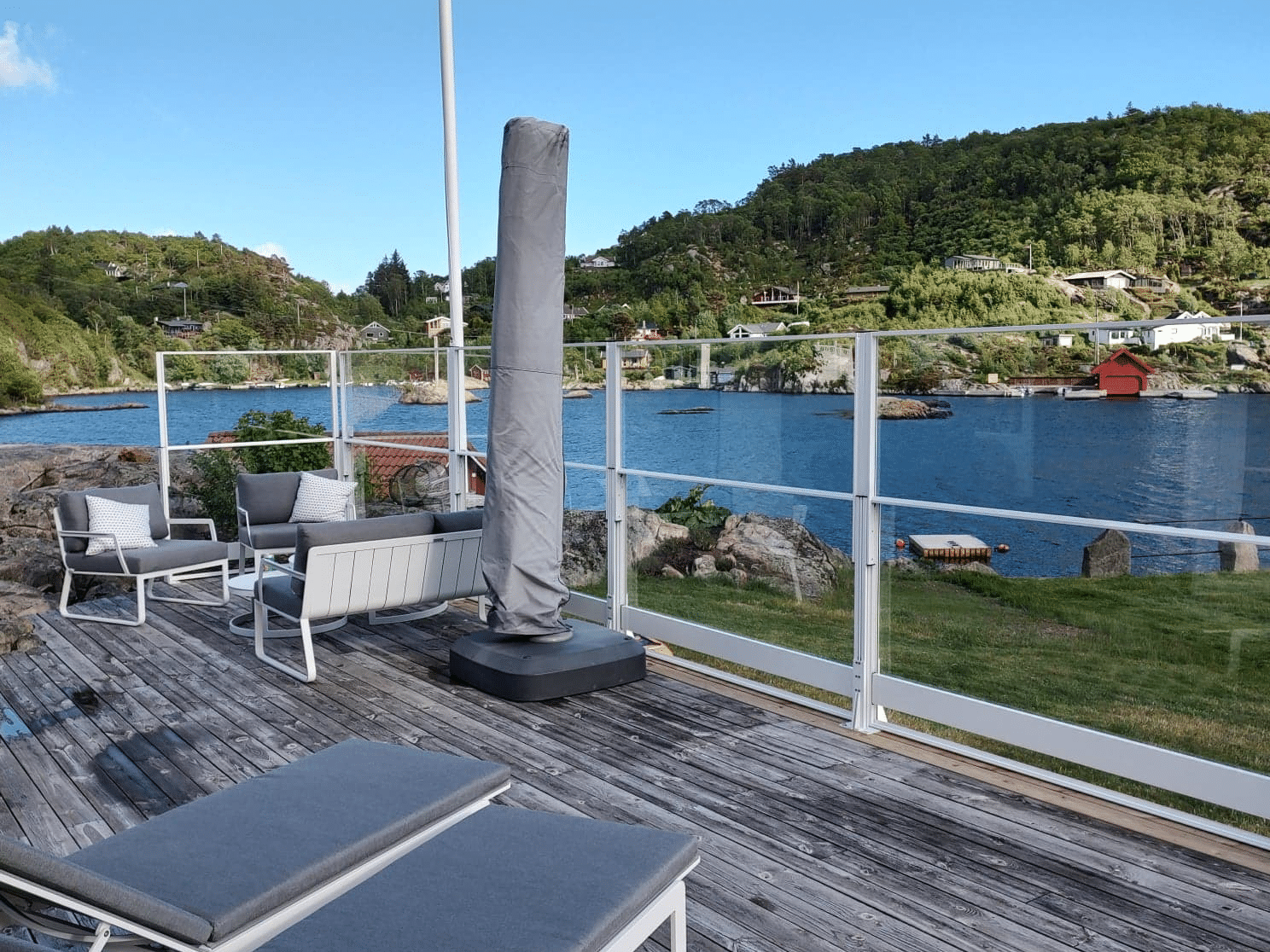
A glass windbreak can provide shelter on your patio without blocking the light or the view. The transparent surface blocks the wind where you are sitting while maintaining the view across the patio and out into the surroundings.
This makes glass particularly appealing for balconies, terraces, and other outdoor spaces where the view is an important part of the experience. Unlike a denser privacy screen or a screen with slats, you don’t have to choose between a more sheltered location and an unobstructed view.
However, how well a windbreak works depends on more than just the material. Height, placement, glass type, open corners, and fixing all affect how the wind moves around the screen. In this guide, we’ll walk you through the choices that will help you create more shelter without losing the feeling of an open outdoor space.
Why choose glass for a windbreak?
Glass is ideal when you want to block direct wind without blocking the light or the view. A solid glass surface does not let air through in the same way as a screen with open slats, while still allowing you to see through the windbreak.
The openings let some of the wind through
Slats can block the wind, but air can still pass through the gaps. At the same time, slats break the line of sight and creates a more secluded look.
A more solid windbreak without blocking the view
The continuous glass surface blocks the wind where the screen is located, while allowing light and the view to pass through the glass. The amount of shelter from the wind you get is also affected by the screen’s height, length, and placement.
The key difference is how much air passes through. Glass blocks direct wind without openings in the panel itself, while still allowing a clear view.
If you want more shelter without losing the view of your surroundings, a glass windbreak can be a good choice for a patio with an open outlook.
Which glass should you choose for a windbreak?
Choose clear glass when the view is most important, frosted or opal glass when you want to reduce overlooking from outside, and tinted glass when you want to reduce light and glare without completely losing your view. A split glass panel can combine privacy at the bottom with an unobstructed view higher up.
- Clear glass
- Provides the greatest transparency and allows light to pass through the windbreak. It’s particularly well-suited for areas where the view is an important part of the outdoor space.
- Frosted or opal glass
- It lets light through but makes it harder to see clearly through the glass surface. It can therefore provide more privacy in places such as a patio or balcony near neighbours and walkways.
- Tinted glass
- Reduces the amount of visible light passing through the glass and can create a calmer atmosphere in bright sunlight. The degree to which overlooking is reduced depends, among other things, on the tint and the lighting conditions on either side of the glass.
- Split glass panel
- A combination of more opaque glass at the bottom and clear glass at the top can provide privacy at seating height while still preserving the view above.
How tall should a glass windbreak be?
There is no single height that provides the best shelter for all patios. The windbreak needs to be tall enough for the part of the patio you want to protect, but the result is also affected by wind direction, the screen’s length, placement, and open corners.
A windbreak designed primarily to provide shelter around the seating area can therefore be designed differently than one that is also intended to be effective when you are standing. Simply making the screen taller also does not solve the problem of wind blowing around the side of the structure.
If the windbreak also serves as a railing or other fall protection, the height cannot be chosen solely based on how much shelter you want. In that case, the protective structure must be designed for fall protection and have a height and construction that meet the safety requirements for the location.
| Situation | What the height needs to do | To check |
|---|---|---|
| Shelter around the seating area | Block the wind from reaching the area where you're sitting, such as at the dining table, on lounge furniture or on a sofa. | Start by considering the placement of the furniture and check where the top edge of the windbreak will be in relation to the seating area. |
| Shelter when standing as well | Protect a larger part of the body than is needed when shelter is required only at seated height. | A taller glass section catches more wind and therefore also places greater demands on the structure and fixings. |
| Open corner | Reduce the amount of wind that can get around the open edge of the screen and in behind the shield. | Height isn't the only factor. The orientation of the screen and any angled section can be just as important. |
| Above an existing railing | Provide the desired windbreak height in conjunction with the structure that is already in place. | Estimate the total height from the floor to the top of the glass and check separately what requirements apply if the structure also serves as fall protection. |
Should you choose a fixed or height-adjustable glass windbreak?
Choose a fixed windbreak when you want the same protective height at all times. A height-adjustable windbreak is a better fit when you want to be able to switch between more shelter and a more open patio area depending on the weather and wind.
How should a glass windbreak be mounted?
The fixing must be adapted to the substrate, the size of the windbreak, and how exposed the location is. Since a solid glass surface acts as a distinct windbreak, posts, the hardware, and the supporting structure must collectively be able to withstand the forces generated by the wind.
Check these three things
-
The basis
Check what posts or tracks should be anchored to. Wood, concrete, and other substrates require different fixings, and the supporting material must be able to withstand the load from the finished structure.
-
The existing structure
If the windbreak is to be installed on a balcony, on a post-supported deck, or in conjunction with an existing railing, the anchoring and stability of that structure must also be assessed.
-
Wind conditions
Take into account how exposed the location is, the height and width of the windbreak, as well as whether there are corners or exposed edges where the wind frequently hits the structure.
Do not size the fixings based solely on the glass section. The substrate, the load-bearing structure, and the site’s wind conditions must be evaluated together.
Which safety glass is needed for a windbreak?
The glass assembly must be adapted to the design and location. Toughened safety glass has a different strength and fracture behavior than regular glass, while laminated glass is held together by the lamination if the pane is damaged. If windbreak also serves as fall protection, that function must also be taken into account when the glass and fixing are sized.
Where people may come into contact with the glass surface, the risk of injury from impact or glass breakage must also be taken into account. Therefore, verify that the glass’s safety properties and fixing are appropriate for the intended use of windbreak.
Which is better for a windbreak—glass or plexiglass?
For a permanent windbreak where unobstructed visibility and a hard, scratch-resistant surface are key considerations, glass is often the more long-term choice. Acrylic, often called Plexiglas, and polycarbonate weigh less and may be worth considering when low weight or high impact resistance is a priority.
At the same time, these differences depend on material quality, thickness, UV protection, and any surface treatment. The table therefore shows the overall differences between the materials, not the properties of a specific sheet or glass structure.
| Property | Glass | Acrylic, plexiglas | Polycarbonate |
|---|---|---|---|
| Clarity over time | The hard glass surface normally retains its clarity well with regular cleaning. | It can maintain good clarity, but surface scratches can make the material dull over time. | How well the clarity is preserved depends largely on UV protection and surface treatment. |
| Scratch Resistance | Glass generally has a more scratch-resistant surface than the two plastic materials. | It scratches more easily than glass. Sand, dirt, and dry wiping can leave visible marks. | It also scratches more easily than glass if the sheet does not have a special scratch-resistant surface treatment. |
| Impact resistance | It depends on the type of glass, its thickness, and its construction. Glass can break if subjected to a sufficiently strong impact. | It has high impact resistance compared to regular glass, but its properties vary depending on the specific pane and thickness. | It generally has very high impact resistance, which is one of the material's most important properties. |
| Dimensional stability | Changes relatively little with normal temperature fluctuations outdoors. | It expands and contracts more as the temperature changes, which must be taken into account in the design. | It is also affected by temperature fluctuations and must be installed with consideration for the material's movement. |
| Weight | Heavier than comparable plastic sheets. | Significantly lighter than glass. | Significantly lighter than glass. |
| Outdoor surface | The hard surface makes it relatively easy to keep glass clear and clean over time. | The surface may take on a more scratched or dull appearance if it is exposed to wear and tear. | Performance over time is greatly influenced by the sheet's UV protection and surface treatment. |
If the view needs to be unobstructed and the surface must also withstand regular cleaning and long-term outdoor exposure, glass is often the natural first choice. Acrylic and polycarbonate are primarily used as alternatives when lightweight or impact resistance are more important considerations.
How do you clean and maintain a glass windbreak?
A glass windbreak typically requires little ongoing maintenance, but dirt, pollen, and other deposits need to be washed away so that the glass retains its clarity. How often this is necessary depends on how exposed the patio is.
Always start by removing loose dirt before washing the glass surface itself. This reduces the risk of particles being dragged across the glass during cleaning.
Three simple steps
-
Rinse off loose dirt
Start by rinsing the glass to remove dust, pollen, and other loose particles before wiping the surface with a cloth or sponge.
-
Wash with a mild detergent
Next, gently wash the glass surface with a mild cleaning solution to remove any dirt and residue that remains after rinsing.
-
Rinse and dry
Finish by rinsing off the cleaning solution and drying the glass so that water and residue don't leave unnecessary marks on the surface.
Rinse first, then wash, and finish with a clean rinse. This reduces the risk of dirt particles being smeared across the glass surface during cleaning.
Not sure about the height, glass type, or fixing?
Check out our glass windbreak or contact us if you'd like help figuring out which solution is right for your patio. Windbreaks are custom-made at Ängelholm.
What should you know before choosing a glass windbreak?
Height and glass type are just part of the bigger picture. Location, wind direction, fall risk, and how the patio is used also affect which solution works best.
Does the length of the windbreak matter as much as its height?
Yes, the length affects how easily the wind can get around the sail’s free edge. A higher windbreak therefore does not automatically provide better shelter if the wind is coming in from the side instead. Position, length, and wind direction need to be assessed together.
Does a glass windbreak also need to serve as a railing?
Not always. If the glass is installed in a location where there is no risk of a fall, its primary function may be to provide shelter. If the structure is also intended to protect against falls, the height of the railing, the glass, fixing, and other safety requirements must be assessed based on that function.
Can different types of glass be combined in the same windbreak?
It depends on which windbreak system you choose. Where the design allows, for example, a more opaque glass panel at the bottom can be combined with clear glass higher up, so you get more privacy at seating height without blocking the view above.
What should you keep in mind if your patio is very exposed to the wind?
Pay particular attention to the substrate, the size of the glass panel, its placement, and how exposed the location is. A solid glass surface creates a significant wind load, so posts, the hardware, and the anchoring must be adapted to the load at that specific location.
How do you know where on the patio a windbreak will be most useful?
Observe the patio on several windy days and note from which direction the wind most often blows towardss the seating area. Also take note of open corners and where leaves or light objects tend to gather. This can give you a better idea of the wind’s path than choosing a location based solely on the shape of the patio.