An " vertical awning " is an exterior sunshade that runs vertically in front of windows, glass walls, or open sides. It works especially well when the sun is low and coming from the side—for example, in the morning or evening—when a standard patio awning does not provide enough shade.
Because the fabric is on the outside, it can reduce solar radiation before it reaches the glass and help create a more comfortable indoor climate. Depending on the fabric’s density, a vertical awning can also reduce glare and prevent people from seeing in without blocking out all daylight or the entire view.
In this article, we’ll discuss when a vertical awning is the right choice for solar shading, how side guides and tracks affect its function, and how to choose the fabric, placement, and design based on the sun’s direction and the environment where the awning will be installed.
What is a vertical awning?
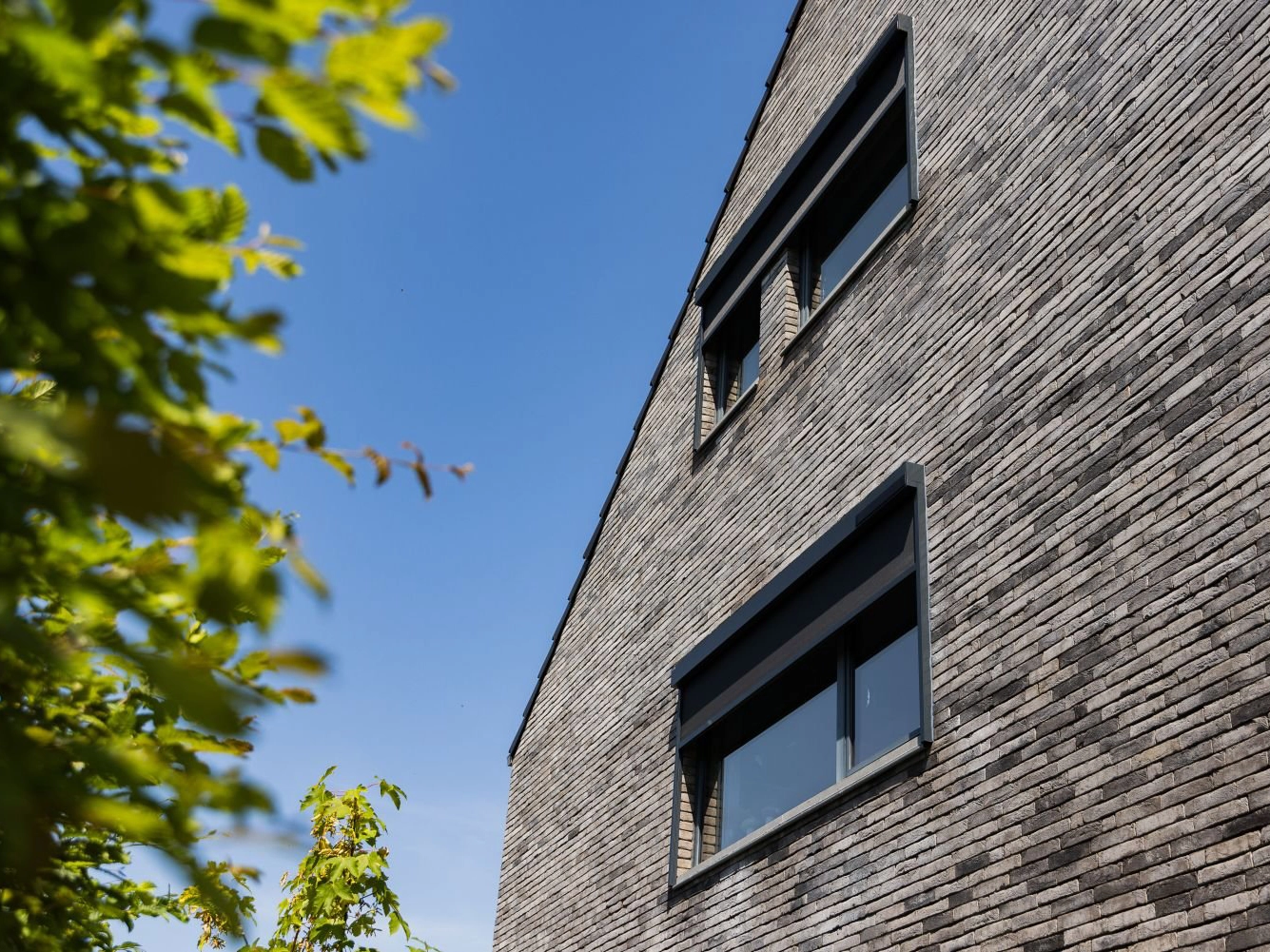
An " vertical awning " is an exterior sunshade that is lowered vertically in front of windows, glass panels, or open sides. It is particularly useful when the sun is low in the sky and hits the opening from the side, whereas a standard patio awning primarily provides shade from above.
On a track-guided vertical awning, the fabric runs along side guides that help keep it straight and stable as it is lowered. This provides a more controlled cover in front of the opening and reduces gaps along the sides.
| Property | Terrassmarkis | Vertical awning |
|---|---|---|
| Direction of movement | Folds out from the façade | Lowers vertically in front of the opening |
| Best suited for | Sunlight coming from above | Low sun shining on a window or opening from the side |
| Common placement | Over a deck, terrace or patio | In front of windows, glass panels, and open sides |
| Overlooking | Provides shade primarily from above | Can reduce overlooking, depending on how closely woven the fabric is |
| View | Does not normally affect visibility straight ahead when the awning is extended | Visibility through the opening is affected by the weave's openness |
| Stability | The projecting fabric is affected by wind | A rail-guided fabric remains more stable along the sides |
When do you need a vertical awning?
A vertical awning is especially useful when the sun is low in the sky and hits windows, glass panels, or an open side from the side. It is also ideal when you want to reduce glare or prevent people from seeing in without blocking out all the light and the entire view.
- West- and east-facing
- The morning and evening sun is often lower in the sky than the midday sun and can therefore hit windows and glass surfaces more directly. In such cases, a vertical sunshade can provide protection where a patio awning above is not sufficient.
- Overlooking from the side
- A vertical screen can provide more privacy from, for example, the street, a walkway, or a neighbour. The extent to which it reduces visibility depends on the screen’s density, openness, and the lighting conditions inside and outside.
- Wind-exposed façade or opening
- A track-guided awning remains more stable along the sides and can block some of the wind. However, it does not replace a fixed glasswindbreak when the main purpose is to windbreak.
- Large windows
- When installed in front of large glass surfaces, a vertical awning can reduce solar radiation on the outside, before the sun reaches the glass. This can help limit both heat and glare indoors.
- Conservatories and glazed areas
- In environments with a lot of glass, the sun can heat the surface for several hours. Vertical sunshades can be particularly useful on the side where the low sun continues to hit the glass as the sun moves across the sky throughout the day.
Why should a vertical awning run in side tracks?
The rails help keep the fabric straight and stable when a vertical awning is lowered in front of a window, glass panel, or an open side. Instead of hanging freely, the fabric is guided along the sides, allowing it to follow the opening more closely and leaving less space for low sunlight and overlooking around the edges.
The side guides also reduce the movement of the fabric in lighter winds. This is particularly valuable in exposed locations where the sun, wind and overlooking often come from the same direction. A vertical awning does not, however, function as a fixed windbreak, but the tracks provide a more controlled and stable solution than a freely hanging fabric.
More stable fabric
The fabric is held in place along the sides and moves less when there is a light breeze.
More complete coverage
The sunshade follows the opening more closely, leaving less space for low-angle sunlight and overlooking from the sides.
Better in exposed locations
Side-guided fabric provides more effective screening where sun, wind and overlooking tend to come from the same direction.
How does the awning fabric affect visibility, light, and privacy?
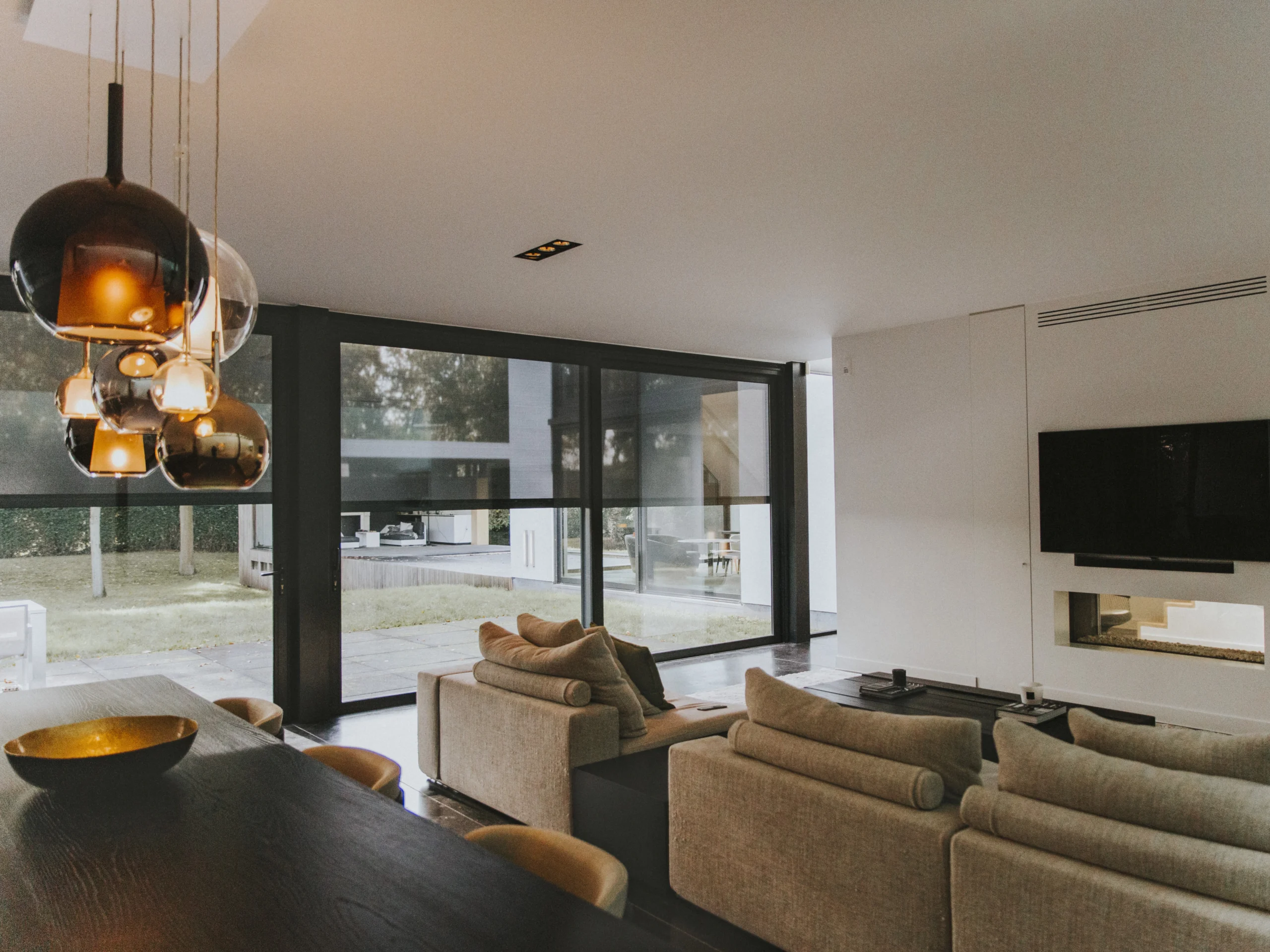
The openness of the fabric determines how much direct sunlight is blocked, how much daylight is allowed through, and how clearly you can still see outside. A denser fabric provides more screening, while a more open fabric allows more light and a better view.
The choice therefore depends on what is most important for that space. If you want to learn more about the differences between materials, colours, and light transmission, you can read our guide on awning fabric and fabric.
More shade and more privacy
Ideal when you want to block out more direct sunlight and reduce visibility from the street, a walkway, or a neighbour, for example. The screening becomes more effective, but visibility through the fabric is reduced at the same time.
More light and better visibility outside
Ideal when you want to block some of the sun’s rays while still letting in more daylight and preserving the view. However, the privacy screening is less effective than with a denser fabric.
How do you choose the right vertical awning?
Start by considering where the sun is coming from and what you want to block out. Then, the placement, fixing, fabric, and control system need to be adapted to the opening and how the space is used.
What to check before choosing a vertical awning
-
Take note when the sun is a distraction
Check what time of day the sun hits the window, the glass panel, or the open side. Morning and evening sun often requires shading from a different direction than the midday sun.
-
Decide which side needs shading
Start with the side where the sun, glare, or overlooking is actually a problem. On a patio or in a sunroom, the need may be greater on one side than on the others.
-
Check the fixings for the rails
Make sure there are stable anchor points on both sides of the opening. Door frames, the facade, posts, and other fixed components affect how the tracks can be positioned.
-
Choose a fabric based on light, the view, and privacy
A denser weave provides more screening, while a more open weave lets in more natural light and preserves more of the view. Choose the option that best suits your needs for that specific location.
-
Choose the control system and power supply
Think about how the awning should be operated and how any motor should be powered. The location may affect which solution is most practical.
-
Check for obstacles around the opening
Check to see if handles, fittings, railings, window flashings, or other parts might affect the position of the tracks or the movement of the fabric.
Summary: Start by considering the direction of the sun and the area that needs to be shaded. Then check the fixings, fabric, control system, and any obstacles around the opening before deciding on the design.
Do you need help choosing a vertical awning?
Check out our vertical awnings and compare different solutions for sun protection, privacy, and placement. If you need help making a choice, you can also contact us at customer service.
What should you know about vertical awnings?
Here we provide brief answers to common questions about the differences compared to a standard awning, transparency, light control, wind, and placement in front of windows.
What is the difference between a vertical awning and a regular awning?
A standard awning extends out from the façade and provides shade primarily from above. A vertical awning is lowered vertically in front of windows, glass sections, or open sides and works especially well when the sun is low and coming from the side.
Does a vertical awning replace a standard patio awning?
Not always. A standard awning primarily provides shade from above, while a vertical awning blocks the low sun from the side. In some places, therefore, they work best as supplementary solar shading.
Does this provide a vertical awning privacy screen?
Yes, but the reduction in overlooking depends on the fabric’s openness and the lighting conditions. A denser fabric provides more privacy, while a more open fabric allows more light and visibility. In the evening, overlooking may increase when the lights are on indoors.
What does it mean when a vertical awning runs on rails?
This means that the fabric is guided along the sides as the awning is lowered and raised. The rails help keep the fabric straight, reduce movement, and provide more even shading along the opening.
Does a vertical awning work as a windbreak?
A track-guided fabric can reduce some drafts because it is held in place along the sides. A vertical awning, however, does not replace a fixed windbreak when windbreak is the main purpose.
Can a vertical awning be used as a standalone unit?
Not without a sturdy structure to attach it to. The track system requires fixed attachment points on both sides, such as in the facade, window frames, posts, or another load-bearing structure.
Can a vertical awning be used in front of a window?
Yes. When placed in front of a window, a vertical awning can block the sun's rays on the outside before they pass through the glass. This can reduce both glare and the amount of solar heat that enters the room.