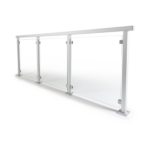
The main differences are weight, appearance and finish. Aluminium is lightweight and can be powder-coated in a range of colours, while stainless steel is heavier and has a distinctive metallic appearance. Both can perform well outdoors when the material grade and balustrade design suit the location. Aluminium forms a protective oxide layer, with the coating providing additional surface protection.
For stainless steel, the grade must be chosen to suit the environment, particularly near the sea, and the surface cleaned as needed. The stability of a balustrade depends on the complete system, not just the post material. Choose aluminium if you want a particular colour, or stainless steel if you prefer the metal itself to be part of the design.
A suitable pool balustrade should provide a clear boundary, good visibility and components appropriate for a damp environment. Glass balustrades are popular because they preserve views across the pool area while offering some wind shelter, making the space more comfortable to use.
Posts, fittings and fixings around pools should be selected to suit moisture and exposure to pool chemicals. Appropriate grades of stainless steel or powder-coated aluminium may be suitable depending on the environment. Consider child safety, climbing risks, openings and gates when planning the layout. A balustrade never replaces supervision of children; check the relevant local pool safety requirements.
If the glass slides in glass clamps, the screws usually need to be tightened, or the grip between the glass, rubber, and bracket is too loose. Check glass clamps before making any other changes to the railing. It’s usually easy to fix yourself with the right tools. Perform this check before making any other changes.
Retighten the glass clamps as instructed in the installation guide and check that the rubber inserts are correctly positioned and match the glass thickness. Clean the contact surfaces, as grease and dirt can reduce grip. Also check that the glass is seated correctly in every clamp and that the posts are stable. If the glass still slips, stop adjusting it and contact us with photos of the glass and clamps.
The most common options are clear, opaque (opal) and tinted glass. Some systems also offer extra-clear and coloured glass. Your choice depends on the views, natural light, privacy and appearance you want. Clear glass preserves views and daylight, while extra-clear glass has less of a green tint.
Opal glass lets daylight through while obscuring details. Tinted glass, such as grey glass, creates a darker appearance and can offer some additional privacy. These glass options are also available for windbreaks. You can combine glass types in one project, for example clear glass facing the view and opal glass facing a neighbouring property.
Glass used in balustrades is designed to withstand normal seasonal changes, from summer heat to cold and frost. Glass panels may also flex slightly under wind loads without this necessarily indicating a fault. The effects depend on the glass type, panel size, fixings and edge finish. The glass is specified for outdoor use.
Rapid or substantial changes in temperature put more stress on glass than gradual changes – for example, when one part of a panel is warmed by the sun while the rest remains cold. Some movement in larger glass panels in windy conditions is normal and depends on their size, thickness and fixings. Frost alone should not cause a correctly specified glass balustrade to crack. The glass, fittings and fixings must all be suitable for the location.
The easiest way to clean a glass balustrade is with lukewarm water, a mild cleaning product and a soft microfibre cloth or window squeegee. Avoid harsh or abrasive cleaners that may damage the glass surface or fittings. Cleaning frequency depends on the location: balustrades near the sea, roads or areas with high pollen levels may need more frequent cleaning.
A suitable water-repellent glass treatment can help reduce the build-up of dirt and limescale, but it does not replace cleaning. Wipe down glass clamps and stainless steel fittings with water and a mild detergent, following the product’s maintenance guidance.
Glass panels for balustrades have ground and polished edges to provide an even, smooth finish after cutting. This is especially important when the edges remain visible, such as with glass clamps or frameless glass balustrades. Edge finishing contributes to both appearance and quality.
Grinding removes uneven areas and minor edge defects left by cutting, while polishing produces a smooth, refined finish. Glass edges are more vulnerable to damage than flat surfaces, so careful edge finishing helps during transport, handling and installation. With exposed glass edges, such as panels held in clamps, the finish is also part of the design.
You choose the right glass balustrade based on location, view, desired look, and the requirements the railing needs to meet. Glass railings work both indoors and outdoors and can be built with posts, with glass clamps, or as post-free systems. frameless offers the best view, while posts can become a distinctive part of the design.
Clear glass preserves the view, while opal or tinted glass glass provides more privacy. Outdoors and along the coast, hardware, profiles, and metal components must be able to withstand the environment. Consider the glass, fixing, and load-bearing components as a complete system, especially where the railing provides fall protection.
A glass balustrade provides a modern, open feel whether installed on a deck, balcony, indoor staircase or around a pool. It preserves the view and natural light while helping to reduce wind exposure. We manufacture every glass balustrade to your measurements at our factory in Ängelholm, so it fits your installation area.
On a deck, glass preserves views of the garden, lake or sea. On balconies, glass balustrades combine fall protection with wind shelter and, with the right glazing, can provide privacy. Indoors, they allow light to pass between floors, while full glass panels avoid gaps between infill bars. For doors opening without a balcony platform, explore our Juliet balconies. We also supply glass balustrades for pools and commercial spaces such as hotels and restaurants.
Clear glass offers the least obstructed view. Grey-tinted glass reduces light transmission slightly and can complement darker façades. Frosted opal glass lets daylight through while obscuring the view, making it an option for privacy screening.
Depending on the product, we use laminated safety glass made from two panes bonded together with a PVB interlayer that helps retain fragments if the glass breaks. Glass thickness is selected according to the loads involved: 8.76 mm laminated glass is used for many decks and patios, while we recommend 12.76 mm toughened and laminated glass for pool areas, exposed locations and Juliet balconies.
The manufacturing process is certified to EN 1090-1. Production is regularly monitored by RISE, with a focus on traceability, quality and the manufacturing process.
The price depends on the glass type, system and overall length. Our 8.76 mm laminated glass option is generally more economical than 12.76 mm toughened laminated glass. Frameless Vista is a premium option, while post-supported systems such as Arcus generally cost less. Fewer corners and longer straight runs can lower the price per metre. See your price directly in our 3D configurator.
Your glass balustrade is supplied as a complete kit with made-to-measure glass panels, posts, fixings and installation instructions. Fixings must always be suitable for the supporting substrate and load-bearing structure.
Your basket will be emptied if you change country.