Use a sturdy measuring tape
Measure in centimetres or millimetres and check each measurement carefully. Avoid estimating width, height or projection by eye.

With accurate measurements from the start, it is easier to choose and order an awning that fits. This guide explains how to measure correctly before buying a patio or vertical awning.
An awning is made to fit the position where it will be installed. Start by checking the façade, windows, patio and any obstructions before entering your measurements in our design tool.
Measure in centimetres or millimetres and check each measurement carefully. Avoid estimating width, height or projection by eye.
Take photos of the façade, window, or patio from directly in front and from the side. Photos make it easier to see any obstacles, the direction the property faces, and possible placement options.
Check for downpipes, eaves, lights, window sills, outdoor sockets and other features that could affect where the awning can be installed.
Consider when the sun causes the most glare. A west-facing patio awning may need a different projection from a south-facing awning, particularly when the evening sun is low.
Before continuing, note the width, height, projection, mounting height, orientation and whether you need an electric motor or a manual crank handle.
When measuring for a patio awning, first check the width, projection and mounting height. Also consider the sun’s movement across your patio and anything on the façade that may affect placement.
Measure the area you want to shade and check how much space is available on the façade. Remember that the awning may need to extend slightly beyond the seating area to provide effective shade.
Projection is the distance the awning extends from the wall. When the sun is low, for example on a west-facing patio, greater projection or a steeper pitch can provide more shade.
Measure from the ground or floor to the intended mounting position, as well as the clearance beneath the awning when it is extended. Also check any eaves, windows and doors that may affect the available height.
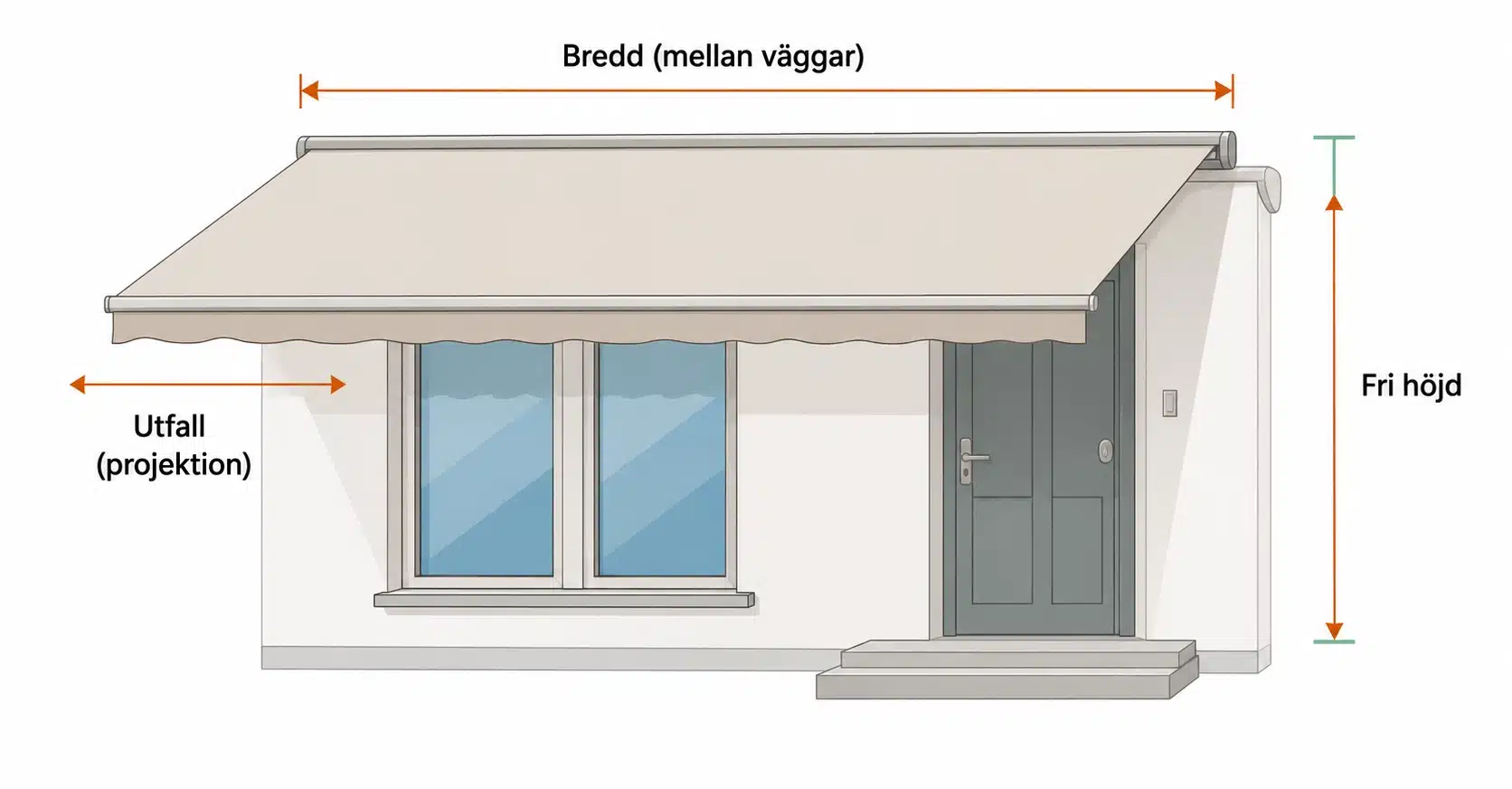
All measurements are given in millimetres (mm)
When measuring for a vertical awning, first check the overall width, height and fixing position. Also inspect the façade, identify any obstructions and consider how much of the window, balcony or patio you want to shade.
Measure the full area you want to cover. For a window, the awning may need to extend beyond the opening to provide better shade and coverage.
Measure from the fixing position down to the intended end point. Check that the awning will not come into contact with the window sill, balustrade, floor or other fittings.
Check that there is enough space for the wall brackets and guide rails. Look for downpipes, lights, handles or other features that could affect positioning.
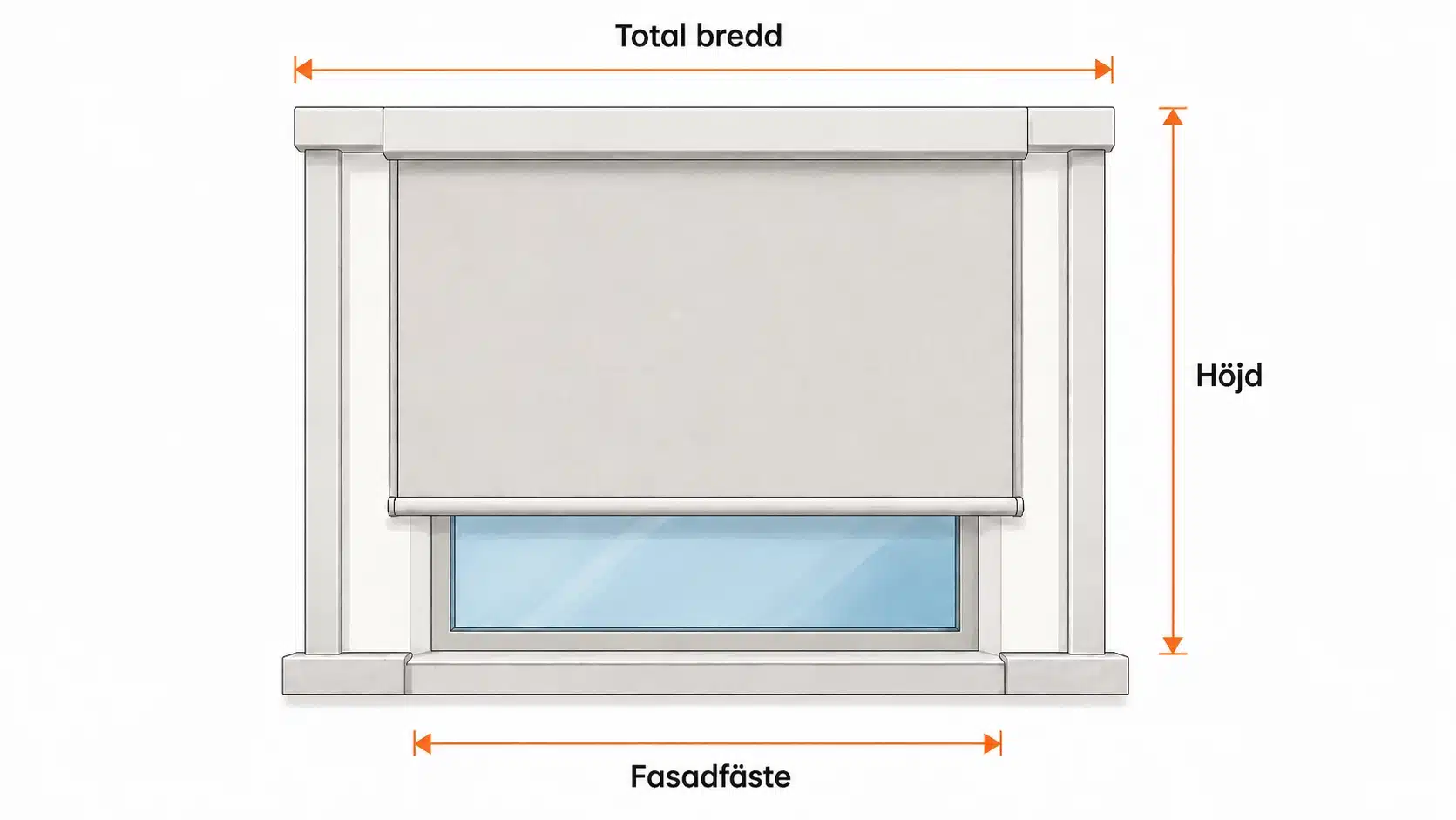
All measurements are given in millimetres (mm)
Make sure there is sufficient headroom for installing and extending the awning.
The wall or ceiling must be sturdy and suitable for fixing.
Check the material, such as concrete, wood, brick, or another type of façade.
Plan the position of the motor, wiring or manual crank handle, as applicable.
Watch out for downspouts, lights, balconies, or anything else that might be in the way.
Strong winds affect the choice of model and the awning's lifespan.
We're happy to help! Our experts can review your measurements and ensure that your awning fits perfectly. Contact us for personalised advice or schedule a free consultation.
Here you'll find answers to common questions about taking measurements for a patio awning or vertical awning.
For a patio awning, you’ll mainly need to measure the width, projection, and mounting height. For a vertical awning you’ll usually need to measure the total width and height, and check where awning can be mounted. It’s also a good idea to note the wall material, any obstacles, and whether you want a motorized or manual model winding handle.
Yes. For a patio awning, you mainly need to measure the width, projection, and mounting height, since awning extends out from the facade and is designed to provide shade over a patio, deck, or balcony. For a vertical awning, you should instead measure the total width and height and check the facade mounting, guide rails, and any potential obstacles. That’s why it’s important to start with the correct awning type before entering your measurements.
Measurements are normally given in millimetres when ordering an awning. This helps ensure an accurate order and reduces the risk of misunderstandings. Check every measurement before continuing.
No. Do not add to the measurements unless the instructions specifically say to do so. The awning will be made to the dimensions you provide, so measure the area where it will be installed or the area it needs to cover.
The projection is how far the deck awning extends from the wall when it is extended. A larger projection provides more shade further out on the deck or deck, while a smaller projection is better suited for areas where space is limited.
First check which material the awning will be fixed to, such as timber, brick, concrete or another façade material. The surface must be stable and suitable for fixing. If you are unsure, contact us before placing your order.
Take photos of the location, write down your measurements, and contact us before proceeding. That way, we can help you assess the width, height, projection, fixing, and any potential obstacles before you place your order.
Once you have checked your measurements, choose the type of awning that suits your space. Patio awnings provide shade over patios and balconies, while vertical awnings shade windows, balconies and façades.
Your basket will be emptied if you change country.