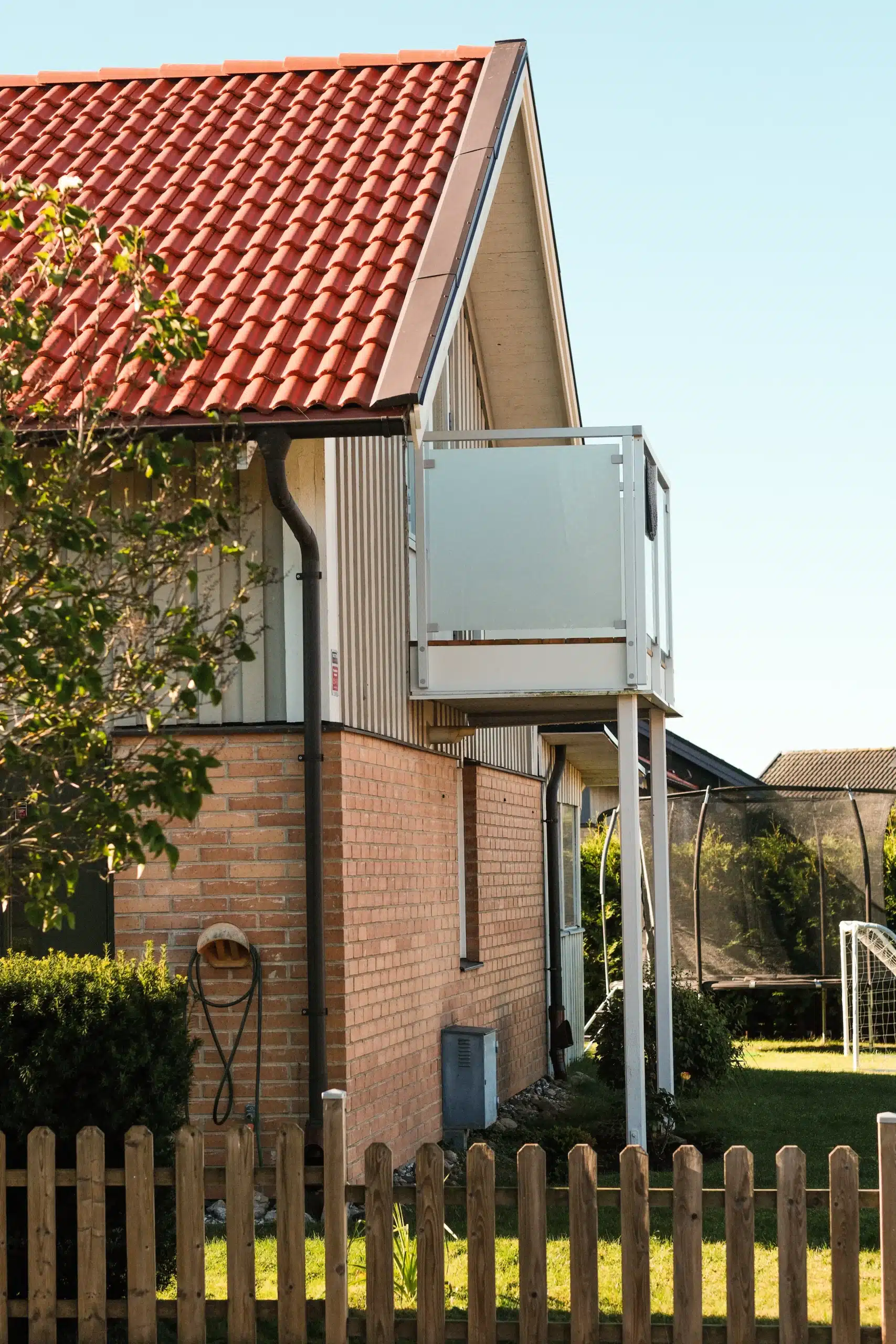
To choose the right balcony awning, select the model based on the sun’s direction and the available mounting options; choose the size based on the balcony’s width and depth; and select the mounting method based on the building’s structure and applicable regulations.
Space on a balcony is often limited, and fixing isn’t always something you can decide on your own. If you aren’t responsible for the facade or the balcony’s structure, you’ll need to check what’s allowed in terms of, for example, placement, colour, and fixing before you decide on the awning’s dimensions or design.
In this guide, we’ll go over what factors determine which solution is right for you, how to measure width and projection, what installation height is required, and what options are available if the awning must be installed without drilling.
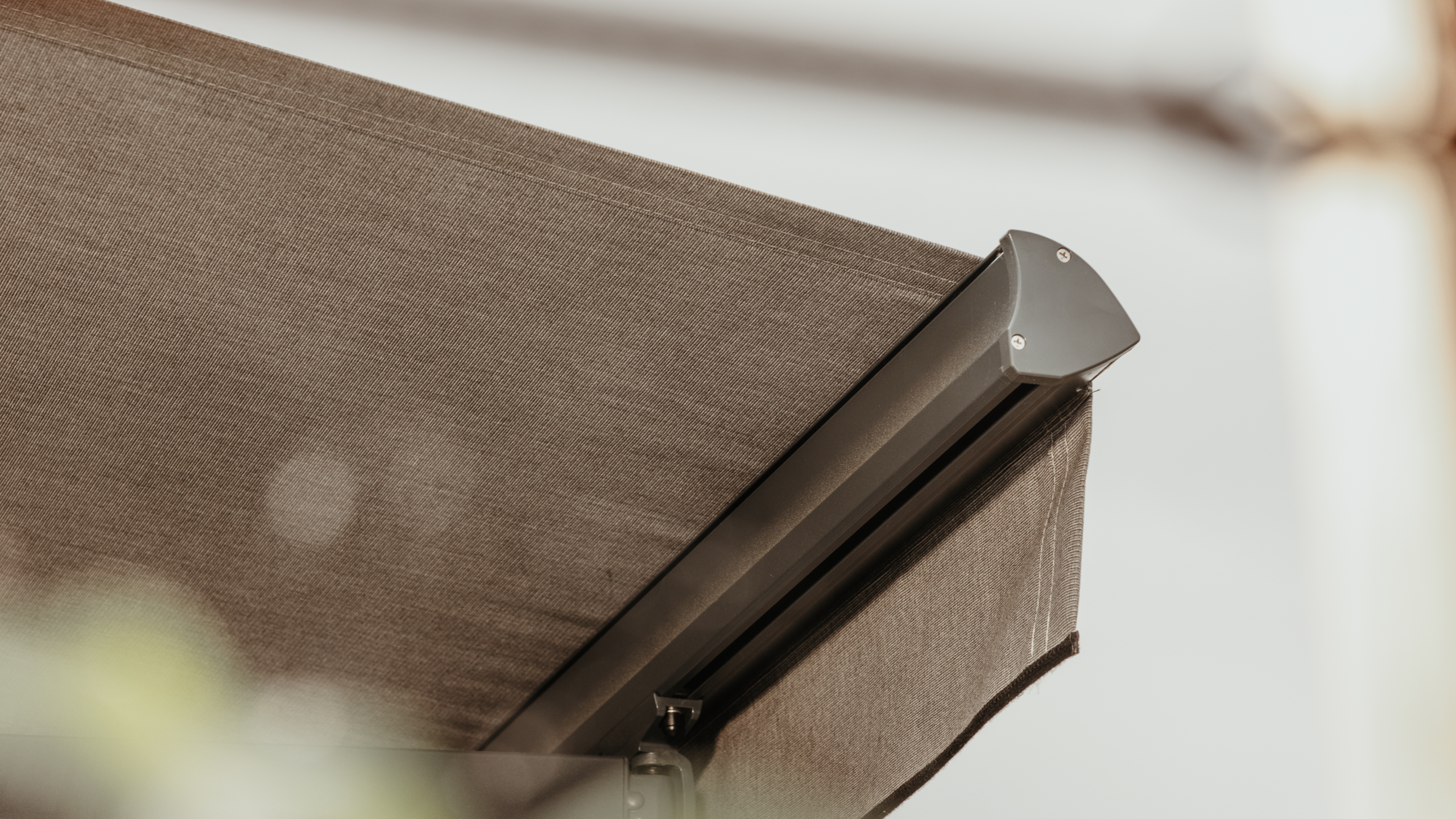
What determines which awning is suitable for a balcony?
Three factors determine which options will work: what you’re allowed to install, where the awning can be mounted, and how much space the balcony has. Once these are clarified, it becomes easier to choose the right size and design for an awning for your balcony.
What are you allowed to install?
If you are not responsible for the facade or the balcony’s construction, you need to check what is permitted before placing an order. The requirements may apply, for example, to fixing, the size of the awning, and which colours may be used.
Where can the awning be attached?
The balcony's construction determines whether wall mounting, ceiling mounting on the balcony above, or a solution that does not require drilling is possible. This, in turn, affects which models and sizes can be used.
How much space is there?
The width and depth of the balcony determine the dimensions of the awning. Above all, the depth determines how much projection is needed to shade the part of the balcony you use.
Once you know the regulations, fixing, and the available space, you can move on to comparing the awning's width, projection, and other options.
What do you need to check before installing an awning on your balcony?
If you are not responsible for the facade or balcony structure yourself, you need to check what is permitted before ordering awning. There may be requirements regarding colour and dimensions, where awning may be installed, and whether you are allowed to make alterations to the facade or the balcony above.
- Colour and Dimensions
- There may be requirements regarding which awning fabrics and colours may be used and what dimensions are permitted. Therefore, check the applicable guidelines before choosing the fabric, width, and drop.
- Fixing
- Wall mounting involves altering the building façade. If you are not responsible for the building, you must therefore verify that fixing is permitted before beginning the work. The same applies to mounting on the underside of the balcony above.
- Rules and permits
- Approval from the person responsible for the building does not replace any local regulations or permit requirements. Therefore, check what applies to the specific building and location before work begins.
What measurements do you need to take for an awning on the balcony?
Measure the balcony’s available width, depth, and height to the intended fixing . These three measurements determine how wide the awning can be, which projection is suitable, and whether there is enough space for the awning’s fixing and arms.
Do not rely on a general standard measurement when placing your order. The exact overall dimensions, mounting points, and range of motion of the selected awning model must always be verified against the actual measurements of the balcony.
| Measurements to take | What the measure determines | Check before ordering |
|---|---|---|
| Available width | How wide an awning can fit between the edges of the balcony and other obstacles. | The total width of the awning and where the brackets need to be placed. |
| Balcony depth | How far the awning needs to extend to shade the part of the balcony that is in use. | The awning's projection and how the extended awning functions in relation to the balcony's depth. |
| Mounting height | How much headroom is available under the awning when it is extended. | The model's fixing, arms, tilt, and the clearance under the awning. |
How high should the awning be installed?
Plan for about two metres of clear space below the arm bracket when awning is extended. The exact installation height depends on the awning’s design, angle, and how the brackets need to be positioned. Therefore, always check the installation dimensions for the model you choose.
How can an awning be installed on the balcony?
A balcony awning can be mounted on the wall, on the underside of the balcony above it, or using a solution that does not require drilling. Which mounting method works depends on the balcony’s construction, the available mounting surfaces, and what you are permitted to do.
- Wall mounting
- The awning is mounted on the exterior wall above the balcony or balcony door. This installation method requires a suitable mounting surface. If you are not responsible for the exterior wall, you must also verify that the modification is permitted before beginning the work.
- Ceiling mount
- The awning is mounted on the underside of the balcony above. This may be an option when wall mounting is not suitable, but the structure must be able to support fixing , and the installation must be permitted.
- No drilling required
- If you are not allowed to drill holes, a clamp-on solution or a freestanding structure may be an alternative. Which solutions work depends on the balcony’s design and the size of the awning, so always make sure that the mounting method is intended for the specific structure.
Should you choose a motor or a winding handle for the awning on the balcony?
Winding handle It’s often a good fit for a smaller balcony awning that’s easy to reach and used more sporadically. A motorised awning is a more convenient choice when awning the awning is wider, used frequently, or needs to be easy to open and close.
It's easy when the awning is smaller
A manual crank requires no electricity at the awning and works well when the sunshade is easy to reach and does not need to be extended or retracted many times during the day.
More convenient when the awning is used frequently
A motor makes it easier to operate a wider awning or a sunshade that is used frequently. Depending on the solution chosen, it can be controlled using, for example, a remote control or another compatible control system.
When is an awning suitable for the balcony—and when is another type of sunshade needed?
A retractable awning is best when you want to create shade over the balcony itself. If the sun is low on the side, the heat comes mainly through the glass, or the main concern is privacy, another sunshade might be a better fit.
| Your problem | What usually works best | Why |
|---|---|---|
| Sun from above | Retractable awning | The awning provides shade over the balcony and is ideal when the seating area primarily needs protection from the sun when it is higher in the sky. |
| Low sun from the side | Vertical sunshade | When the sun is low in the sky, light can enter under an extended awning. A more vertical shade can then block the sun more effectively. |
| Heat through glass | Shading close to the windows | If the heat comes mainly through the glass sections, the sunshade should be placed where the problem occurs, rather than over the entire balcony. |
| Overlooking | Vertical or shielding protection | A standard balcony awning primarily provides protection from above and is therefore not always the right solution when privacy is the top priority. |
If you want to compare more solutions, you can start by considering whether your needs primarily involve sunlight from above, low sunlight from the side, heat through the glass, or privacy.
What should you check before ordering a balcony awning?
Check the building's specifications, the balcony's dimensions, possible fixing, and any obstacles before choosing a model. That way, you'll know which options will actually work on the balcony before placing your order.
Go through these seven points
-
Check the rules and colours
If you are not responsible for the façade or balcony’s construction, check what is permitted before choosing the fabric, size, and installation method.
-
Measure the width of the balcony
Measure the available width, and then check the awning's overall dimensions and how much space the selected model requires for its mounting brackets.
-
Measure the clearance height
Measure from the balcony floor to the intended fixing and check that the awning can be extended with sufficient clearance below it.
-
Determine the awning projection you need
The depth of the balcony and the area you want to shade determine which projection is suitable. A greater projection isn't automatically better on a shallow balcony.
-
Determine where the awning can be fixed
Check whether wall mounting, ceiling mounting, or a solution that doesn't require drilling is possible on your specific balcony.
-
Check for obstacles around the awning
Check for downpipes, lights, window flashings, and other details that could affect the fixings or the movement of the awning.
-
Take a picture of the balcony
An overview photograph makes it easier to assess balcony ceilings, mounting surfaces, railings, and any obstacles if you need help choosing a solution.
Check the applicable rules, dimensions, projection, mounting height and fixing requirements before you place your order. That way, the awning can be selected based on the balcony’s actual conditions, rather than having to be adjusted afterward.
Next step
Which awning is right for your balcony?
It depends on the balcony's dimensions, possible fixing, and the regulations that apply to the building. Visit patio awnings if you already know the requirements, or contact customer service if you need help assessing which solution might be right for you.
What are some common questions about an awning on a balcony?
Here, we answer some more specific questions that may arise once the rules, dimensions, and basic installation methods have already been verified.
Can the awning be installed on the balcony above?
Yes, ceiling mounting on the underside of the balcony above can be an option when wall mounting is not feasible. First, check that the structure is suitable for the proposed fixings and that the installation is permitted.
Can downpipes or lights affect the installation?
Yes. Downpipes, lights, window flashings, and other features may be located where the awning brackets need to be placed or may get in the way when the awning is in use. Therefore, check the entire area around the intended installation site, not just the width of the balcony.
What should I do if the sun shines in beneath the awning?
Low morning or evening sun may shine in under an extended awning. If that is the main problem, a vertical or more sunshade fitted closer to the windows might be a better solution than simply increasing the awning’s size.
Are there any requirements regarding the colour of the awning?
Yes. If you are not responsible for the facade yourself, there may be requirements regarding which awning fabrics and colours may be used to ensure that the building has a uniform appearance. Therefore, check the applicable rules before choosing a fabric.
Is a greater awning projection always better on a balcony?
No. The projection needs to be adjusted to the depth of the balcony and the area you actually want to shade. On a shallow balcony, a larger projection may be unnecessary, so start by assessing the space and then check what dimensions the model you’ve chosen offers.
What should I photograph if I need help choosing an awning?
Take a wide-angle photo showing the wall, the balcony above, balcony balustrade, and the area where awning can be mounted. Also try to include downspouts, lights, and other details that might affect the installation.
Should I select awning before checking what's allowed?
No. First, check the requirements for, for example, colour, dimensions, and fixing. Then you can choose from the awnings options that work within those parameters, rather than having to change your selection later.