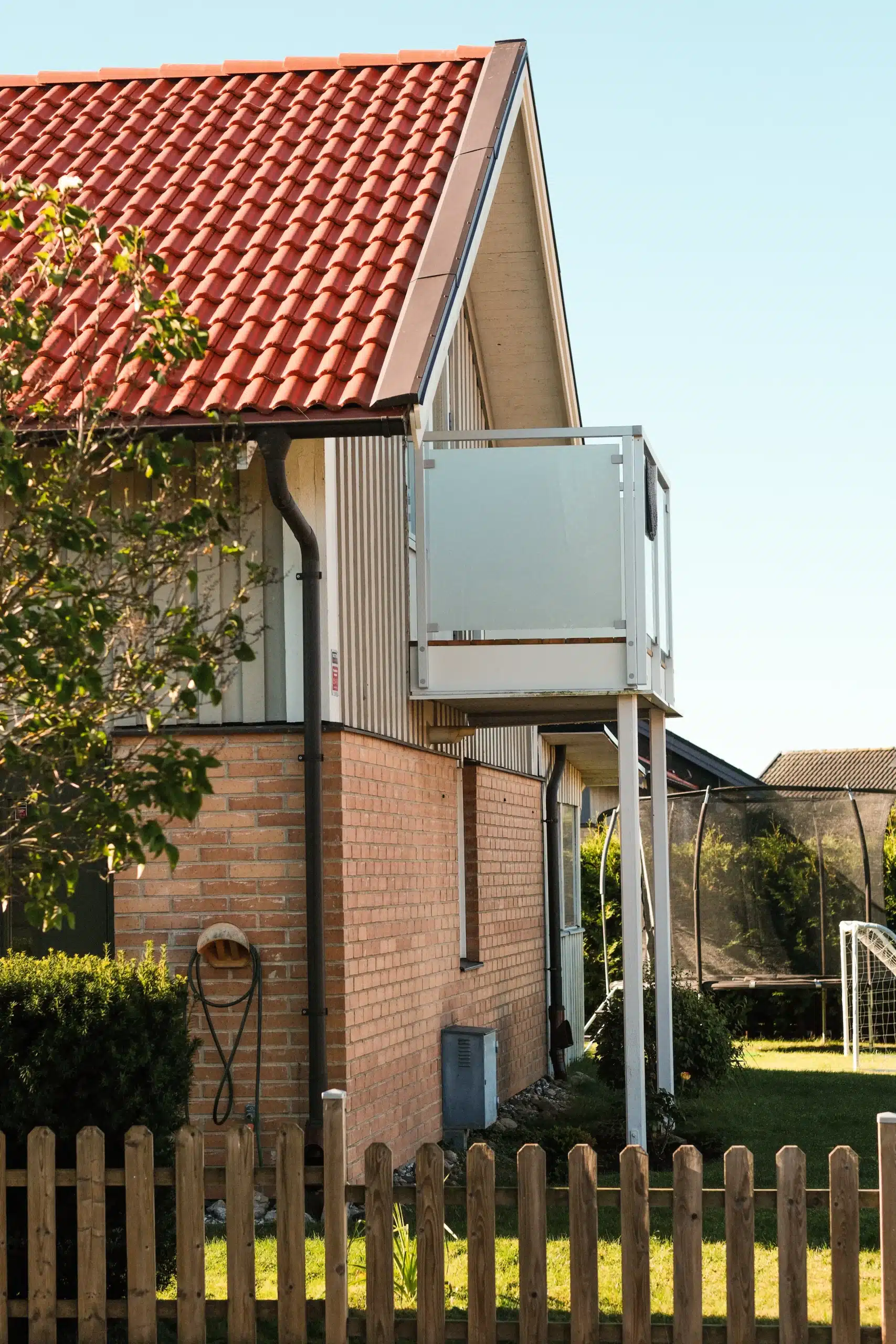
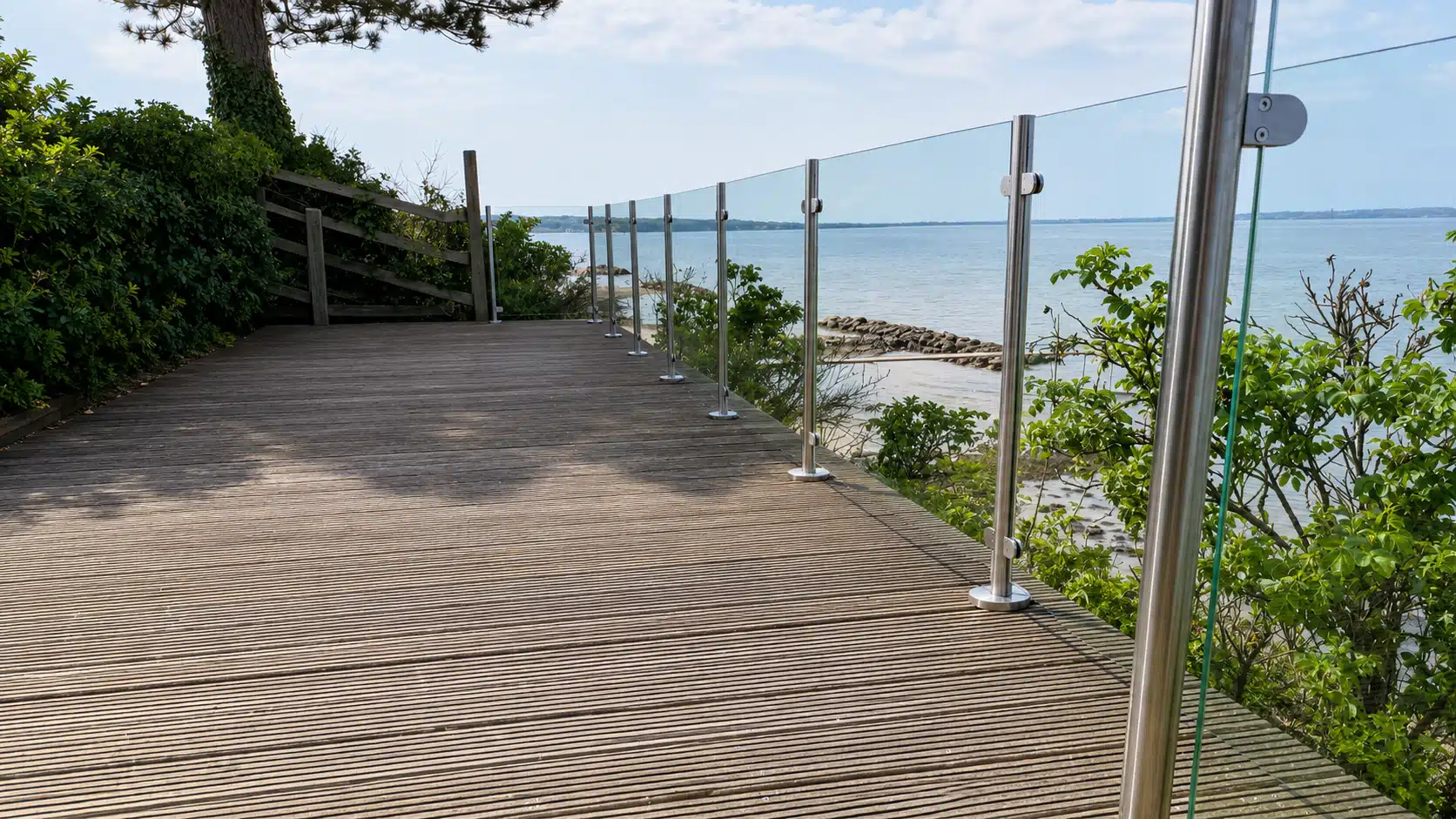
Glass railings are ideal when you want to create a protective railing without blocking out light, views, or the feeling of space. With the right type of glass and design, the railing can also be customised to address privacy, style, and how exposed the location is throughout the year.
Clear glass provides the most unobstructed view, while tinted or frosted glass can change both the appearance and the level of privacy. Where a balustrade also provides fall protection, the glass construction must be chosen for that function.
In this article, we’ll go over different types of glass, the difference between toughened and laminated glass, how glass performs outdoors year-round, and what is important when it comes to maintenance and choosing a frame.
Which glass type should you choose for a balustrade?
Choose clear glass when the view and transparency are most important, frosted glass when you want to improve privacy, and grey-tinted glass when you want to maintain transparency but give the railing a darker look. The exact amount of light transmission and degree of visibility depend on the type of glass.
When you compare our glass balustrades you'll see which glass options are available for each model.
| Type of glass | Transparency | Shielding | Suitable for |
|---|---|---|---|
| Clear glass | High transparency | Small | Ljus, utsikt och känslan av rymd är viktigast. |
| Grey-tinted glass | Clear views with a darker tint | Some reduction in visibility | You want to maintain the transparency but give the railing a darker look. |
| Frosted glass | Details are hidden | Larger | You want to improve privacy without blocking out the daylight. |
Clear glass offers the most unobstructed view
Clear glass is particularly suitable for decks, terraces and balconies where you want to preserve the view and let in as much daylight as possible.
Frosted glass provides more privacy
Frosted glass is suitable when you want to reduce views into an area from a neighbour or the street while still allowing daylight through.
What is the difference between laminated and toughened glass?
Toughened glass is strengthened by heat treatment and usually breaks into small fragments. Laminated glass contains an interlayer that helps hold the fragments together if it breaks. Toughened laminated glass combines these properties.
Toughened glass
Toughened glass is heat-treated to achieve greater strength than untreated glass. If it breaks, it shatters into many small pieces instead of large, sharp shards.
Laminated glass
Laminated glass consists of glass panes bonded with an interlayer. If the glass breaks, the interlayer helps hold fragments together.
Toughened laminated glass
Here, the higher strength of toughened glass is combined with the bonding properties of lamination. The type of glass structure required for a railing depends, however, on the overall design, including the glass’s dimensions, fixing, placement, and load.
How does balustrade glass perform in different weather conditions?
Glass withstands rain, moisture, and cold well, but a glass balustrade must always be evaluated as a complete structure. Temperature fluctuations, wind, snow, and environments near the coast or a pool primarily influence the requirements placed on the glass’s design, fixings, and frame.
| Stress | Effects on the glass | Things to Keep in Mind |
|---|---|---|
| Rain and moisture | Unlike timber, glass does not absorb moisture. | Water, lime, and dirt can leave deposits, causing the railing to need cleaning more often. |
| Frost and cold | Low temperatures alone do not normally cause the glass to degrade. | The edges of the glass, the fixings, and other parts of the railing must be suitable for outdoor use. |
| Temperature fluctuations | Uneven heating can cause thermal stress in the glass. | The risk is influenced by factors such as the type of glass, its dimensions, the edge conditions, and how the glass is exposed to sunlight and shade. |
| Wind and snow | These conditions primarily affect the loads on the balustrade structure. | Glass, posts, base channel and fixings must be designed together for the particular location. |
| Coastal and poolside environments | Salt and chlorine can leave deposits on the glass surface. | At the same time, the environment can place higher demands on metal components, fittings, and fixings. |
How do you look after a glass balustrade throughout the year?
Glass does not need to be painted, oiled, or sanded, but should be cleaned when dirt and deposits become visible. How often depends mainly on the location and how exposed the railing is to, for example, rain, salt, pollen, and splashes.
How to keep your glass balustrade clean
-
Clean with mild products
Use lukewarm water, a mild detergent, and a soft cloth or window scraper when the glass needs to be cleaned.
-
Avoid anything that might scratch it
Do not use abrasive cleaners, hard sponges, or metal tools that could scratch the glass or other parts of the railing.
-
Rinse off salt and chlorine
Remove salt, chlorine, and other dirt that has accumulated on the glass, fittings, or profiles, especially if the railing is located near the sea or a pool.
-
Gently remove snow and loose dirt
Use a soft brush and avoid hitting or scraping against the edges of the glass when removing snow or other loose dirt.
-
Check the fittings and fixings
Regularly check that visible fittings and fixings are properly secured, and follow the railing system’s installation and maintenance instructions.
Which frame should you choose for a glass balustrade?
Choose powder-coated aluminium for a light, understated appearance, stainless steel for a distinctive metallic finish, or a frameless base-channel system when you want the glass to dominate the design.
| Frame | Appearance | Care | Things to Keep in Mind |
|---|---|---|---|
| Powder-coated aluminium | Clean and modern | Minor routine maintenance | The finish and colour affect the overall look. Check which finishes are available for the selected railing model. |
| stainless steel | Distinct metallic character | Must be cleaned to maintain the surface | In coastal, pool, and other exposed environments, the choice of materials must be adapted to the surroundings and the specific balustrade system. |
| Frameless base-channel system | Glass plays the most prominent visual role | Minimises visible vertical elements | The base and fixing must be able to support the loads that are transmitted down through the base channel. |
Which glass balustrade is right for your patio?
Consider the view, privacy, location, and the look you want to create. On each product page, you can see the glass options and finishes available for that railing model.
What do you need to know about glass for balustrades?
The most important thing is to choose the type of glass based on the view and privacy, adapt the entire railing design to the site conditions, and clean the glass as needed. Here are brief answers to common questions about glass for railings.
What type of glass should I use if I want to keep the view?
Clear glass offers the most unobstructed view and is therefore a good choice when daylight, views and a sense of space matter most. Available glass types depend on the chosen balustrade system.
Can frosted glass improve privacy without blocking out the light?
Yes, frosted glass can conceal details and reduce transparency while still allowing daylight to pass through the glass. The amount of overlooking experienced depends, among other things, on the glass’s design, lighting conditions, and distance.
Can a glass balustrade stay outdoors year-round?
Glass is well-suited for outdoor use, but the entire railing structure must be adapted to the location. Wind, temperature fluctuations, coastal environments, pools, and other conditions can affect the requirements placed on the glass, frame, and fixings.
Can glass balustrades crack due to temperature differences?
Uneven heating can cause thermal stresses in the glass. This risk is influenced by factors such as the type of glass, the glass’s dimensions, the edge conditions, and how different parts of the glass surface are exposed to sunlight and shade.
How often does a glass balustrade need to be cleaned?
There is no set interval for all glass balustrades. Clean when dirt and deposits become visible, and more often if the railing is located near, for example, the ocean, a pool, traffic, or other environments where salt, splashes, and particles accumulate more quickly.
What should I consider when installing a glass balustrade near the sea or a pool?
Salt, chlorine, and other deposits can mean that both the glass and the other parts of the railing need to be cleaned more often. The environment can also place greater demands on fittings, profiles, fixings, and other metal components.
What should be assessed when a glass balustrade is designed to prevent falls?
The type of glass, its construction, dimensions and fixings must be evaluated together as part of the overall railing structure. Location, load, and the specific risk of falling also affect which requirements must be met.