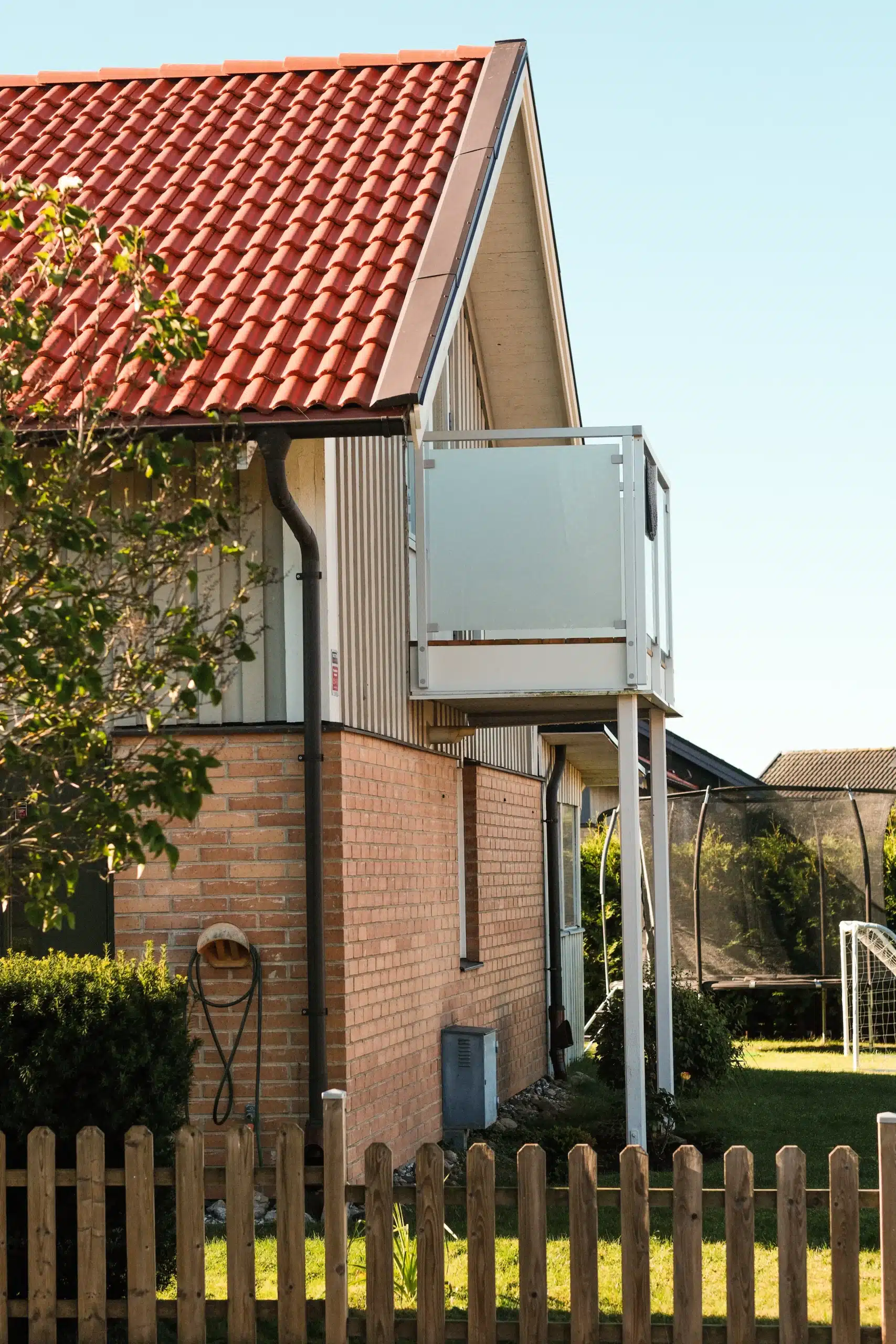
The top rail is the part of the balustrade you are most likely to come into contact with every day. It is where your hand rests, yet it is often chosen only after the rest of the balustrade has been decided.
The choice affects more than just the appearance. The material, profile, and dimensions determine how the balustrade feels to use, how easy it is to grip, and how well the finish complements the rest of the structure.
The most important thing is to first distinguish between a handrail – which should be easy to grip – and a top rail, which primarily serves to cap the top of the railing. After that, choosing the right material and profile becomes much easier.

What is the difference between a handrail and a top rail?
A handrail should be easy to grip and provide support when you walk. In this guide, we use the term handrail to describe this graspable feature. A “ top rail ,” on the other hand, caps the top of the balustrade and does not need to be designed so that a hand can wrap around it.
Must be able to be gripped
A handrail is designed to fit the hand. Its shape should be easy to grip, and its placement should allow you to use it for support while walking.
- Most important in
- Stairs and other changes in level
- Main function
- Support, grip and safety
Finishes the railing at the top
A top rail is the uppermost finish of a balustrade. It may be round, oval, flat or wide, and does not necessarily need to be shaped for a full hand grip.
- Common in
- Decks, balconies, and glass balustrades
- Main function
- Finishing detail, protection and appearance
What material is best suited for a top rail?
Wood is a good choice when the feel in your hand and the wood’s appearance are most important, while painted aluminium requires little ongoing maintenance, and acid-resistant stainless steel is better suited for more exposed environments. The material also affects how top rail it ages and how much maintenance it requires.
| Materials | Strength | Weakness | Fits |
|---|---|---|---|
| Oak and ash | A warm feel and a natural look | Requires surface treatment and maintenance | Indoors and in more sheltered locations |
| Jatoba | A durable hardwood better suited to exposed locations | A distinct reddish-brown hue that affects the overall look | Outdoors, where the wood should be visible |
| Painted aluminium | A little routine maintenance and many colour options | It can feel cold to the touch in the winter | Decks and modern balustrade designs |
| Acid-resistant stainless steel | Durable in harsh environments | Higher price and a colder feel in the hand | Coastal and more exposed locations |
| Pressure-treated pine | Affordable and easy to work with | May crack and warp over time | Simpler building projects and timber decks |
Base your decision on the weather and exposure
The more the railing is exposed to rain, wind, salt, and temperature fluctuations, the more important the material’s durability and maintenance requirements become. Wood requires more care over time, while painted aluminium and acid-resistant stainless steel are often chosen when maintenance needs to be kept to a minimum.
Grip and feel are more important
Indoors, the top rail is less exposed to the elements, which means that the feel in the hand and the interplay with the floor, stairs, and other materials can carry more weight. Wood provides a warmer feel, while metal offers a more austere look.
What profile and dimensions should a top rail or handrail have?
A handrail needs a profile that’s easy to grip, while a top rail can be round, oval, or flat, depending on how the railing will be used and what it will look like. In Balustradedesign’s current range, the dimensions vary between systems: round metal profiles measure about 42–42.4 millimeters, and wood profiles measure about 43–45 millimeters.
-
Round
- The round profile is best suited when the upper section is intended to serve as a handrail. Its shape allows you to wrap your hand around the profile and get a firm grip. The exact diameter depends on which railing or handrail system you choose.
-
Oval
- An oval profile provides a wider and softer surface for the hand to rest against. It is therefore well-suited for situations where the top rail is primarily intended to be comfortable to hold or lean against.
-
Flat with rounded edges
- A flat profile mainly finishes the top of a balustrade. It provides a broader surface to rest your arms on, but it cannot be gripped in the same way as a round handrail.
-
Wide, flat profile
- A wide, flat top rail gives a more substantial look and suits broader balustrade designs. On a slim balustrade, however, it may appear disproportionately heavy.
Which top rail is best suited for a decking balustrade?
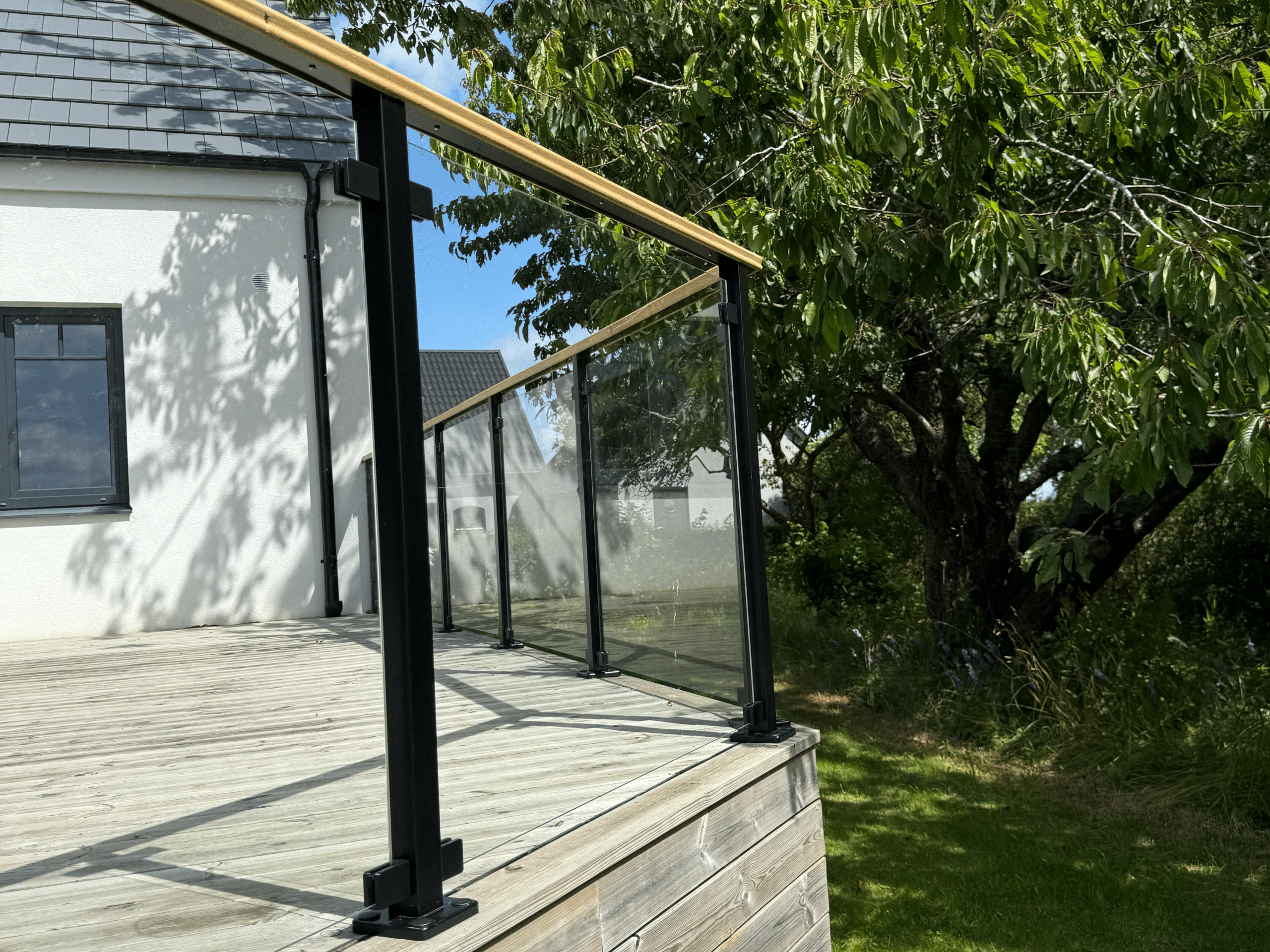
Wood is a good choice when you want to combine the railing with timber decking for a warmer feel, while painted aluminium is a better option when low maintenance is a priority. An aluminium frame with timber top rail can combine both features.
Creates a cohesive look
A wooden top rail connects the railing to the deck floor and provides a warmer grip. Oak and jatoba are particularly good choices when the wood will be exposed outdoors.
Some routine maintenance
Painted aluminium is a good fit for modern balconies and glass balustrades. The surface requires minimal ongoing maintenance and can be matched to the railing’s other profiles.
Aluminium frame with timber top rail
Here, you get the warmer feel of wood on the most visible surface, while the rest of the railing can be made of a material that’s easier to maintain.
How do you fit a top rail to a balustrade?
The installation method depends on the balustrade system. The top rail can be attached to the top of the post using fittings supplied with the system, or, with some frameless glass balustrades, directly along the top edge of the glass. Always plan joints, corners, and ends before beginning installation.
Fixing at the top of the post
On post-mounted railings, the top rail can be attached directly to the top of the post when the structure and components are designed for that solution.
The fittings determine how it is installed
Other balustrade systems , for example, use clamps, brackets, or threaded fixings. Always follow the installation instructions for the specific system.
The top rail can be mounted against the glass
On certain frameless glass systems, the top rail is installed directly along the top edge of the glass using the fixing or the spacer solution included with the system.
Joints
Order the top rail in the correct length whenever possible. If a joint is needed, the result is usually better if it is placed at a post or connected using a joint fitting designed for the system.
Corner
Corners can be joined using mitred joints or pre-made corner fittings, depending on the material and balustrade system. A custom-made fitting is often easier to make even than a mitre cut that is cut and fitted on site.
Conclusion
Plan how to finish open ends before installation. Where the system uses end caps or return bends, choose the correct finish so that the profile has a smooth edge without openings where anything could get caught.
How do you choose the right top rail for your balustrade?
Start by considering the function, and then check the profile, material, span, and mounting details. This will make it easier to choose a top rail that both fits the railing and works in the specific location.
Check these seven points
-
Decide whether you need a handrail or top rail
If the hand is to follow the profile for support – for example, on a staircase – you need to think in terms of a handrail. If the profile is primarily intended to cap the top of the railing, it is a top rail.
-
Make sure the profile can be gripped when necessary
A handrail needs a shape and size that the hand can wrap around. Always check the actual dimensions of the handrail or railing system you choose.
-
Match the material to the location
Wood provides a warmer feel and can complement the tone of a timber decking . Painted aluminium requires a little ongoing maintenance, while acid-resistant stainless steel is better suited for more exposed environments.
-
Check the span
Longer unsupported spans place greater demands on the profile's stiffness. The top rail should not bend noticeably between the attachment points.
-
Plan the joints before placing your order
If possible, avoid splices in the middle of an unobstructed section. The correct length or a splice placed at a post usually produces a cleaner result.
-
Decide how to handle the corners
Pre-made corner fittings often produce a neater result than a mitre cut that is cut and fitted on site, when such fittings are available for the system in question.
-
Plan the end finishes
Check how open ends should be terminated in the specific material and balustrade system, for example, with an end cap, a return bend, or another customised termination.
If the railing is to serve as a handrail, you also need to check the requirements for railings and handrails in the specific staircase or building. You can find up-to-date information from your local municipality or the relevant authority.
Not sure which profile is right for your railing?
Please let us know where the balustrade is installed and whether the top rail is intended to serve as a handrail for gripping or primarily as a top finish. This will make it easier to choose the right profile, material, and finish.
What are the most common questions about top rails and handrails?
The most common questions concern the profile's dimensions, choice of material, handrail, and how joints and ends should be handled.
Can a top rail also serve as a handrail?
Yes, if the profile is designed so that it is easy to grip and serves as support for the hand. A wide, flat top rail , on the other hand, is primarily a finishing rail along the top of the balustrade and does not function in the same way as a grip-friendly handrail.
What diameter should a handrail have?
There is no single standard diameter that applies to all handrails. Above all, the profile needs to be easy to grip, and the dimensions vary between different railing and handrail systems. Therefore, check the dimensions for the product and system you choose.
Is a handrail required on both sides of a staircase?
It depends on the staircase’s width, design, intended use, and the requirements that apply at the site. On some staircases, a handrail may provide sufficient support, while others require handrails on both sides. Therefore, check the current requirements for the staircase where the handrail is to be installed.
Which material is best suited for outdoor use?
It depends on how exposed the railing is. Painted aluminium requires some ongoing maintenance, while acid-resistant stainless steel is well-suited for more exposed and coastal environments. If you choose wood, the wood species, finish, and location must all be adapted to the level of weather exposure.
Can I combine wood and aluminium?
Yes, in the " balustrade system " series, which is designed for that combination. A timber top rail can then be combined with an aluminium frame when you want the warmer feel of wood at the top and, at the same time, a more low-maintenance material for the rest of the railing.
How do I avoid visible seams in top rail?
Order the top rail in the correct length whenever possible and plan the joints before installation. If a joint is necessary, the result is often neater when it is placed at a post or connected using a joint fitting designed for the system.
How should the ends of a top rail be finished?
The finish depends on the profile, material, and balustrade system. Some profiles use an end cap or return bend, while others have a different, customised finish. The goal is a finished edge without sharp edges or openings where clothing and other objects can get caught.