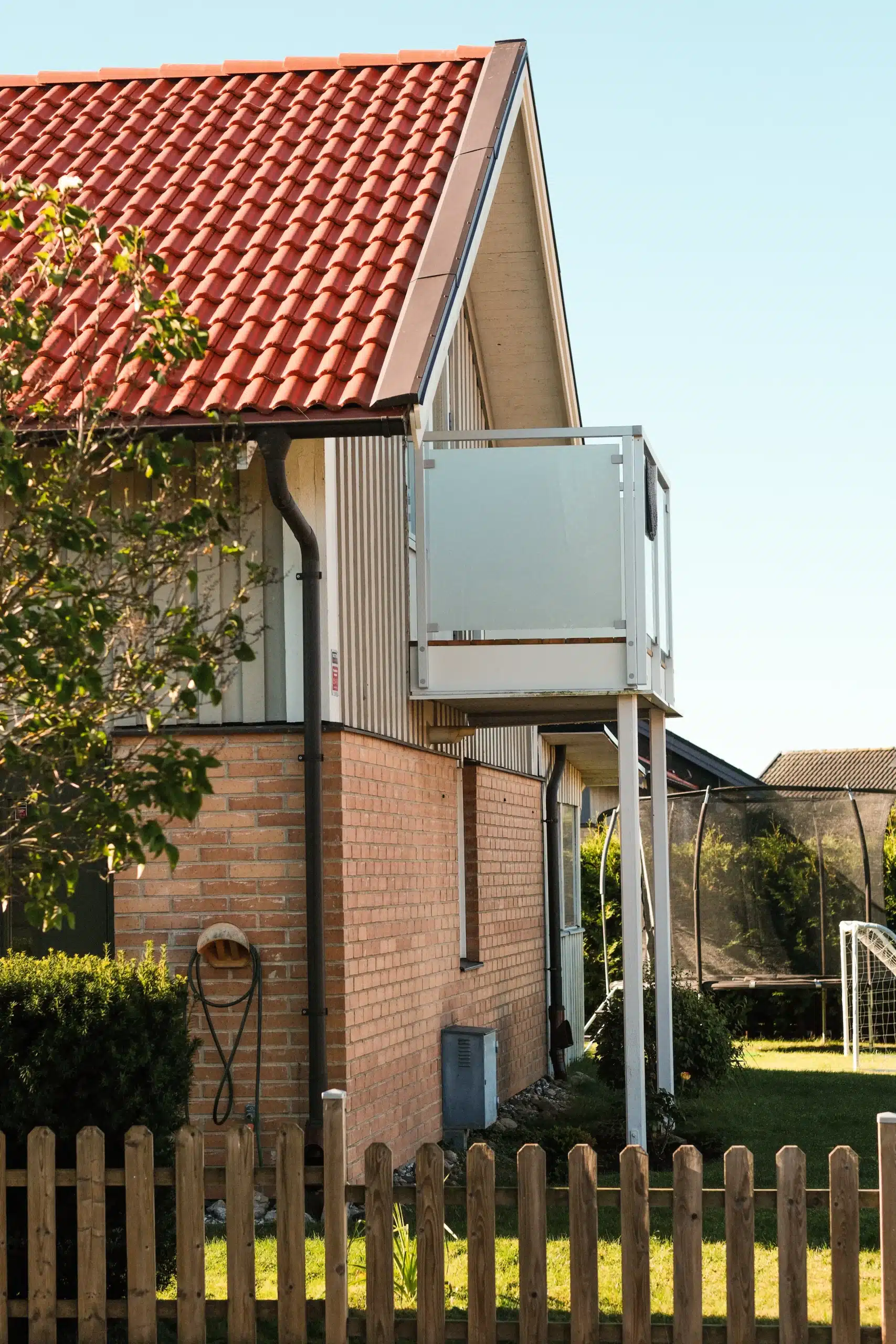
A well-positioned windbreak at the barbecue area provides shelter where people are sitting, without enclosing the grill and trapping the smoke. Start by identifying the wind direction that causes the most disturbance to the seating area, shield it from the exposed directions, and leave one side open so that air and smoke can move away from the area.
The placement is therefore just as important as the material. A windbreak that surrounds the entire barbecue area can provide plenty of shelter, but at the same time, it can impair airflow and cause smoke to linger where the guests are seated.
In this guide, we’ll walk you through how to position a windbreak, assess wind direction, choose materials and installation methods, and what you need to consider regarding barbecue placement and any regulations or permit requirements.
How do you position a windbreak so that the smoke can escape?
Protect the seating area from the wind that causes the most disruption, but avoid completely enclosing the grill area. An open side can allow air and smoke to escape, and which side should be open needs to be determined based on the wind direction at your specific location.
Smoke struggles to escape
If a windbreak surrounds the area from too many directions, air circulation may be reduced and the smoke may linger longer around the seating area.
Air and smoke will have a clearer path out
When a side is left open, a windbreak can still slow down the flow around the seating area without making the space feel as confined.
Where should the windbreak be placed at the barbecue area?
Start with the seating area and the wind direction that most affects the space. The windbreak should primarily provide shelter where people are seated, while the barbecue area needs to be open enough to allow for airflow and smoke to escape.
When planning a windbreak at a barbecue area, it’s therefore better to start with the placement of the furniture and the wind direction rather than trying to build a tight shelter around the grill itself.
| Location | Why it works |
|---|---|
| L-shape around the seating area | Kan bromsa vind från två håll och skapa en lugnare sittplats utan att hela grillområdet behöver byggas in. |
| One side is left open | Provides a clearer path for air and smoke to escape. Which side should be open depends on the wind direction at that location. |
| The seating area is placed in a sheltered spot | The screen is positioned where the wind is strongest: in the spot where guests sit still for long periods of time. |
| Height adjusted to the seating area | The windbreak needs to reduce the wind at the level where the draft is actually noticeable when people are sitting at the table. |
| Sufficient distance from the grill | The screen must be positioned in accordance with the barbecue manufacturer’s safety instructions and maintain a safe distance from heat, flames, and grease splatters. |
What material is best suited for the windbreak at the barbecue area?
There is no single material that is always the best. Glass provides a solid windbreak with a smooth surface, slats can allow more air to pass through, and wood offers a different look but requires more attention to surface treatment and cleaning. The safety distance from the grill should always be determined based on the grill’s instructions.
The choice of materials therefore comes after deciding on the location. Start by considering where the seating area needs to be sheltered, how air and smoke can escape from the area, and what safety distance the grill requires.
| Materials | Airflow | Cleaning | Things to keep in mind when grilling |
|---|---|---|---|
| Glass | A sealed glass surface effectively blocks the wind but does not allow air to pass through the surface itself. | The smooth surface is easy to clean when pollen, cooking fumes, or grease splashes need to be wiped away. | Position the screen according to the grill's safety instructions and avoid unnecessary exposure to intense heat or flames. |
| Aluminium slats | The gaps between slats can allow some air to pass through while slowing down the wind. | Multiple slats and gaps create more surfaces to clean than a smooth, continuous cover. | Even an aluminium windbreak must be placed at the safety distance specified for the grill in question. |
| Wood | The airflow depends on whether the structure is solid or has gaps between the boards or slats. | How easily grease and other stains can be cleaned depends on factors such as the type of wood and the surface finish. | Wood is flammable, which makes it especially important to follow the grill's specified distance from flammable materials. |
Ska vindskyddet vara fast eller fristående?
Permanent installation is appropriate when the location is fixed and the surface is suitable for a permanent fixing. A freestanding windbreak may be an option when you need to be able to change the location, but in that case, the stability must be adapted to the size of the shelter and the wind conditions at the site.
Permanent installation
A permanent windbreak may be appropriate when the location of the grill area has already been determined and there is a surface suitable for the fixing required by the system. The fixing must comply with the windbreak’s assembly instructions and the site’s conditions.
Standalone
A freestanding windbreak can be handy if you’re still figuring out where it works best or want to be able to change its location. How to ensure stability depends on the design, the size of the shelter, and how exposed the location is to the wind.
A windbreak catches the wind and needs to remain stable even when the load increases. Therefore, assess the entire structure and the site's exposure rather than relying on a general size specification for, say, the foot or base.
Do you need to check regulations or permits for a windbreak?
Yes, that may be necessary. The applicable rules or permitting requirements depend, among other things, on the design of windbreak, its size, and its location.
Requirements may therefore vary depending on the design and location. Check the applicable requirements before you build or order a permanent windbreak.
How is the structure designed?
How a windbreak is assessed can be influenced by factors such as height, length, density, function, and the permanence of the structure. The design is therefore important when determining which requirements may apply.
Check the height and distance
Regulations may specify requirements regarding, for example, the height of the structure and its distance from buildings, property lines, or other parts of the property. Therefore, do not assume that the same dimensions apply everywhere.
Special requirements may apply
The location of the building or property may affect what is permitted. For example, there may be specific requirements for certain areas, buildings, or locations.
Regulations and any permit requirements may vary depending on where the structure will be located. Therefore, always check what requirements apply at the specific location before you build or place an order.
What should you check before building a windbreak at a barbecue area?
Start by considering the seating area and wind conditions. Then check how air and smoke can escape from the area, the barbecue’s safety clearance, materials, assembly, and any regulations or permit requirements that may apply to the structure.
Plan your barbecue area before deciding on a solution
-
Start with the seating area
First, place the table and chairs where they will actually be used. The seating area, in particular, needs shelter, so let it determine where a windbreak is needed.
-
Check the wind conditions at the actual location
Observe the wind direction on several occasions, preferably in various weather conditions. Houses, hedges, fences, and other structures can deflect the wind in ways that differ from the general direction in the area.
-
Leave a path for air and smoke
Avoid completely enclosing the barbecue area. An open side can help air and smoke escape, but which side should be open depends on the direction of the wind.
-
Check the barbecue's safety distance
Read the grill's manual and follow the manufacturer's instructions regarding distance, heat, and flammable materials. Do not assume there is a single standard measurement for all grills.
-
Choose materials based on the location
Compare glass, slats, and other materials based on how much wind they block, how well air can pass through them, and how easy the surface is to clean. The choice of material should not replace checking the barbecue’s safety distance.
-
Decide whether to use a fixed or freestanding installation
Permanent installation may be appropriate when the location is fixed and the foundation is suitable for fixing. A freestanding windbreak, on the other hand, must have a level of stability that is adapted to the structure and the wind loads at the site.
-
Check the regulations and any permit requirements
The applicable requirements may depend on the structure’s design, size, and location. Therefore, check the regulations for the specific location before you build or order a permanent windbreak.
When seating, wind, airflow, safety distances, and installation are carefully considered, it becomes easier to choose a windbreak that creates a sheltered space without making the grill area feel cramped.
Do you need help choosing a windbreak for your barbecue area?
Compare our windbreaks or contact customer service if you would like help finding a solution that suits the conditions at your location.
What else should you know about windbreaks at a barbecue area?
Once the placement, safety distance, and materials have been carefully considered, questions often remain about how dense the protection needs to be, what happens when the wind changes direction, and how to maintain the windbreak after use.
Does a windbreak need to be completely sealed to provide good shelter?
No. A solid shelter blocks a lot of wind, but even slats or other partially open structures can provide shelter. At a barbecue area, it’s also important not to enclose the area so much that air and smoke have difficulty leaving the site.
What do you do if the wind frequently changes direction at the barbecue area?
Look for recurring wind directions and prioritise protection where the wind most disrupts the seating area. If conditions vary greatly, it may be better to avoid a completely enclosed solution and allow for air to circulate.
How can you tell if the windbreak is in the wrong place?
If there is still a noticeable draft where guests are seated, or if smoke often gathers around the seating area, the layout needs to be reviewed. Assess both where the wind is coming from and where the air can exit the barbecue area.
Can a windbreak also provide privacy?
Yes, depending on the material and density, the same design can both provide shelter and reduce overlooking. Keep in mind, however, that a denser solution also affects airflow, which is especially important near a barbecue area.
How do you clean a windbreak after a barbecue?
Remove grease splatters and other dirt using a method that is suitable for the windbreak’s material and finish. The closer the windbreak is to the grill and the more frequently the area is used, the more important it is to check the surface regularly.
Can you change the placement of the windbreak after the grill area is set up?
It depends on the design. A freestanding shelter can offer greater flexibility, while a permanently mounted windbreak is secured by permanent fixings. Therefore, it’s wise to test the seating area’s placement and assess the wind conditions before deciding on a permanent location.