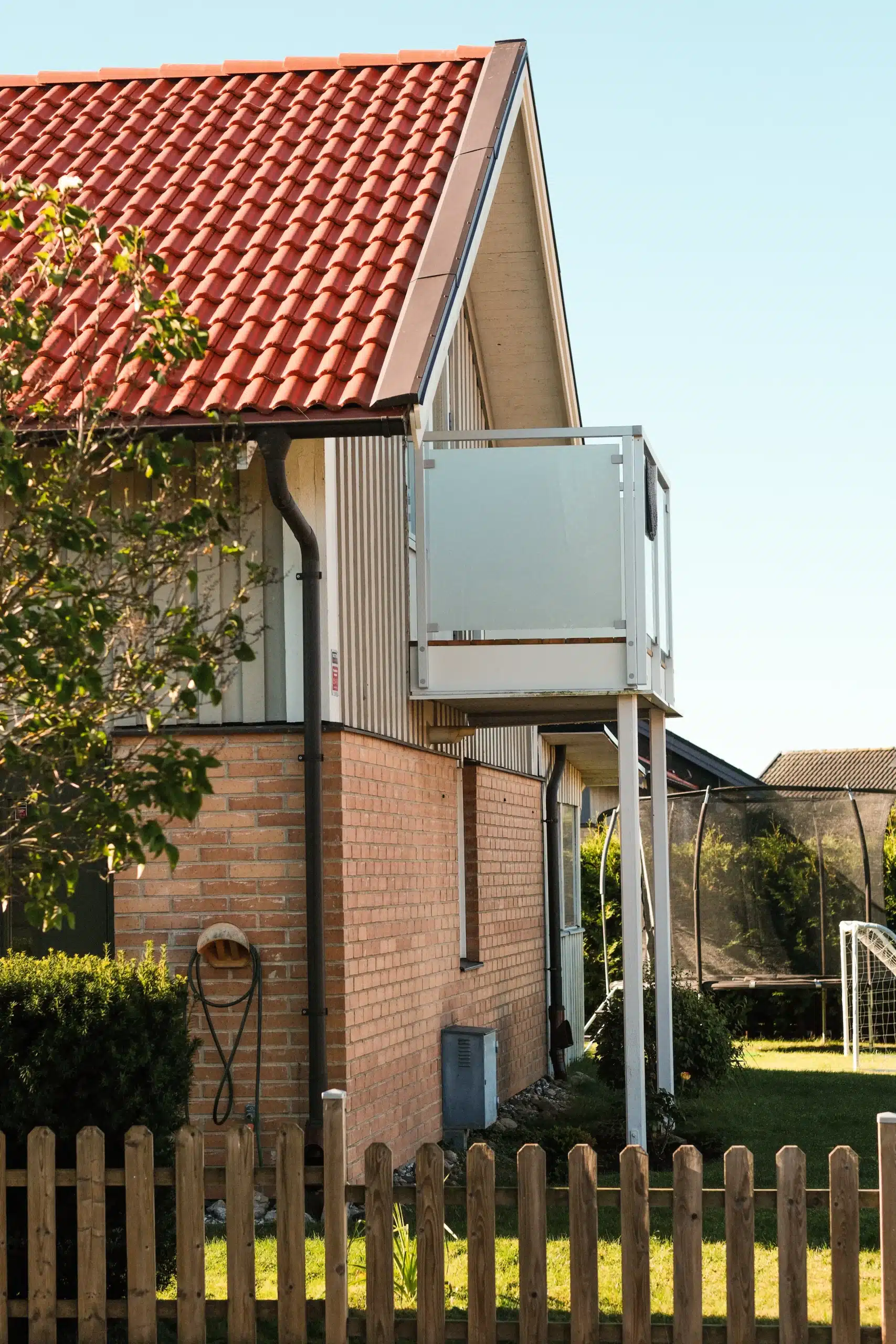
Choose a fence when you mainly need to define the boundaries of an area, windbreak when wind is the problem, and a privacy screen when you want to create more privacy. The solutions may look similar, but their function should determine which one you choose.
If you want to block the wind, the structure needs to be able to withstand it. If you want to reduce overlooking, the placement, height, and density are the key factors. If, on the other hand, you need to mark a property boundary or keep children and animals within a certain area, what you’re looking for above all is a boundary.
In this guide, we’ll go over the differences between fence, windbreak, and privacy screen —when the same solution can serve multiple purposes and when you need to consider railings, pool covers, or building permits instead. The goal is for you to be able to choose a solution based on the actual needs of the location.
When should you choose fence, windbreak, or privacy screen?
Choose a windbreak if wind is the problem, a privacy screen if you want to reduce visibility, and a fence if your main goal is to define the boundaries of an area. So, start by determining what needs to be addressed at the site before choosing the design and materials.
If you have a pool or a drop height, you also need to take safety requirements into account. In that case, it’s not enough to choose between fence, windbreak, and privacy screen based solely on functionality.
| Your needs | Choose based on |
|---|---|
| It's windy on the patio | Windbreak |
| neighbours or passersby look in | Privacy Protection |
| Tomtgränsen behöver markeras | Fence |
| Children or pets need to remain within a defined area | Fence |
| There is a risk of injury from a fall | Balustrade or other fall protection |
| There is a permanent swimming pool | Drowning prevention |
What is the difference between fence, windbreak, and privacy screen?
The difference lies primarily in their function. A fence is mainly used to define an area, a windbreak to reduce wind, and privacy screen to provide more privacy. The same design can sometimes address multiple needs, but the main issue should guide the choice.
A fence is therefore best suited when a boundary needs to be marked, while windbreak are designed to provide more shelter. With privacy screen, you prioritize reducing visibility from neighbours, passersby, or nearby buildings.
| Property | Fence | Windbreak | Privacy Protection |
|---|---|---|---|
| Main function | Defines an area or marks a boundary | Reduces wind and provides more shelter | Reduces overlooking and provides privacy |
| Best suited for when | The property boundary needs to be made clear, or children and animals must be kept within a certain area | The wind is a nuisance on the patio or in the seating area, which needs to be better sheltered | neighbours or passersby look in from a specific direction |
| Wind | An open fence lets in a lot of wind | The design is intended to create a quieter area on the sheltered side | Wind protection depends on how dense the structure is |
| Overlooking | Depends on the height, density and design | Clear glass preserves the view but offers limited privacy | Frosted glass, slats or an outdoor screen can improve privacy |
| Location | Often placed where a boundary or area needs to be marked | Place it where the wind is strongest on the patio and causes the most disruption | Placed where overlooking occurs |
| Important points to consider | A completely enclosed fence may behave differently in the wind than an open fence | The height, direction, and whether the screen extends around a corner affect how much shelter from the wind you get | It is rarely necessary to screen off the entire outdoor space if the view comes from a limited direction |
Is it possible to combine fence, windbreak, and privacy screen?
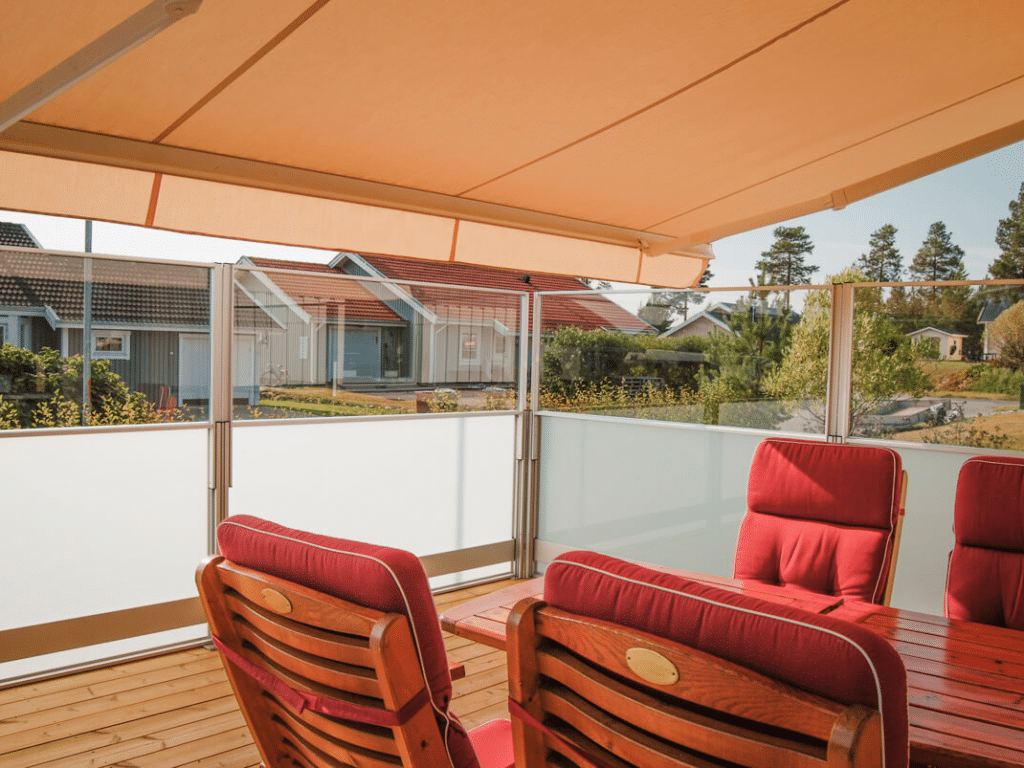
Yes. Fence, windbreak, and privacy screen can be combined in the same outdoor space when different areas have different needs. For example, you can use clear glass where you want to preserve the view, frosted glass or slats to block the view from the outside, and a design that offers more wind protection where the wind is strongest.
This means you don't have to choose a single solution around the entire area. Instead, assess each side based on what's most important right there: wind, privacy, views or defining a boundary.
A single solution can also serve multiple purposes. Frosted glass For example, it can both improve privacy and provide shelter, while a denser slatted fence can define the space and at the same time block out parts of the surroundings.
Windbreak
Place the screen where the wind is strongest and where you want to create a more sheltered seating area.
Frosted glass or slats
Skärma av den sida där grannar eller förbipasserande faktiskt har insyn.
Clear glass
Maintain an unobstructed view where the view is important and you don't need to improve privacy.
Fence or slatted fence
Use a clearer boundary where the property boundary or the outer edge of the patio itself needs to be marked.
What safety rules apply around pools and where there is a fall risk?
Around a pool, safety measures must be designed to reduce the risk of drowning and prevent young children from reaching the water. If there is also a drop height where a fall could pose a risk of injury, fall protection must also be assessed. Specific requirements depend on the site’s conditions and the regulations that apply there.
A suitable pool barrier should help prevent young children from getting past
Pool safety measures must be designed with a focus on reducing the risk of drowning and preventing young children from reaching the water. The design requirements depend on the site’s conditions and current regulations.
There is no single height measurement or design that can be used as a general rule. Therefore, check the requirements for height, design, and function at the location of the pool.
In that case, you need to consider fall protection
Balconies, rooftop terraces, and other outdoor areas where a fall could pose a risk of injury may require fall protection. The applicable requirements depend on the specific conditions of the location and local regulations.
Determine the height and design of the guardrail based on how the area is used, fall height and the safety requirements that apply where the structure will be used.
Always check the safety requirements that apply to pool covers and fall protection where the structure will be used.
Do fence, windbreak, or privacy screen require a permit?
Regulations and any permitting requirements for fence, windbreak, and privacy screen may vary depending on where the structure is located and how it is designed. Height, density, function, location, and impact on the surrounding area can all be factors.
More transparent and airy
An open- fence, or a more transparent boundary, often affects the site in a different way than a tall, dense structure. However, the applicable regulations must be checked for the specific site.
More secluded and enclosed
A taller or denser windbreak or privacy screen may be subject to different requirements than an open boundary. The assessment may be influenced by factors such as height, density, function, location, and how the structure affects its surroundings.
Height, density, and placement need to be evaluated together
Regulations and any permit requirements may vary depending on where the structure will be located. Therefore, always check what requirements apply at the specific location before you build or place an order.
Local conditions may have an impact
A location near a property line, road, railroad, or other structure may affect which rules or permit requirements apply. Specific zoning regulations or local requirements may also be relevant. Therefore, the specific location must always be verified.
What should you check before choosing fence, windbreak, or privacy screen?
First, determine what need you are trying to address, where the wind or overlooking is coming from, and whether the location has any specific safety requirements or permit requirements. Then measure the actual area before deciding which solution is best suited.
Check these seven points
-
What problem do you need to solve?
Is it mainly the wind, lack of privacy, or the need for a clear boundary? Start there, not with which product you think looks best.
-
Where does the wind comes from or where you are overlooked?
Sit where you’ll actually be spending time and look around. People can often see in from a specific direction, height, or a particular window, while the wind may hit the patio from a completely different direction.
-
Is there a a risk of falling?
If a fall from the deck, veranda, or terrace could pose a risk of injury, you need to assess fall protection measures. In that case, a standard fence is not automatically the right solution.
-
Is there a pool?
The safety barriers around a pool must be designed to reduce the risk of drowning and prevent young children from reaching the water. If the pool is located on an elevated surface, protection against falls may also need to be assessed. Check which safety requirements apply at the site.
-
Do all sides need the same solution?
Often not. Clear glass is suitable where the view needs to be preserved, whilst frosted glass or slats can be used to prevent people looking in from outside, and windbreak where the wind is strongest.
-
Do you need to check regulations or permits?
Height, density, function, and location can affect which regulations or permit requirements apply. Therefore, check what applies at the specific location before you build or place an order.
-
Have you measured the actual location?
Measure each side where the screen will be installed and check the corners, level differences, openings, and where posts or fixings can be placed before you order.
By now, you should know what problem needs to be solved, which sides need protection, whether safety requirements or permits need to be checked, and what specifications you have to work with. Then, choosing a product becomes the last step, not the first.
Which solution is best for your patio?
Once you know whether you need a windbreak, privacy screen, or a boundary-defining fence, or a combination of these, you can compare the options based on your specific location and dimensions.
What do you need to know before choosing fence, windbreak, or privacy screen?
The most common questions concern the differences between the solutions, pool safety and the height of fall, regulations and any required permits, as well as where the safety barrier should be placed. Here are brief answers to the most important questions.
What is the difference between a windbreak and a privacy screen?
A windbreak is designed to reduce wind, while privacy screen primarily improves privacy. Frosted glass can combine both functions.
Can a fence serve as a windbreak?
Partially. An open fence allows more wind to pass through, while a more dense design can provide more shelter. For a clear windbreak, the placement and design should be adapted to the wind direction.
What safety requirements apply to pool safety measures?
Pool safety barriers need to be designed to reduce the risk of drowning and prevent young children from reaching the water. Requirements regarding height, design, and function may depend on the site’s specific conditions and the regulations in effect there.
When do you need a railing instead of a fence?
When a fall could pose a risk of personal injury, the structure must be designed to provide protection against falls. In such cases, it is not enough to choose a solution intended solely for containment.
Do fence, windbreak, or privacy screen require a permit?
It depends on the design of the structure and where it is located. Height, density, function, location, and local conditions can affect which regulations or permitting requirements apply. Therefore, check what applies at the specific location before you begin construction.
Do you have to choose the same solution for the entire patio?
No. Different sides can address different needs; for example, clear glass for the view, frosted glass to prevent people looking in, and a windbreak where the wind is strongest.
How tall does a privacy screen need to be?
It depends on where people can overlook the space from. Assess the line of sight from the spot where you are sitting or standing, and choose a height based on the actual view. At the same time, check which rules or permit requirements apply at that location.