

Choose glass balustrade if you want to preserve the view and natural light and keep maintenance to a minimum. Choose a wooden railing if you prefer a warmer, more traditional look, want to be able to customise the railing on-site, and are willing to perform regular maintenance.
So there is no single material that is always the best. The choice depends on the view and light at the location, the character of the house, how much maintenance you want to put in over time, and how the railing will be built and installed.
In this article, we compare glass balustrade and timber railings based on factors such as maintenance, lifespan, cost, appearance, and intended use, so that you can decide which option is best suited for your patio, balcony, or outdoor space.
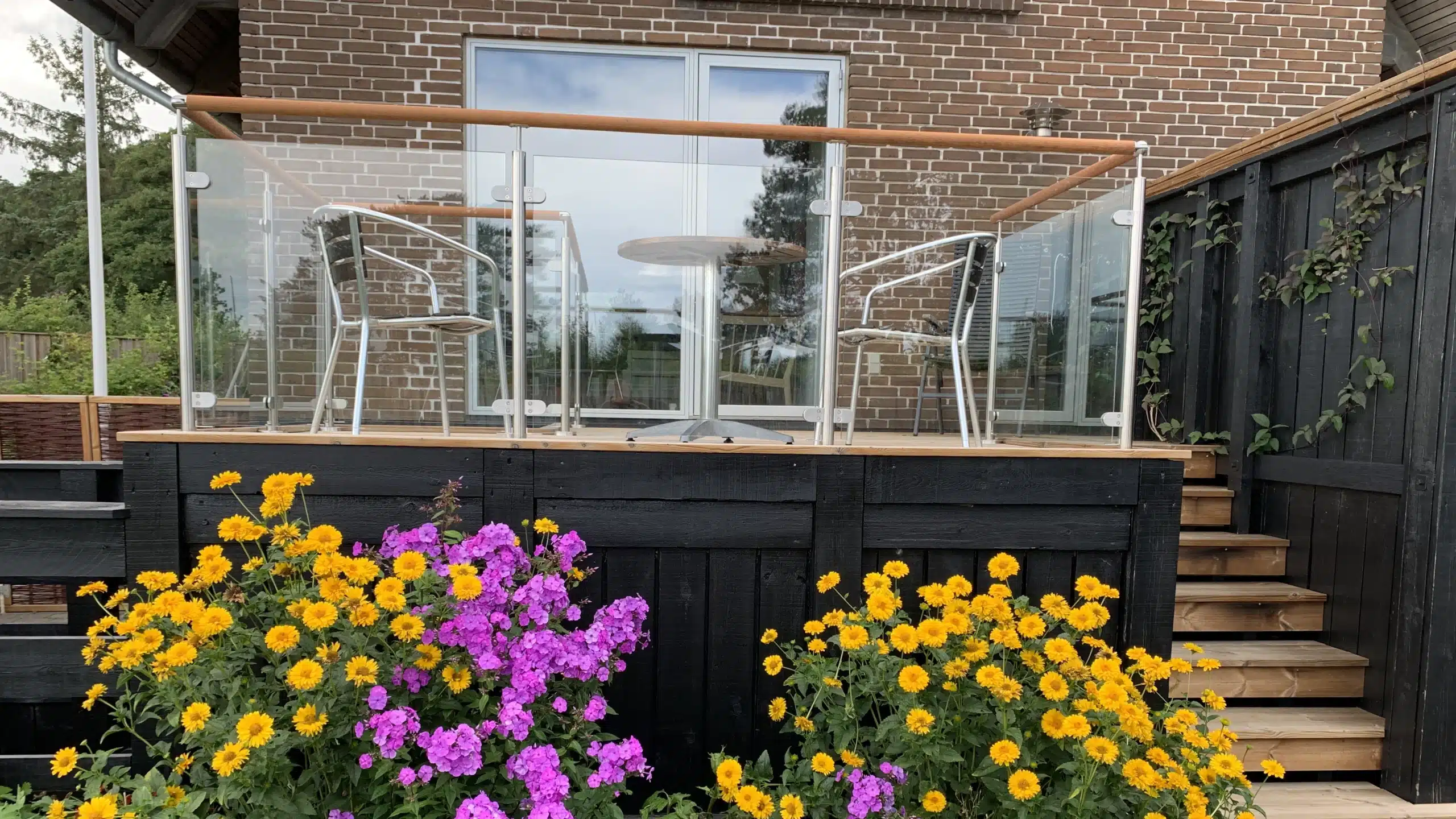
What is the practical difference between glass and wood?
Glass railings are best when you want to preserve the view and let in light while keeping ongoing maintenance to a minimum, whereas wooden railings are a better choice when you prioritize a warm, traditional look and greater flexibility to customise the design on-site.
On a small patio or balcony, the difference is particularly noticeable: a glass balustrade allows the eye to continue through the railing, while wood provides more visual privacy and often blends more naturally into older or green surroundings.
| Property | Glass balustrade | Timber railing |
|---|---|---|
| View | Unobstructed view through the railing | More obstructed by bars and the top rail |
| Light | Lets light through | Provides more screening |
| Maintenance | Clean as needed | Periodic oiling or painting |
| Service life | Long service life without surface treatment | Varies depending on the type of wood, construction, and maintenance |
| Appearance | Modern and visually light | Warm and traditional |
| Privacy Protection | With frosted or tinted glass | Depends on the spacing between the slats and the design |
| Winter vibes | May appear visually cooler | Often creates a warmer visual look |
| Purchase price | Usually higher | Usually lower |
How much do glass balustrade and wooden railings cost over time?
Timber railings often have a lower purchase price, while glass balustrade typically require less ongoing maintenance. The difference is therefore smaller when you factor in the entire period during which the railing will be used, rather than just the cost at the time of purchase.
For a fair comparison, you need to weigh the purchase price, ongoing maintenance, and expected lifespan. A railing that’s inexpensive at the time of purchase may not necessarily be the option that costs the least or requires the least work over time.
Three factors affect the total cost
Purchase price
Timber railings often have a lower purchase price than glass balustrade. For glass, a larger portion of the cost therefore comes from the purchase itself.
Maintenance
Wood requires periodic oiling or painting, depending on the material, surface treatment, and exposure. Glass, on the other hand, needs to be cleaned as needed but does not require any corresponding surface treatment.
Service life and possible replacement
The lifespan of a timber railing is affected by the type of wood, the design, moisture, and how well it is maintained. Therefore, the need for a future replacement must also be taken into account when comparing options over the long term.
When is a wooden railing better than a glass balustrade?
Wooden railings are often better than glass balustrade when the character of the house, the surroundings, or the ability to build and customise the railing yourself take precedence over an unobstructed view and low maintenance requirements.
- Older houses that have retained their original character
- On an older house, cottage, or building with a distinct traditional character, wood may blend in better with the façade and the house’s other details than a modern glass balustrade.
- Low deck with no view
- If the railing faces a hedge, wall, or other nearby boundary, there is less of a view to preserve. In that case, the glass’s transparency is not as important.
- Woodland plot and green surroundings
- Wood can blend naturally in with the vegetation, trees, and other timber features on the property, making it a good choice when you want the railing to become part of the surroundings.
- You want to build and customise it yourself
- Wood can be cut, adjusted, and customised on site using standard tools. Custom-sized glass is manufactured to the specified dimensions and cannot be cut on site afterward.
- You are prepared to carry out regular maintenance
- A timber railing typically requires maintenance, such as cleaning, oiling, or painting, depending on the material and finish. If that kind of work fits with how you want to maintain your home, the maintenance doesn't have to be a major obstacle.
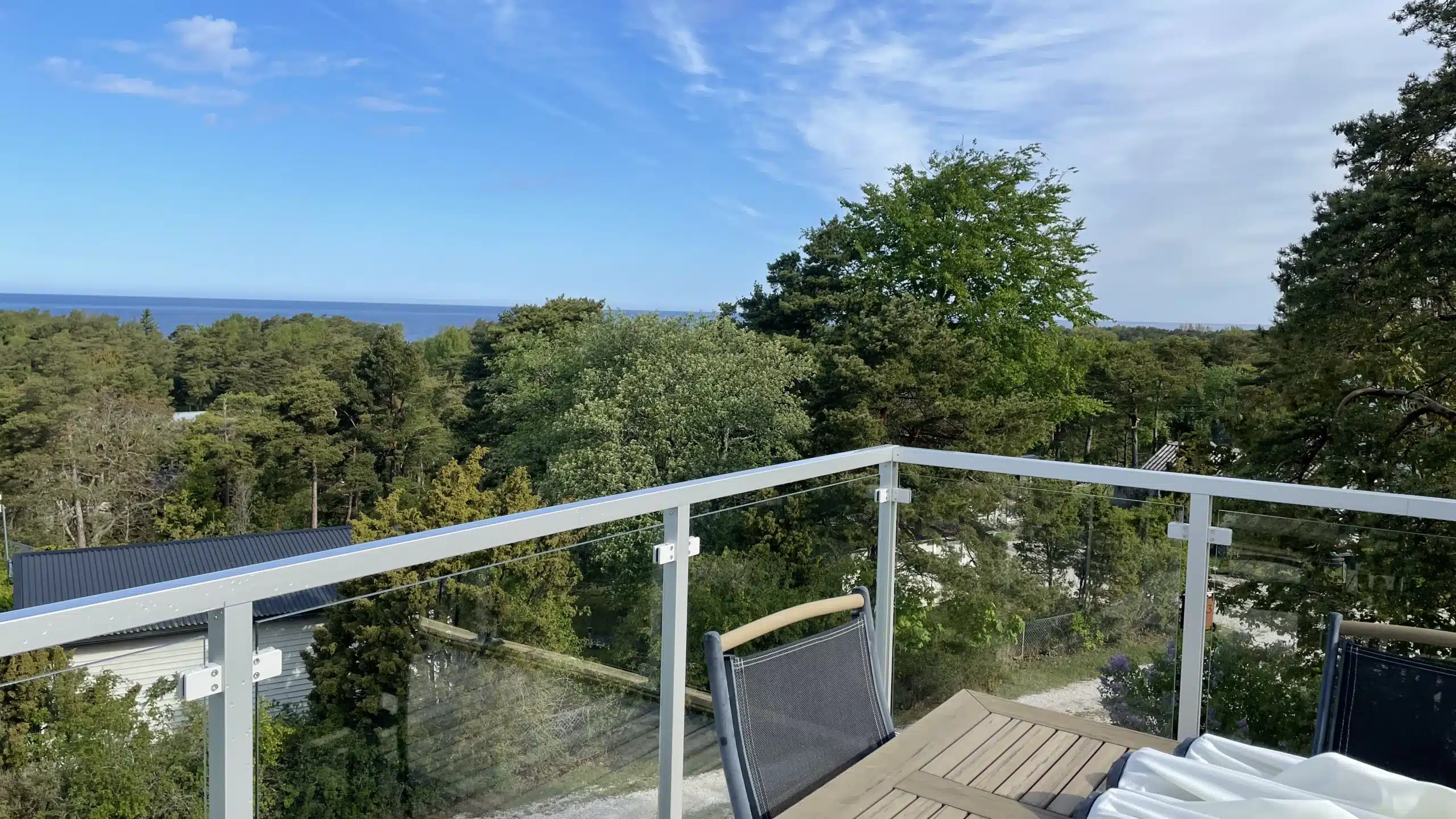
When is a glass balustrade better than a wooden railing?
Glass balustrades are often better than wooden railings when you want to preserve the view and let in light, make a small space feel more open, or reduce the need for repeated surface treatment.
It is therefore particularly well-suited for balconies and decks with a view, in small spaces, and around pool areas where you want to be able to see through the railing.
Can you replace a wooden railing with a glass balustrade?
Yes, it's often possible to replace a wooden railing with a glass balustrade, but the existing structure must be able to support the new design, and the glass must be cut to size according to the new fixing.
The fixing must reach the load-bearing structure
Glass is heavier than wood, and fixings distributes the load in a different way. If the old railing is attached only to the decking, fixing must instead be attached to load-bearing joists.
The glass needs to be remeasured
A timber railing is often built on site and can be adjusted as work progresses. The glass is custom-made to your specifications and cannot be cut or adjusted on site afterward.
How do you choose between a glass balustrade and a timber railing?
Start by weighing the view and natural light against the home’s aesthetic, how much maintenance you’re willing to put into the railing, the cost over time, and how the railing can be secured to the structure. Then go through the points below for the deck, balcony, or patio where the railing will be installed.
Check these six points
-
See what the railing is meant to frame
If the location offers an unobstructed view of the water, the landscape, or the garden, that’s a good reason to choose glass. If the railing faces a hedge, a wall, or a nearby neighbour, an unobstructed view becomes less important.
-
Assess the character of the house
Glass often creates a lighter, more modern look, while wood can blend naturally into older homes, traditional architecture, and settings where wood is already a prominent material.
-
Be realistic about maintenance
Consider whether you want to spend time cleaning, sanding, oiling, or painting the railing in the future. Glass needs to be cleaned as needed, while wood typically requires more frequent surface maintenance.
-
Calculate the cost over time
Don't just compare the purchase price. Also take into account future surface treatments, labour time, and whether parts of the railing may need to be repaired or replaced during its useful life.
-
Check the substrate and fixing
The railing material is only one part of the design. Check where fixing can be installed and that it reaches a load-bearing surface, especially if an existing timber railing is to be replaced with glass.
-
Consider combining the materials
You don't have to use the same material throughout the entire space. Glass can be used where the view is important, and wood where you want a more enclosed look or greater privacy.
Choose glass balustrade when views, light, and less need for surface treatment are the most important factors. Choose a wooden railing when the home’s appearance, the ability to customise on-site, and a more traditional material are more important.
Which railing is best for your deck?
Start by considering the view and how much maintenance you're willing to do. Our customer service team can help you compare your options and calculate the dimensions before you place your order.
What do you need to know before choosing a glass balustrade or a wooden railing?
The most common questions concern cost, maintenance, transparency, and what can be customised after the railing has been ordered. Here are brief answers to some of the practical differences between glass and wood.
Which is more expensive— glass balustrade, or a wooden railing?
Timber railings often have a lower purchase price than glass balustrade. The difference becomes smaller when you also factor in recurring maintenance and a possible future replacement.
How much maintenance do timber railings require compared to glass balustrade?
Wooden railings typically require more frequent surface maintenance, such as oiling or painting, depending on the material and finish. Glass balustrades mainly need to be cleaned as needed.
Does the glass balustrade need to be painted or oiled?
No. Glass does not need to be painted or oiled in the same way as wood. However, the glass surface does need to be cleaned when dirt and deposits become visible.
Does glass balustrade privacy screen?
Clear glass provides an unobstructed view in both directions and therefore does not serve as a privacy screen. Frosted or tinted glass can provide more privacy, depending on the design.
Can you use a wooden top rail on a glass balustrade?
Yes. A wooden top rail can be combined with glass balustrade to give the railing a warmer look, while the glass preserves the light and the view.
Is it possible to cut glass for a balustrade on site?
No. The glass is manufactured to the specified dimensions and cannot be cut or resized on site afterwards. Therefore, the dimensions must be verified before placing the order.

