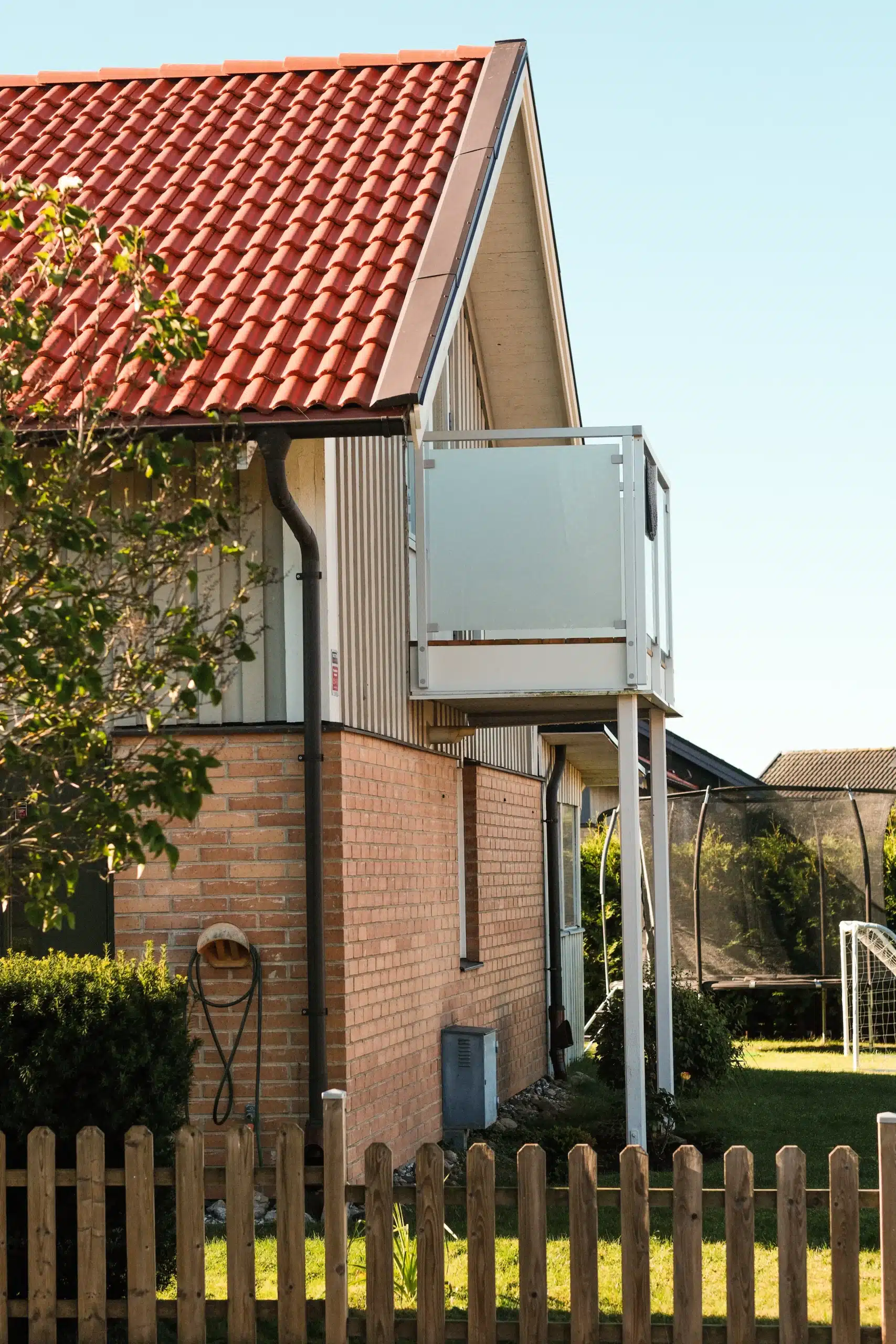
A fence around the pool is designed to help prevent young children from reaching the water without supervision. To serve as a barrier, height, openings, anti-climbing features, and the gate must be planned as a whole. The specific requirements depend on the pool’s design and location.
So height is only part of the solution. The gate needs to be planned just as carefully as the rest of the fence, and the material should be able to withstand moisture, splashes, UV light, and the maintenance required in a pool environment.
In this guide, we’ll go over what you need to consider regarding regulations and safety, how to assess height and design, what’s important gate, and how glass, aluminium, and stainless steel differ around the pool.
What are the rules for fencing and pool safety?
A pool safety barrier is intended to reduce the risk of children accessing the water without supervision. The type of barrier required depends, among other things, on the pool’s type, location, and use. If the barrier is designed as a fence, its height, openings, anti-climbing features, and access points must work together. Check the current requirements for pool safety barriers with your local municipality or the relevant authority.
| Question | What do you need to know? |
|---|---|
| Which pools are covered? | The requirements for pool safety may depend on the pool's design, location, and use. Check which safety features are needed for your pool before you choose a safety solution. |
| Does this also apply to shallow pools? | Even shallow water can pose a drowning risk, especially for young children. Therefore, assess the need for safety measures even for shallow, above-ground, and portable pools. Check the requirements that apply to the pool’s design. |
| Who is this protection meant to stop? | Above all, the pool safety barrier must prevent small children from reaching the water without adult supervision. Its design should prevent children from easily getting under, through, or over the cover. |
| Does the cover have to be a fence? | A fence is one possible solution, but safety covers, pool enclosures, or other safety devices may also be appropriate. Make sure the solution you choose meets applicable requirements and is designed to prevent drowning. A standard pool cover does not automatically provide sufficient protection. |
| How tall should a pool fence be? | The height of the fence must meet current requirements and be designed so that small children cannot easily climb over it. If the pool is located on a slope, you also need to determine whether the railing should provide protection against falls. |
| How should fence be structured? | The fence should be designed so that small children have difficulty crawling under, climbing over, or getting through it. Openings, joints, and passageways must be evaluated in conjunction with the gate’s height and function. Also check the dimensions and characteristics required for protection. |
What are the requirements for the design of a pool fence?
A pool fence must be designed so that young children cannot get past the barrier. Therefore, it is not just a matter of height, but also of openings, the possibility of climbing, access points, and how the gate works.
Check the entire perimeter around the pool and how the fence connects to the deck, stairs, or existing glass balustrade. A weak spot in a passage or connection can affect the entire function of the safety system.
Check the complete barrier
Five components that need to work together
-
The height must be adjusted to meet all safety requirements
The height of the pool fence must be adjusted to meet the safety requirements that apply where the pool is located. Fence is designed to help prevent young children from climbing over the fence. On a raised pool deck, the risk of falling may also affect the height the railing needs to be.
-
Openings must not allow anyone to get through
Gaps between the slats and slats, as well as at the bottom of the fence, must be designed so that younger children cannot squeeze through or crawl under the barrier. Check the applicable dimensions and safety requirements for the specific location.
-
Avoid parts that make it easy to climb over the fence
Horizontal elements close to the ground can serve as stepping stones for children. Glass panels or vertical slats make it easier to create a barrier without obvious footholds.
-
The entire path to the pool needs to be protected
The fence must work in conjunction with connections to the patio, stairs, house, and garden. An opening or passageway is still a route to the pool and must therefore be designed to be just as safe as the rest of the barrier.
-
The gate must function just as reliably as the fence
The gate should be self-closing, have a child-proof latch, and be the same height as the rest of the fence. It should also open away from the pool so that it does not naturally lead toward the water.
Brief summary
Don't judge a pool fence based on a single measurement. Height, openings, opportunities for climbing, connections, and the gate must all work together to make it difficult for young children to get into the pool.
How should the gate in a pool fence be designed?
The gate should be self-closing, have a child-proof lock, and be the same height as the rest of the pool fence. It should also open away from the pool so that the path does not naturally lead toward the water.
Since gate is used more frequently than the rest of fence, the hinges, closing mechanism, and locking system must also function reliably over time. Therefore, plan the gate’s location and function at the same time you design the rest of the pool enclosure.
Check the gate
Three components need to work together
-
Self-closing hinges
The gate should close on its own even if it is left half-open, not just when it is fully open.
-
Child-proof lock
The lock should be positioned and designed so that young children have difficulty both reaching and opening it.
-
Entrance away from the pool
The gate should open outward, away from the water, so that the direction of the opening does not naturally lead toward the pool area.
What material is best suited for a poolside fence?
Glass is a good choice when an unobstructed view of the pool area is important, while aluminium with vertical slats provides more privacy and is easier to maintain. stainless steel is primarily used in details and structures where the material is exposed to high levels of moisture, chlorine, or salt.
The pool environment also involves splashes, sunscreen, UV light, and regular cleaning. The choice of materials must therefore meet the needs of safety, maintenance, and the look you want around the pool.
| Materials | Advantage | Things to Keep in Mind |
|---|---|---|
| Glass balustrade | Provides an unobstructed view of the pool from the house, the deck, and the garden, and makes it easier to keep an eye on the pool area. | Splashes and limescale stains are more visible on glass than on non-porous materials, which means the surface needs to be cleaned regularly. |
| Aluminium with vertical slats | Provides more enclosed protection and makes it possible to design the railing without obvious horizontal handholds. | Aluminium requires relatively little ongoing maintenance, but the design, openings, and fixing still need to be adapted to meet the safety requirements of the pool area. |
| stainless steel | Suitable for trim and railing solutions where the material is exposed to high levels of moisture and splashes near the pool. | In pool environments, acid-resistant stainless steel, such as AISI 316, is often used. Even stainless steel needs to be cleaned and maintained in harsh environments. |
How do you plan the pool, deck, and stairs as a whole?
Plan the pool, deck, and stairs as a cohesive environment rather than as three separate parts. Using the same post design and colour can tie the whole space together, while glass, slats, or vertical slats can be chosen based on which function is most important for each section.
| Section | A starting point | Why? |
|---|---|---|
| Around the pool | Clear glass balustrade | Provides an unobstructed view from the house, deck, and garden, making the pool area easier to keep an eye on. |
| Against the neighbour | Slats made of aluminium | Provides more privacy where screening for privacy is more important than an unobstructed view of the entire pool area. If the structure also serves as a pool safety barrier, slats must be designed without parts that are easy to climb. Horizontal slats could otherwise serve as footholds. |
| Along the stairs | Vertical bars with handrails | Provides support where there are differences in elevation and makes it possible to design the route without distinct horizontal climbing points. |
What are some common misconceptions about fencing and pool safety?
Two common misconceptions are that pool safety measures are only necessary when there are small children in the household and that a standard pool cover can always replace a fence. The type of protection needed depends on the pool’s specific conditions, but the risk of young children accessing the water unsupervised must always be taken seriously.
Misconception 1
“We don’t have any children, so we don’t need a fence.”
The need for pool safety measures isn’t just about who lives in the house. Visiting children, neighbours’ children, and other situations where young children might enter the property also need to be taken into account in the safety assessment. Check what safety measures are required for your pool.
An effective pool safety fence reduces the risk of children getting into the water unsupervised, but it is no substitute for adult supervision when children are near the pool.
Misconception 2
“The pool cover is always enough.”
A pool cover can serve as pool protection if it is designed to prevent young children from reaching the water and meets the safety requirements that apply to the pool. A regular blanket or tarpaulin, on the other hand, does not automatically provide the same protection.
The cover also needs to be in place and functioning when the pool is not in use. A cover that is regularly left off during the swimming season does not protect the pool during that time.
How do you plan a safe fence around the pool?
Start by checking what type of pool you have and what safety risks the location poses. When you assess the pool cover, any risk of falling, gate, and the pool’s dimensions together, it becomes easier to plan a railing around the pool that works along the entire length.
Check before ordering
Review these six points
-
What kind of pool do you have?
Start by checking whether the pool is in-ground, above-ground, or portable. The pool’s design and location can affect the requirements for drowning prevention. Assess the safety needs based on the pool’s specific conditions.
-
Is there also a risk of falling?
If the pool is located on a raised deck or next to a change in level, the risk of falling must also be assessed. This can affect the height the railing needs to be.
-
What type of pool protection should be used?
A fence is one possible safety solution. Other options may include a safety cover, a safety net, or a lockable pool enclosure. Make sure the solution you choose is designed to prevent drowning and meets the safety requirements that apply to the pool.
-
Are the height and design suitable for the entire route?
Assess the height, openings, bottom edge, and the ability to climb together. If both pool safety and fall protection need to be addressed, the design must meet both safety requirements.
-
Was the gate planned from the start?
Check the placement, self-closing mechanism, and locking mechanism early in the planning process. The gate needs to function just as reliably as the rest of fence and should not be treated as a minor detail to be addressed at the end.
-
Have the dimensions and local conditions been verified?
Measure the entire route and check the height, corners, level differences, connections, and gate openings before you place your order. Also check with your local municipality or the relevant authority to find out what safety requirements apply to your pool.
Brief summary
Plan the pool safety measures as a whole. The type of pool, fall risk, safety solution, design, gate, and dimensions must all work together to create a safety system that is effective throughout the entire pool area.
Which pool fence is right for your pool?
Once you’ve checked the pool’s location, any potential fall hazards, gate, and dimensions, you can compare railing solutions for your pool area. If you need help with height, design, or dimensions before placing an order, customer service can assist you further.
Frequently Asked Questions
What do you need to know about fencing and pool protection?
Here are brief answers to common questions about height, pool protection, gates, materials, openings, and safety around the pool.
How tall does a pool fence have to be?
The height of the pool fence must meet applicable requirements and make it difficult for young children to climb over the barrier. If the pool is located on a slope, the height of the railing must also be assessed based on the risk of falling.
Do all pools have to have a fence?
No, a fence is not always the only possible safety solution. The type of protection needed depends on the pool’s type and location. A safety cover, a pool enclosure, or another safety device may be an alternative if it meets the pool’s requirements.
Can a pool cover replace a fence?
A safety cover may be an option if it is designed to prevent drowning and meets the safety requirements for the pool. A standard pool cover or tarp, however, does not automatically provide adequate protection.
What are the requirements for a pool fence gate?
The gate should be self-closing, have a child-proof lock, and be the same height as the rest of the fence. It should also open away from the pool so that the path does not naturally lead toward the water.
What material works best around a pool?
Glass railings are ideal when an unobstructed view of the pool is important. Aluminium with vertical slats is suitable when privacy and low-maintenance are priorities, while stainless steel is often used in exposed areas near moisture, chlorine, or salt.
How large can the openings in a pool fence be?
Gaps between the slats and at the bottom of the fence must be small enough that young children cannot squeeze through or crawl under the fence. Check the required dimensions for your pool fence before ordering.
Who is responsible for making sure the pool safety measures are in place?
The person responsible for the pool must ensure that the safety features are in working order and properly maintained. Check who is responsible and what obligations apply to the pool, especially if it is used by multiple people.