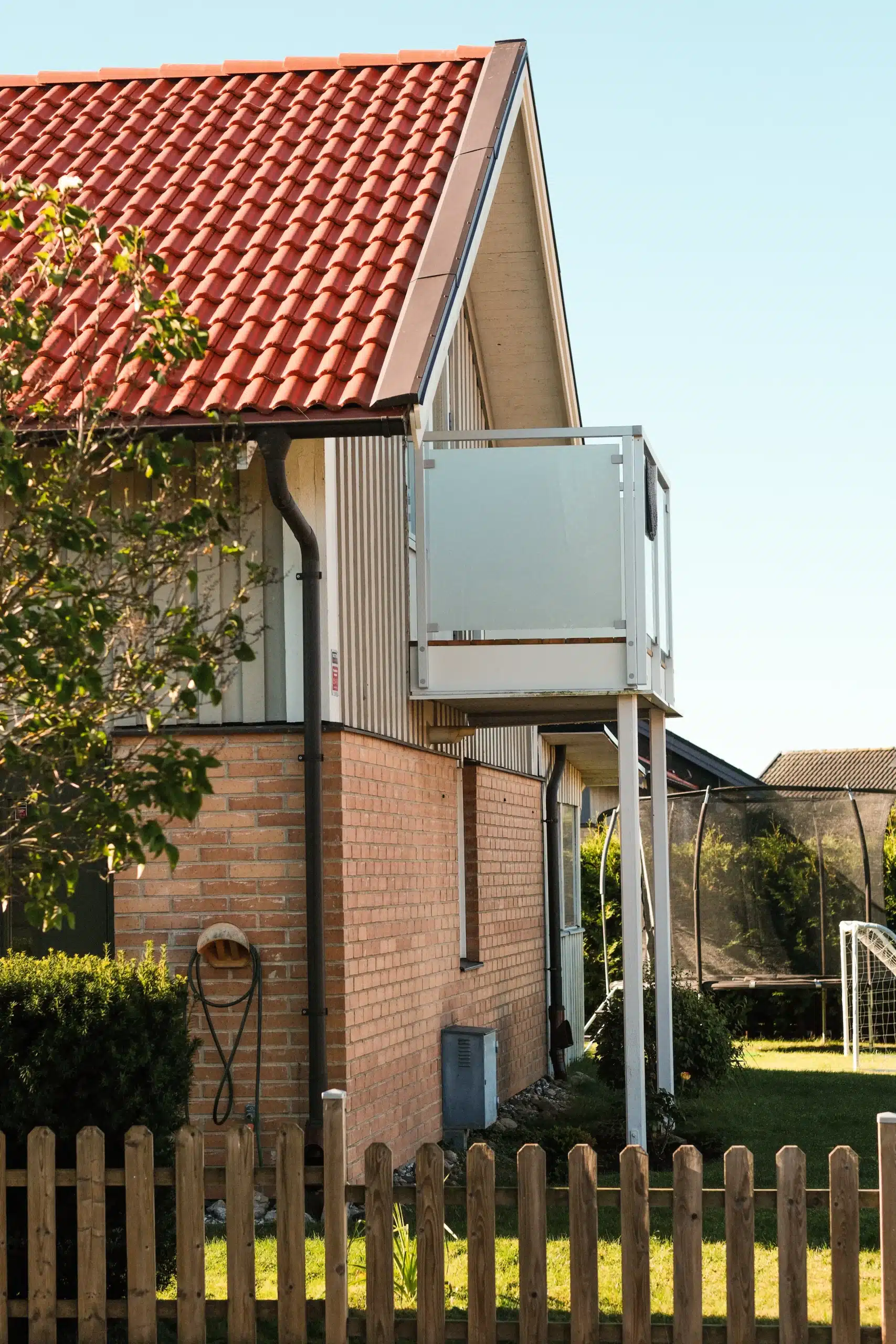
A railing around the patio frames the space and creates a more defined outdoor area. The furniture encourages people to use the patio, but the railing makes it feel complete.
The difference between a space with furniture and a clearly defined outdoor area often lies in the surrounding framework. A railing around the patio can create that boundary, but it can also affect how open the space feels, what you see from your seating area, and how the patio connects to the house.
That’s why the choice isn’t just about glass, aluminium, wood, or wire. Instead, start by considering how the patio will be used, which direction you want the view to face, and where you need more privacy. Once those decisions are clear, it becomes much easier to choose a railing that suits both your home and your patio lifestyle.
How does the balustrade affect the atmosphere and the view on the patio?
The railing creates a clear boundary around the patio and helps the space feel like its own outdoor room. Without a clear boundary, the patio visually extends into the garden, and when the eye can’t find a boundary, it becomes harder to tell where the space actually begins and ends.
At the same time, the railing influences the direction of your gaze. A denser railing causes your eyes to linger at the edge, while a see-through railing allows your gaze to continue out towards the garden or the view. Therefore, the first choice isn’t really about which material you want, but rather what you want to look at when you’re sitting on the patio.
Closer-spaced railing
A denser railing blocks the view at the edge of the patio. It reinforces the feeling of a defined space and is ideal when privacy is more important than the view.
Transparent railing
A see-through railing still marks where the patio ends, but allows the eye to continue outward. This way, the garden, the landscape, or the view becomes a visual extension of the room.
First, decide where you want to direct your gaze. Once that’s clear, it will be easier to determine whether your patio needs a more open or more solid railing and then choose the material.
Which balustrade best suits the style and era of the house?
A railing that complements the architecture of the house usually feels natural even many years later. Therefore, take the facade’s lines, materials, and architectural period into account before choosing a design. A glass balustrade can, for example, be unobtrusive against both older and modern houses, but the proportions, posts, and other lines still need to complement the facade.
| House type | What usually works |
|---|---|
| Period homes and older timber houses | Vertical slats or wrought aluminium design. |
| Functionalism and modern houses | Straight lines in aluminium or glass without top rail. |
| A house from the 1970s | Horizontal slats or glass with narrow posts. |
| Summer homes and country living | Wood or timber posts with glass in between. |
| Waterside homes | Glass, preferably frameless, with marine-grade fittings where the balustrade is exposed to salt. |
A balustrade that suits the period of the house is rarely a bad choice. A striking contrast can also work, but in that case, the materials, lines, and proportions need to feel deliberately chosen in relation to the house.
Can different parts of the patio have different balustrade designs?
Yes. Different parts of the patio may have different needs depending on which direction they face. One side might open up to the view, another might be close to the neighbour’s property, and a third might be more exposed to the wind.
Therefore, you don’t need to design the entire patio in the same way. Choose the type of railing or screening that works best for each section, and then tie the whole space together using elements such as colour, lines, and texture.
Let your gaze continue
Clear glass or another transparent railing solution allows the view to continue and makes the garden or landscape still feel close by.
Put privacy where it's needed
where overlooking is greatest, slats or a privacy screen may be more relevant than in the open areas of the patio. Often, only one side needs to be made more airtight.
Protect the most vulnerable side
In the wind-exposed area, a separate windbreak may be the right solution. It doesn’t have to be the same system as the railing on the rest of the patio.
What details make the biggest difference on a patio with a balustrade?
Lighting, greenery, and textiles often make the biggest difference once the railing and furniture are already in place. They affect the outdoor space in various ways – from how long it can be used in the evening to how distinctly it feels like a separate room.
Make the evenings last longer
Lighting along the edge of the patio makes it easier to find your way in the dark and can also highlight the lines of the railing. Plan the placement early on so that the lighting works in harmony with the walkways, furniture, and railing.
Move the plants to a higher spot
Plants near the railing add colour and soften the boundary with the garden without taking up much floor space. On a smaller patio, window boxes and taller planters can therefore free up more space for furniture and walkways.
Divide the space without building
An outdoor rug, cushions, and other textiles can define a dining area or seating area, for example, without the need for additional fixed boundaries. This makes it easier to create smaller spaces within the same outdoor area.
What should you consider before ordering a balustrade for your patio?
Start by considering how the patio is actually used and how the space changes throughout the day. Sunlight, privacy and views influence which areas should feel open and where a denser railing or other form of screening might be most useful.
So be sure to take a look at the space before deciding on materials and design. It often becomes clear that different parts of the patio have different needs when you view it from various angles and at different times of the day.
Three things to check before choosing a solution
When do you use your outdoor space?
See where the sun is in the morning, at midday, and in the evening. This will help you determine which areas can remain open and where more shade might be beneficial.
Where does the overlooking come from?
Check the area around your neighbour's property, walkways, and other nearby spaces. Often, only a small part of the patio needs more privacy.
Which direction do you want to look towards?
Decide which part of the garden, landscape, or view you’d most like to keep open. That’s where a more transparent balustrade can make the biggest difference.
Once you've checked these three points, it will be easier to determine what the railing actually needs to do before you move on to taking measurements and placing an order.
What should you check before measuring and ordering balustrades for your patio?
Check the location, appearance, safety, and dimensions one last time before placing your order. This reduces the risk that a decision that looks good on screen will turn out less than ideal once the railing is installed.
Review the steps on site before taking measurements
-
Have you checked for sunlight, privacy, and the view?
Make sure you know which areas can be open and where the patio needs more privacy or shelter.
-
Does the balustrade's style match the house?
Compare the lines, materials, and proportions with the façade so that the railing feels like a well-thought-out part of the house and the patio.
-
Do different sides require different solutions?
Determine whether one side should be more open, another more sheltered, and a third in need of extra protection from the wind.
-
Have you looked at the balustrade from inside the house?
Look through the windows where the patio is most visible and make sure that posts, height, and more closely screened sections do not obstruct the line of sight.
-
Is any lighting planned?
Determine the placement of light fixtures and any electrical wiring well in advance so that the lighting, furniture, and railing placement work well together.
-
Does the balustrade need to prevent falls?
If the railing serves a protective function, the applicable requirements regarding, among other things, height, openings, and design must be verified before a solution is determined.
-
Have all the measurements been checked?
Do not take measurements until the location and design have been determined. Double-check the measurements before placing your order, as the railing will be manufactured according to the measurements you provide.
That way, you’ll have a clearer basis for both material selection and measurements – and at the same time, you’ll know which parts of the patio need to be open, screened off, or given extra protection.
Which balustrade is right for your patio?
Once you know what the railing needs to do, which sections should feel open, and where you need more protection, it becomes easier to compare different solutions. Start with the patio first, and then choose a railing based on function, style, and material.
What are some common questions about patio balustrades?
Here are brief answers to some common questions about views, privacy, safety, and planning when choosing a railing for your patio.
Does a patio always need a balustrade?
No. The need depends, among other things, on the level differences in the outdoor area and whether there is a risk of falling. If the railing is to serve a protective function, the applicable safety requirements must be verified before a solution is determined.
How do I choose between a solid balustrade and a see-through balustrade?
Start by considering what you want to see and where you need more privacy. A see-through railing preserves the view, while a more solid railing creates a clearer boundary and can reduce overlooking.
How can I get more privacy without enclosing the entire patio?
Place the denser screening where people can see in from. Often, it’s enough to make one side more screened off and leave the other parts of the patio more open.
How can I keep the balustrade from blocking the view from inside the house?
Look out through the windows where the patio is most visible before deciding on the railing’s placement and design. Pay particular attention to where posts and denser sections will be positioned in relation to your natural line of sight.
Can I combine a balustrade and a windbreak on the same patio?
Yes. A side exposed to the wind can have a separate windbreak while other sections have a more open railing. The solutions do not need to be based on the same system for the patio to feel cohesive.
When should I measure the balustrade for the patio?
Take measurements once you have decided on the location and which solution to use. Double-check the measurements before placing your order, as the railing will be manufactured according to the measurements you provide.
How do I plan the lighting around the balustrade?
Decide on the placement of the light fixtures early on and see how they work together with walkways, furniture, and the placement of the railing. That way, the lighting becomes part of the overall design rather than something that needs to be adjusted later.