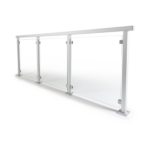
A glass balustrade around the pool can provide both a clear physical boundary and an unobstructed view of the pool area. This makes it easier to keep an eye on the pool from, for example, the house or the patio, without having to surround it with a solid barrier.
If a glass balustrade forms part of the pool’s safety measures, the whole arrangement needs to be designed to reduce the risk of young children gaining access to the water. Height, openings, climbability, gates and fixings all need to be assessed together, not just the glass.
The main advantage of glass is that the barrier does not obscure the area inside. You can still see the pool and what is happening around it, while the railing helps clearly separate the pool area from the rest of the garden. However, an unobstructed view does not make the railing a substitute for actual supervision.
Why choose a glass balustrade for a pool area?
The main advantage of a glass balustrade around the pool is that the area can be enclosed without blocking the view of the water. With clear glass, you can still see the pool area from, for example, the house or the patio, while the railing can serve as part of the physical enclosure.
The design of the pool’s safety features must be evaluated as a whole. Therefore, check for openings, climbability, any gates and fixings along with the glass balustrade itself.
| Property | Glass balustrade | Solid timber fence or screen | Slatted fence |
|---|---|---|---|
| Unobstructed view of the pool | Tall with clear glass | None through the barrier itself | Partially, depending on the design |
| Climbability | The smooth glass surface provides no natural footholds, but the design of the entire railing needs to be evaluated | It depends on the solid screen's construction and details | It depends, among other things, on the direction and placement of the slats |
| Wind protection | Can provide an effective windbreak | Can provide an effective windbreak | Typically allows more wind to pass through |
| Ongoing maintenance | Mainly cleaning the glass and fittings | Depends on the material and surface treatment | Depends on the material and surface treatment |
| Impact on cooling | May reduce wind over the water's surface | May reduce wind over the water's surface | The effect depends on how open the fence is |
Which glass should you choose for a glass balustrade by the pool?
Laminated safety glass is an important factor in ensuring that the railing remains a continuous barrier even if the glass is damaged. The interlayer holds the glass pieces together when they break, whereas a pane made solely of toughened glass can leave an open passage when it breaks.
The exact type and thickness of the glass must also comply with the railing system’s design specifications. This applies regardless of whether you are comparing different glass balustrades for a pool or for another setting.
Laminated safety glass holds the glass pieces together
Laminated glass consists of panes bonded by an interlayer. If it breaks, the interlayer helps retain the fragments, reducing the risk of an opening forming immediately.
Toughened glass alone does not remain as a continuous panel after breakage
Toughened glass is treated so that it breaks into many small pieces when it shatters. After it breaks, however, there is no longer a continuous glass panel, which can create an opening in the railing.
Should you choose clear or frosted glass around the pool?
Clear glass is generally preferable on sides where you want to see the pool from the house or patio. Frosted glass may provide greater privacy, but it also reduces visibility through the balustrade.
You don't have to choose the same type of glass for the entire pool. Clear and frosted glass can be combined so that visibility is maintained where it's most important and overlooking is reduced on a more exposed side.
Clear glass that lets you keep an eye on everything
Clear glass allows you to see the pool through the railing and is therefore particularly well-suited for use alongside the house, the terrace, and other locations from which the pool area should be visible.
Frosted glass where overlooking needs to be reduced
Frosted glass provides more privacy and may be appropriate, for example, toward a neighbour. Since visibility through the glass is reduced, it is better suited for a single side than for the entire pool area when an unobstructed view is important.

How should a glass balustrade be secured around a pool?
The lateral loads on the balustrade must be transferred into the supporting structure. On timber decking, the fixings therefore need to reach suitable joists, beams or designed reinforcement rather than ending in the deck boards.
Check the supporting structure before ordering the balustrade. It is much easier to reinforce timber decking while the framework is accessible than after the balustrade has been installed.
Decking boards and the structural frame have different roles
The deck is the floor you walk on. The force from the railing, however, must be absorbed further down in the structure.
Fixing remains in the surface layer
If the railing is attached only to the deck boards, the lateral load is transferred to a surface layer that is not designed to bear the forces of the railing. When the railing is loaded, the boards may then move along with fixing.
The lateral load is transferred through the structure
When fixings reach joists, supporting beams or properly designed reinforcement, the load can be transferred to the structural elements intended to support it.
Check the structure under the deck
-
Lift a deck board
Open the deck where the railing will be installed so you can see how the structure underneath is built.
-
Check joists and supporting members
Check where the load-bearing components are located in relation to the railing’s intended placement and whether the fixings can reach down to them.
-
Reinforce the structure before ordering the railing
If there is no suitable load-bearing substrate, the structure must be reinforced before the deck is closed off and the railing is installed.
The fixing method needs to be adapted to the location
- Concrete or a load-bearing masonry structure
- The fixing must be designed for the specific substrate and rated to withstand the forces that the railing will transfer to the structure.
- Humid pool environment
- Fittings and fixings are regularly exposed to moisture and splashes. The choice of materials must therefore comply with the railing system’s material specifications and be suitable for the environment in which the railing will be installed.
What should you check after the pool balustrade has been installed?
Check the entire area around the railing – not just the glass itself. There should be no objects near the railing that could be used to climb it, and openings must continue to serve as a safe barrier even when furniture, planters, and other furnishings are in place.
In a pool area, it is therefore a good idea to do a final check from a child’s perspective and walk all the way around the railing after the patio has been furnished.
Check the railing with the entire pool area in place
Walk around the railing when chairs, sun loungers, planters, and other furnishings are in their usual places. That makes it easier to spot things that aren't visible on a drawing.
-
Make sure the railing cannot be climbed
View the railing from a child’s height and inspect the entire structure. Profiles, top rail, and other details should not create natural footholds that make it easier to climb over the barrier.
-
Remove any objects that could be used as climbing aids
Chairs, sun loungers, planters, grills, and other movable objects can affect how easy it is to climb over the railing. Therefore, check safety with the furniture in its usual locations.
-
Check for openings around and under the glass
The gap under the glass and other openings in the railing are part of the finished enclosure. Check that the installation conforms to the railing system’s dimensions and that no openings have formed due to differences in level or changes in the supporting surface.
A properly installed railing may be subject to different conditions when the pool area is furnished. Therefore, the final inspection of the surroundings is just as important as the inspection of the glass, fixings, and openings.
How do you clean a glass balustrade around the pool?
Rinse the glass with clean water after heavy splashing, and clean it more thoroughly only if stains remain. Pool water left to dry on the glass can leave limescale and water marks, so regular rinsing makes ongoing maintenance easier.
The stains do not normally affect the railing's function, but they cause the glass to look dirty more quickly. Therefore, adjust your cleaning routine based on what has actually stuck to the surface.

Rinse first – clean as needed
Start with clean water and only move on to the next step if the stains remain. This way, the cleaning process is tailored to what the glass actually needs.
- After a lot of splashes
- Rinse the glass with clean water. Dry it with a soft cloth or a rubber squeegee if you want to reduce the risk of water spots as the surface dries.
- When limescale deposits have built up
- Use a limescale-removing cleaner designed for glass and follow the product instructions.
- Sun cream and fingerprints
- Regular glass cleaner used with a soft microfibre cloth is usually enough to remove greasy marks.
What should you check before ordering a glass balustrade for a pool?
Check the specifications, dimensions, visibility, and mounting surface before choosing the final railing solution. This reduces the risk that the glass, fixing, or placement will need to be changed after the order has already been placed.
Find out what requirements apply to pool safety and placement, and then assess the pool area as a whole.
Review the key considerations
The measurements are only part of the planning process. Also check how the railing will work in conjunction with the pool cover, visibility, and the structure beneath it.
-
Determine how the pool area should be demarcated
Assess the entire safety system around the pool, including the railing, openings, climbability, and any gate. The glass is only one part of the complete solution.
-
Measure each side, corner, and end
Measure the straight sections individually and note the corners, level differences, ends, and the location of any gate. Do not rely solely on the pool’s exterior dimensions.
-
Decide where the view should be unobstructed
Decide where you want to be able to see the pool from the house and patio. This will help identify where clear glass is essential and whether another side would benefit from more privacy.
-
Check what the balustrade will be fixed to
If the balustrade is to be fitted on timber decking, identify the joists, supporting beams or reinforcement. With other substrates, the fixings must be chosen to suit the load-bearing structure.
-
Make sure the glass and the system are compatible
The type, thickness, size, and fixing of the glass must conform to the design specifications for the selected balustrade system. Therefore, do not select the glass as a standalone component of the structure.
Once the rules, dimensions, sight lines, and load-bearing surfaces have been clarified, it becomes easier to choose the right balustrade system and avoid changes later in the project.
Which glass balustrade is right for your pool?
Once you have a good understanding of the dimensions, the supporting substrate, and how the pool area should be delineated, you can compare different glass balustrades and choose a solution that suits the site's conditions.
What do you need to know about glass balustrades around pools?
Here are concise answers to common questions about pool barriers, decking, safety glass and the finished area around the water.
Is a glass balustrade sufficient on its own as a pool safety barrier?
A glass balustrade can be part of the safety measures around the pool, but the entire solution must prevent young children from reaching the water. Therefore, check the railing’s design, openings, climbability, surface, and fixing as well as how any gate works.
What needs to be checked on a gate at the pool balustrade?
Any gate must be assessed as part of the overall enclosure. Check that it works correctly once the balustrade is installed and that closing and locking are not affected by ground levels, furniture or nearby objects.
Can I combine clear and frosted glass around the pool?
Yes. Clear glass can be used along the house and the patio where an unobstructed view is important, while frosted glass can be installed on a side where you want to reduce overlooking. This means you don't have to choose the same type of glass around the entire pool area.
Can I install a glass balustrade on timber decking around a pool?
Yes, but the fixings should not be limited to the deck boards themselves. The forces from the railing need to be transferred to joists, support beams, or a special reinforcement. Therefore, check the structure beneath the deck before ordering the railing.
What happens if a laminated glass panel in the pool balustrade breaks?
The interlayer in laminated glass helps retain fragments if a pane breaks, reducing the risk of a gap forming immediately. The glass construction and thickness must still meet the balustrade system’s specifications.
Hur minskar jag vattenfläckar på glasräcket vid poolen?
Rinse the glass with clean water after heavy splashing and dry it, if necessary, with a soft cloth or rubber squeegee. If limescale stains have already set in, you can use a limescale remover that is designed for glass.
What should I check once the pool area has been furnished?
Make sure that chairs, sun loungers, planters, and other movable objects do not create a climbing aid next to the railing. Also, walk around the entire perimeter and check for openings, differences in level, and any gate when everything is in its usual place.