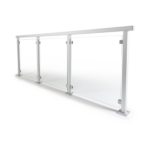
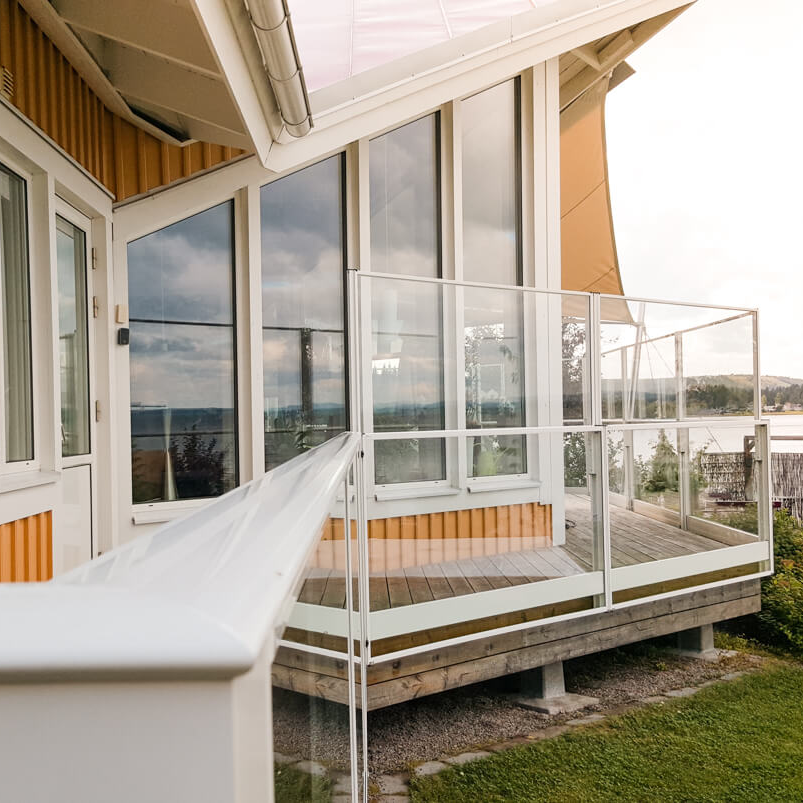
A height-adjustable glass balustrade combines a standard glass balustrade with a windbreak that can be raised when you want more shelter from the wind and lowered when you want to open up the view again.
This solution is particularly well-suited for patios and balconies where wind conditions vary. When lowered, the railing maintains a lower profile and a more open feel, while the upper glass section can be raised when it’s windy and you need more shelter from the wind around your outdoor space.
Flex is our adjustable glass balustrade and is designed for situations where a permanently high windbreak seems unnecessary all the time. This way, you can switch between the railing and the taller windbreak depending on the weather and your needs.
How does a height-adjustable glass balustrade work as a windbreak?
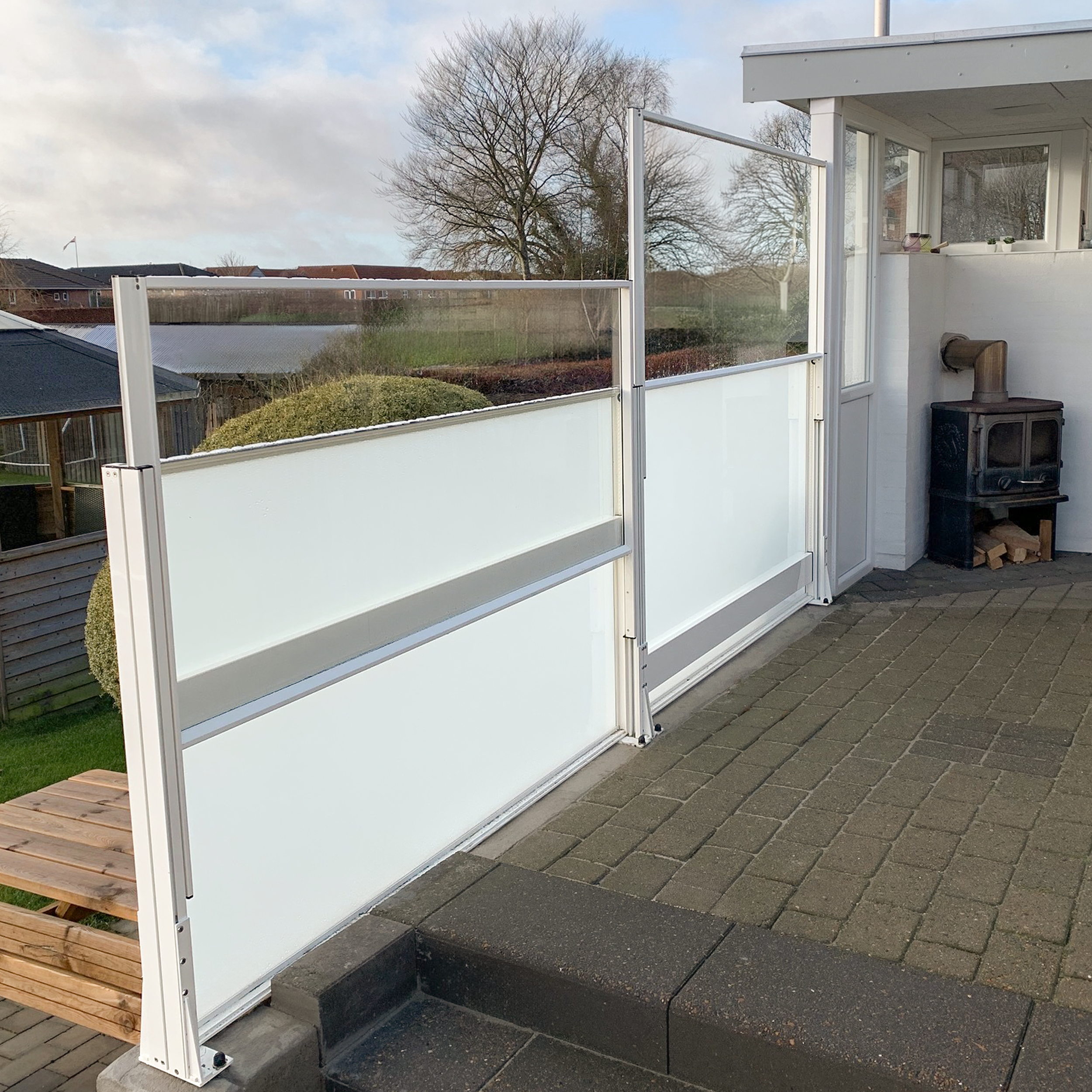
The upper glass section can be slid up and down. When lowered, the design functions as a lower- glass balustrade with a more open view, and when the section is raised, the glass provides greater height and can offer more shelter around the patio.
On the Flex, the upper section can be adjusted by hand without tools. This allows you to adjust the height based on the weather and your needs, rather than keeping a high windbreak up all the time.
A lower profile and a more open view
When you don't need the extra height, keep the upper glass section lowered. This makes the balustrade appear lower and gives the patio a more open feel.
A larger glass surface area when it's windy
When the upper section is raised, the protective glass surface becomes higher. This can provide more shelter at the level where the wind would otherwise be felt around a seating area.
When is a height-adjustable glass balustrade the right choice?
A height-adjustable glass balustrade is best suited for situations where you want to maintain the view and the open feel, while still being able to raise the windbreak when it’s windy. If your needs remain the same at all times, a fixed solution may be more appropriate.
| Situation | How well does the solution fit? |
|---|---|
| A windy location with an unobstructed view | It's especially well-suited when you want to be able to switch between more shelter from the wind and a lower, more open profile. |
| A patio by the lake or near the coast | This may be relevant if the location is exposed to wind and you want to maintain visibility when extra shelter from the wind isn't needed. |
| Wind-exposed balcony | This might be a good option when the wind is variable, and a permanent, taller glass section would provide more shelter than you want on calm days. |
| Enclosed patio or courtyard | The raise-and-lower function may be less relevant if there is little need for extra windbreak. |
| A permanent need for tall screening | A fixed glass panel or other permanent visual and windbreak may be more appropriate if the extra height is needed at all times. |
How does the height of the windbreak affect the performance of a height-adjustable glass balustrade?
When the upper glass section is raised, the wind hits a higher glass surface, which can provide more shelter around a seating area than when the railing is in its lower position.
How big the difference is also depends on wind direction, location, and the surrounding environment. The advantage of a height-adjustable windbreak is that the extra height can be used when needed and lowered again when you want a more open feel.
More glass area above the railing's base height
When lowered, the railing has its lower profile. When the upper section is raised, the glass surface above that level increases and can deflect the wind higher up.
Exact heights depend on the solution you choose. Always check the current product specifications for the available heights.
What glass and design options are available for a height-adjustable glass balustrade?
The most important choices concern the glass in the lower section and whether the top edge of the glass should be finished with a glass trim. At Flex, these choices can be used to customize both the level of privacy screen and the visual appearance of the railing.
Just as with other types of glass balustrade, the design of the glass affects how open or enclosed the railing appears, while the glass trim primarily alters the finish along the top edge.
Can a height-adjustable glass balustrade be combined with an awning?
Yes. A height-adjustable glass balustrade can provide shelter from the wind at the side, while a patio awning provides shade from above. This combination allows the patio to be protected from multiple directions without the solutions needing to be fully extended at all times.
When the weather is calm and you want a more open patio, the upper glass section can be lowered and the awning retracted. When the sun or wind becomes stronger, you can use the appropriate protection as needed.
An awning provides protection from above and the glass from the side
These solutions serve different purposes. The awning reduces sunlight from above, while the raised glass section can reduce wind from the side where the patio is most exposed.
- Awning
- Sun protection from above
- Adjustable-height glass
- Wind protection from the side
What should you check before choosing a height-adjustable glass balustrade?
Before deciding on the final solution, be sure to check the wind direction, which parts of the patio require the lift-up feature, the dimensions, the desired height, the choice of glass, and the requirements for fixing.
Check these six points
-
Where does the wind that's actually causing a disturbance come from?
Start by considering the seating area and the parts of the patio where the wind is strongest. Houses, corners, and other structures can affect the direction of the wind, so assess the exact location where the railing will be installed.
-
Which sections need the height-adjustable feature?
Flex does not need to be used along the entire length of the railing. If the wind comes mainly from one or two directions, the adjustable section can be concentrated there and combined with fixed glass balustrade on the remaining sections.
-
Have you measured distances, angles, and elevation changes?
Measure the actual length of the section where the railing will be installed, and note the corners, ends, and any changes in level. This provides the correct basis for configuring the solution to fit the location.
-
What height combination is best suited for this location?
Check both the lowered height of the railing and its height when the upper section is raised. At the same time, the lowered configuration must be designed in accordance with the railing requirements applicable at that location.
-
What kind of glass and finish would you like?
Decide whether the lower section should provide more privacy and whether the top edge of the glass should be finished with a glass trim. These choices primarily affect how open or enclosed the railing appears.
-
Are the substrate and surroundings prepared?
Check that the subfloor and fixing are suitable for balustrade system. If the patio will also include, for example, awning, the layout and space for movement must be planned so that the solutions work together.
Would you like to see how Flex might look on your patio?
See the available dimensions, heights, and design options for Flex, or contact customer service if you'd like help determining where the height-adjustable feature would be most useful.
Frequently asked questions about height-adjustable glass balustrades
Here are brief answers to frequently asked questions about how the system works, provides wind protection and privacy screening, and can be combined with other features of the outdoor space.
How does a height-adjustable glass balustrade work?
The upper glass section can be raised when you want more windbreak and lowered when you want a lower profile and a more open view. At Flex, the section can be adjusted by hand without tools.
What should you keep in mind regarding balustrade height and fall protection?
The adjustable glass section is used for extra shelter from the wind and should not be viewed as a way to compensate for a railing that is too low. Therefore, check the lowered height of the railing and the requirements that apply at the specific location.
How much wind protection does a height-adjustable glass balustrade provide?
When the upper glass section is raised, the wind hits a higher glass surface, which can provide more shelter around a seating area. The extent of this difference also depends on wind direction, location, and the surrounding environment.
Can you get privacy screening with Flex?
Yes. Opal glass in the lower section can provide more privacy in the part of the railing that remains in place at all times, even when the upper glass section is lowered.
Does the entire balustrade need to be adjustable in height?
No. If the wind comes primarily from one or two directions, Flex can be used on the exposed sides and combined with a fixed glass balustrade on the remaining sections.
Can a height-adjustable glass balustrade be combined with an awning?
Yes. A glass balustrade can provide windbreak from the side, while an awning provides sun protection from above. Check the placement and clearance to ensure that the solutions can be used without interfering with each other.