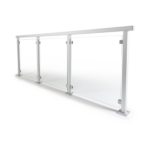
A powder-coated aluminium balustrade should be cleaned gently: water, a mild detergent, and a soft cloth are sufficient for normal cleaning. Avoid polishes and abrasive products that can dull, scratch, or wear down the paint.
Advice on “polishing aluminium” can therefore be misleading. Powder-coated, anodized and untreated aluminium have different surface finishes, and the same cleaning method does not work for all of them.
Räckesbutiken's aluminium balustrades is powder-coated. In this guide, we'll walk you through how to clean the paint, deal with salt, chalk, and minor scratches, what you should avoid, and how to adapt your care routine to the environment where the railing is located.
How do you know if aluminium balustrade is powder-coated, anodised, or untreated?
Appearance can provide an initial clue, but the surest way is to check the product or manufacturer information. Powder-coated finishes often have a uniform coloured surface, anodized aluminium usually has a more metallic appearance, and untreated aluminium lacks a separate coloured surface layer.
Räckesbutiken’s aluminium balustrades are powder-coated. The care instructions in the rest of this guide are therefore primarily based on how to clean a painted surface without scratching or dulling it.
| Surface | Common characteristics | How to care for it |
|---|---|---|
| Powder-coated | It often has a uniform-coloured surface that can be matte, satin-matte, or glossy, depending on the finish. | Wash with water and a mild, pH-neutral cleaning agent. Avoid polishing agents and abrasive products. |
| Anodised | It often has a metallic appearance in which the character of the aluminium is still visible through the surface treatment. | Wash gently. If a special cleaning product is used, it must be intended for anodized aluminium. |
| Untreated | Does not have a coloured coating or an anodized finish. The metal may change in appearance as the natural oxide layer develops. | Clean using a method suitable for untreated aluminium. Any polishing should be adapted to the surface finish to be preserved. |
What affects the paint on a powder-coated aluminium balustrade?
Dirt and salt can remain on the paint surface and should therefore be washed off regularly. UV light works differently: it cannot be washed off, but over time it can alter the paint’s shine and surface. Cleaning therefore helps both to keep the railing clean and to make changes in the paint easier to detect.
Deposits make the surface harder to keep clean
Dirt, pollen, and other deposits can remain on the paint and trap moisture and attract further deposits. Regular washing prevents dirt from accumulating over time.
Salt should be rinsed off more often
Sea salt and road salt can accumulate on the railing, particularly around seams, fixings, and minor paint damage. In environments with repeated exposure to salt, the surface therefore needs to be rinsed and cleaned more often than in a more sheltered location.
Sunlight causes the paint to age over time
Prolonged UV exposure can gradually affect the paint’s gloss and outer layer. If the surface leaves a fine, often light-coloured powder after cleaning, it may be chalking—a sign that the paint surface has aged, not that the aluminium has rusted.
A clean railing also makes it easier to see if the finish has changed or sustained minor damage. That is why cleaning and visual inspection are two parts of the same ongoing maintenance routine.
How do you wash a powder-coated aluminium balustrade without damaging the paint?
Start by rinsing off loose dirt, then wash with lukewarm water, a mild, pH-neutral detergent, and a soft sponge or microfibre cloth. Finish by rinsing thoroughly and checking the paint finish once the railing is clean.
-
01
Rinse away loose dust and pollen
Start with clean water so that loose particles are removed before you wipe the surface with a sponge or cloth. This reduces the risk of dirt being dragged across the paint during washing.
-
02
Prepare a mild cleaning solution
Mix lukewarm water with a mild, pH-neutral cleaning agent. For routine cleaning of powder-coated surfaces, stronger products are generally not needed.
-
03
Clean with a soft cloth or sponge
Use a soft sponge or microfibre cloth, and work from top to bottom. Avoid scouring pads and other tools that might scratch or dull the paint.
-
04
Rinse off all cleaning solution
Rinse thoroughly with clean water so that no residue from the cleaning solution remains and dries on the surface.
-
05
Wipe dry as needed
If the water at that location leaves noticeable limescale marks, you can wipe the railing with a clean, soft cloth after rinsing it.
-
06
Check the paint when the railing is clean
Once the deposits are removed, scratches and other changes are more easily visible. Pay special attention to corners, seams, and other areas where the surface is subject to more wear and tear.
What do you do if the powder coating on the aluminium railing gets scratched?
A superficial scratch does not necessarily mean that the paint layer has been penetrated. However, if the aluminium is visible, the area should be cleaned and any necessary touch-ups should be made in accordance with the recommendations for the railing’s surface treatment and colour.
Clean the area before assessing the damage
Aluminium naturally forms a thin oxide layer and therefore does not develop the same type of rust as untreated steel.
An area of damaged paint, on the other hand, can trap dirt, salt, and moisture. Therefore, wash the area first so you can see how extensive the damage actually is and determine whether the paint needs to be touched up.
Clean
Wash away dirt and salt around the damage using the same gentle method as on the rest of the railing.
Let the surface dry
The area must be clean and dry before you proceed with any touch-ups to the paint.
Touch up the finish if needed
If the paint coating is damaged, follow the recommended repair method for the railing's surface treatment and colour instead of choosing a colour based solely on colour matching.
What should you avoid when cleaning a powder-coated aluminium balustrade?
Avoid tools and cleaning products that can scratch, abrade, or chemically damage the paint. For normal cleaning, all you need is water, a mild, pH-neutral cleaning product, and a soft cloth.
May scratch the surface and leave iron particles
Steel wool and steel brushes can damage the painted surface. Small iron particles from the tools can also get stuck on the railing and later cause brown rust spots on the surface.
May dull or wear down the paint finish
Polishes, scouring powder, coarse sponges, and other abrasive products can alter the gloss or leave marks on the powder-coated finish. They should therefore not be used on the painted surface.
May not be suitable for aluminium and paint
Strong degreasers, certain wheel cleaners, and other alkaline products can damage aluminium or its finish. Use them only if the product is specifically suitable for the painted aluminium surface in question.
Avoid them if the surface treatment does not allow it
Strong chlorine- or chloride-based cleaning agents should not be used if they are not recommended in the instructions for surface treatment. Exercise particular caution where the paint is already damaged or where liquid may remain.
Start with the gentlest method: water and a mild, pH-neutral cleaning agent. Only move on to a specialty product once you know it is suitable for the specific surface finish.
How often does a powder-coated aluminium balustrade need to be washed?
There is no single cleaning schedule that works for everyone aluminium balustrades. A railing in a sheltered location can be cleaned less frequently, while a railing that is regularly exposed to sea salt or road salt needs to be rinsed and washed more often.
Clean when dirt and pollen start to build up
In a more sheltered inland location, the need for cleaning is primarily determined by pollen, dust, and other common dirt. Wash the balustrade when deposits begin to show, and at the same time check that the paint surface is still intact.
- Common effects
- Dust, pollen, rain splashes, and other dirt from the surroundings.
- When to take action
- When deposits begin to build up, or when the balustrade is inspected and cleaned as part of routine maintenance.
Rinse the railing more often when it is exposed to salt
Near the coast or along a road where road salt can reach the railing, salt should not be allowed to remain on the surface for long periods. Rinse the surface after significant exposure to salt, and adjust the frequency of thorough cleaning based on how quickly new deposits reappear.
- Common effects
- Sea salt, road salt, and deposits that accumulate between cleanings.
- When to take action
- After significant exposure to salt, and when you see or suspect that salt has accumulated on the paint surface.
So base your approach on the environment and how quickly deposits build up again, rather than on a fixed number of washes per year. In exposed locations, an extra rinse between thorough cleanings is often more important than waiting until a specific date.
How do you take care of a powder-coated aluminium balustrade?
Gently wash the paint, avoid abrasive products, and check the surface once the railing is clean. Then adjust how often you rinse and clean it based on how exposed the railing is to dirt and salt.
How to keep the powder-coated finish in good condition
-
Check what kind of finish the railing has
An powder-coated railing has a lacquer finish that should be washed gently, not polished. Räckesbutiken's aluminium balustrades is powder-coated.
-
Rinse off loose dirt before washing
First, rinse away dust, pollen, and other loose particles with clean water so that they are not smeared across the paint with the sponge or cloth.
-
Wash with a mild detergent and a soft cloth or sponge
Use lukewarm water, a mild, pH-neutral cleaning solution, and a soft sponge or microfibre cloth.
-
Rinse thoroughly and check the paint
Rinse off any remaining cleaning solution with clean water. Once the railing is clean, it will also be easier to spot scratches and other changes in the surface.
-
Inspect minor paint damage when the surface is clean
If a scratch penetrates the paint and the aluminium is visible, clean the area and follow the recommended procedure for the specific finish if the paint needs to be touched up.
-
Avoid anything that could damage the paint
Do not use steel wool, steel brushes, scouring powder, coarse sponges, or polishing compounds. Also, use caution with strongly alkaline and chlorine-based cleaning agents.
-
Adapt your cleaning routine to the environment
In a sheltered location, the cleaning schedule can be based on how quickly ordinary dirt builds up. If exposed to recurring sea salt or road salt, the railing needs to be rinsed and cleaned more often.
Wash the paint – do not polish it. Gentle cleaning, inspection of the surface, and more frequent rinsing in harsh environments are the foundation of ongoing maintenance.
Would you like to compare aluminium balustrades for your project?
Explore our made-to-measure aluminium balustrades or contact customer service for help choosing the right option.
What are some common questions about caring for aluminium balustrades?
Common follow-up questions concern rust spots, chalking, minor paint damage, and what you should check while the railing is clean anyway. Here are brief answers to these questions that supplement the care instructions above.
Can a powder-coated aluminium balustrade rust?
Aluminium does not develop the same type of rust as untreated steel. The metal naturally forms a thin layer of oxide, while the powder coating is the surface layer that you see and clean on a powder-coated aluminium balustrade.
Why can an aluminium balustrade still develop brown rust spots?
Brown spots may be caused by foreign iron particles on the surface, for example, after contact with steel wool or a steel brush. The particles may begin to rust even if the aluminium beneath does not rust in the same way.
Is chalking on powder coating the same thing as corrosion?
No. Chalking means that the outermost layer of the paint has aged and may leave a fine, often light-coloured powder on the surface. Salt, lime, and other deposits can also appear light in colour, so wash the railing before assessing the change.
Does every scratch in the powder coating need to be repaired?
A superficial scratch does not necessarily mean that the paint layer has been penetrated. Clean the area and inspect the damage. If the aluminium is visible, any touch-ups should be done in accordance with the recommendations for the railing’s surface treatment and colour.
What should you do if the balustrade has been exposed to sea salt or road salt?
Rinse off the salt with clean water instead of letting the buildup remain for an extended period. In environments with repeated exposure to salt, the railing needs to be rinsed and cleaned more often than in a more sheltered location.
What should you check while the aluminum railing is clean anyway?
Once the dirt is gone, it’s easier to see scratches, changes in the finish, and whether any part of the railing appears to have changed. Therefore, also check that the railing’s parts are still securely fastened.