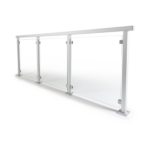
Stainless steel balustrades can develop rust spots when foreign iron particles rust on the surface or when salt, chlorides, and standing moisture compromise the steel’s corrosion protection. Brown spots therefore do not automatically mean that the stainless steel itself has begun to rust.
Often, the stains are caused by surface rust – small iron particles that have become lodged on the surface and rusted there. In more exposed environments, however, salt, steel grade, and trapped moisture can contribute to the steel itself being attacked by pitting corrosion or crevice corrosion, for example.
Here, we’ll go over how to tell the difference between various types of rust damage, why they occur, when AISI 304 or 316L is the right choice, and how to clean and maintain the railing to reduce the risk of the problems recurring.
Why does a stainless steel balustrade develop rust spots?
Rust spots on a stainless steel balustrade may be caused by foreign iron particles that rust on the surface or by corrosion in the steel itself. Salt and other chlorides can affect the steel’s corrosion protection, while trapped moisture in joints can contribute to localized corrosion.
Iron particles can rust on the surface
Small iron particles from sources such as brake dust, railways, construction grinding and tools can settle on the balustrade and start to rust, leaving brown marks on the stainless steel surface.
Salt can affect the protective layer on steel
Sea salt and road salt contain chlorides that under certain conditions can damage the steel’s passive protective layer. This can lead to localised corrosion, known as pitting corrosion, which penetrates into the steel itself.
Standing water can cause problems in joints
In tight joints where moisture remains, the oxygen supply may be limited. This can hinder the regeneration of the steel’s protective layer and, under certain conditions, lead to crevice corrosion.
What is the difference between surface rust, pitting corrosion, and crevice corrosion?
Surface rust is rust caused by foreign iron particles that have become lodged on the surface, whereas pitting and crevice corrosion involve the attack of the steel itself stainless. The location of the stains and the presence of pits on the surface can provide clues as to the type of corrosion involved.
| Type of corrosion | Here's how you can tell | What does that mean? |
|---|---|---|
| Surface rust | Brown spots or discolouration that appear on the exposed surface. | Foreign iron particles rust on the railing. The stainless steel itself may not be corroded. |
| Pitting corrosion | Small, scattered marks or pits, often concentrated in certain parts of the surface. | The passive protective layer has been damaged locally, and the corrosion is penetrating the steel itself. |
| Crevice corrosion | Corrosion in or near joints, fittings, and other confined areas where moisture can accumulate. | The steel itself is corroded in a confined area where a limited supply of oxygen can hinder the regeneration of the protective layer. |
How does stainless steel protect itself against corrosion?
stainless steel is protected by a very thin passive oxide layer that forms when the chromium in the steel reacts with oxygen. The layer acts as a barrier against corrosion and can normally regenerate if the surface is scratched.
Chromium protects the surface of the steel
stainless steel contains chromium. When chromium comes into contact with oxygen, a thin protective layer forms, giving the material its resistance to corrosion.
Chromium gives steel its corrosion resistance
stainless steel is an alloy that contains chromium. The chromium is present in the material itself and is crucial to the steel's ability to resist corrosion.
A passive protective layer forms
When chromium reacts with the oxygen in the air, a very thin oxide layer forms on the surface of the steel. The layer is invisible but acts as a barrier that protects the steel beneath it.
The protective layer can regenerate
If the surface is scratched and the protective layer is broken locally, it can reform when oxygen reaches the exposed surface. This is an important part of stainless steel’s resistance to corrosion.
If the protective layer is compromised by, for example, chlorides, or if the oxygen supply is restricted in a narrow, damp joint, the steel’s natural corrosion protection may be less effective.
What is the difference between AISI 304 and AISI 316L in a stainless steel balustrade?
AISI 304 often works well indoors and can also be used outdoors in environments with low corrosion exposure. AISI 316L contains molybdenum, which provides better resistance to, among other things, chloride-induced pitting corrosion. When comparing stainless steel balustrades, you should therefore consider the environment where the railing will be installed. The surface finish and regular maintenance also affect the outcome.
When the effect of salt is minimal
AISI 304 is often suitable for indoor stairs, lofts and landings. It can also be used outdoors in less corrosive environments with low exposure to salt and other contaminants. Surface finish and cleaning also affect its long-term performance.
When chlorides pose greater challenges
AISI 316L contains molybdenum, which improves resistance to pitting and crevice corrosion. It is therefore often a better choice near the coast or on salted roads. Even 316L needs to be cleaned and can be susceptible to corrosion. In particularly demanding environments, such as certain pool environments, the choice of material must be assessed with extra care.
How do you remove surface rust from a stainless steel balustrade?
Surface rust can often be removed with water and a soft cloth if it is detected early. Start by rinsing the surface clean, then gently clean the stains, and finally check to make sure no residue or discolouration remains.
-
01
Start with water
Rinse away dirt and loose particles
First, rinse or wash the surface with water. This will remove loose dust, salt, and dirt that might otherwise be smeared across the steel when you start drying it.
-
02
Remove the stain
Clean with a soft cloth
Early surface rust can often be removed with water and a soft cloth. If needed, use a mild detergent suitable for stainless steel. Persistent stains may require a specialist stainless steel cleaner. Always follow the cleaner manufacturer’s instructions.
-
03
Check the surface
Rinse and check the results
Rinse away any cleaning residue and check the surface again. If the stains remain or if you see small pits in the steel, it may be more than just surface rust. In that case, avoid proceeding with more aggressive sanding without first assessing what caused the corrosion.
How can you reduce the risk of new rust spots on a stainless steel balustrade?
Regular cleaning, prompt stain removal, and inspection of joints reduce the risk of new rust spots. In coastal and other salt-exposed environments, the railing typically needs to be rinsed and inspected more frequently.
Four things to keep an eye on
-
Rinse the railing regularly
Water helps remove salt, dust, and other particles before they have time to remain on the stainless surface for long.
-
Remove stains as soon as possible
If you notice brown spots or discolouration, it's best to clean them right away. Surface rust often becomes harder to remove the longer it's left on the surface.
-
Check the joints and fittings
Check to see if water is pooling in tight joints or around fixings. It is especially important to pay attention to trapped moisture, as the oxygen supply in those areas may be limited.
-
Be extra careful in salty environments
Near the coast and along salt-treated roads, the balustrade is exposed to higher levels of chlorides. In such areas, more frequent rinsing and inspection may be necessary than in a more sheltered environment.
The most important thing is that salt, iron particles, and trapped moisture are not allowed to remain on or around the stainless surface for an extended period of time.
When is aluminium a better choice th stainless steel e steel?
Powder-coated Aluminium can be a good option when you want a protected and low-maintenance surface. Unlike iron-based steel, aluminium does not form rust in the material itself. However, aluminium balustrades, it can still develop rust-coloured spots from foreign iron particles that stick to the surface. Regular cleaning is therefore necessary even for painted aluminium.
You want a painted, low-maintenance surface
The powder coating provides the aluminium with a protective finish and makes the railing easy to clean. Aluminium does not rust in the material itself, but iron particles that stick to the coating can still cause rust-coloured stains.
Aluminium also needs to be cleaned
Pollen, salt, air pollution, and other dirt can accumulate on the powder-coated surface. Regular cleaning helps the railing maintain its appearance. Also check the finish to detect any damage early on.
When maintenance is a major factor in the decision
The difference isn't that one material is always better than the other. Consider the environment where the railing will be installed, which surface finish you prefer, and how much ongoing cleaning you want to do on the railing.
When should a stainless steel balustrade be inspected, rather than just cleaned?
A stainless steel balustrade should be inspected to see if the corrosion is located on fixings or fittings, has penetrated the material itself, or if the railing feels loose or unstable. In such cases, the problem may be more than just a superficial rust spot that can be remedied by cleaning.
If you notice significant material loss, damaged fixings or changes in stability, the railing’s functionality must be assessed. A railing that is not securely fastened should not be used as fall protection until it has been inspected and, if necessary, repaired. Seek assistance from a qualified professional if you are unsure.
-
Corrosion is visible on the fixings, or fittings
These parts are important for how the railing is secured. Rust damage at fixings should therefore be investigated and not automatically dismissed as ordinary surface stains.
-
You see pits or obvious material loss
Pits or material loss may indicate that the corrosion has penetrated into the steel itself rather than merely remaining on the surface. In that case, the extent of the corrosion must be checked.
-
The balustrade feels loose, moves, or has changed
If the railing no longer feels sturdy, the cause must be investigated. Check both the railing’s components and fixings before treating the problem as a routine cleaning issue.
What should you check if a stainless steel balustrade has rust spots?
Start by determining whether the stains are on the surface or whether the steel itself has been corroded. Then check the environment, the steel grade, the cleaning process, and the railing’s fixings e to assess what needs to be done.
Go through these eight points
-
Are the rust spots just on the surface?
Brown spots or discolouration on the exposed surface may be surface rust caused by foreign iron particles. This does not automatically mean that the steel underneath stainless is corroded.
-
Are there any pits or areas where material is missing?
Small pits or visible damage to the material may indicate that the corrosion has penetrated the steel itself and is not just on the surface.
-
Is the damage at the joints, fittings, or fixings?
Moisture that accumulates in confined areas can contribute to crevice corrosion. Corrosion at fixings needs to be examined particularly carefully, as it can affect how securely the railing is fastened.
-
Is the balustrade exposed to salt or other chlorides?
Environments near the coast, swimming pools, or salted roads can result in increased chloride exposure. In such cases, the choice of materials, surface finish, and cleaning intervals must be adapted to the on-site conditions.
-
Is the steel grade suitable for the environment?
AISI 304 often performs well indoors and can also be used outdoors in environments with low corrosion exposure. AISI 316L It offers better resistance to chlorides and is often a better choice in environments with higher salt exposure. However, even 316L can be affected by corrosion and requires regular maintenance.
-
Have you started using mild cleaning products?
First, rinse the surface with water and use a soft cloth. Early surface rust can often be removed this way. If the stains remain, you may need a cleaning product designed for stainless steel. Follow the product’s instructions.
-
Have you avoided steel wool and chlorine-based cleaners?
Regular steel wool, steel brushes, and abrasive materials that have been in contact with regular steel can transfer iron particles to the surface. Also avoid chlorine-based cleaning agents, as they can increase the risk of corrosion.
-
Does the balustrade still feel sturdy?
If the railing feels loose, moves, or has changed, the cause must be investigated. A railing that is not secure should not be used as fall protection until it has been inspected and, if necessary, repaired.
Superficial surface rust can often be cleaned off. However, pitting, material loss, corrosion at fixings, or a railing that feels unstable need to be investigated as more than just a cosmetic problem.
Which stainless steel balustrade is right for your space?
Consider the environment, the steel grade, and how the railing will be used. Our customer service team is happy to help if you need guidance.
What do you need to know about rust spots on stainless steel balustrades?
Here are brief answers to frequently asked questions about surface rust, cleaning, corrosion, steel quality, and maintenance of stainless steel balustrades.
Why does a stainless steel balustrade develop rust spots?
Brown spots are often caused by surface rust – foreign iron particles that rust on the surface. Salt and other chlorides can, under certain conditions, damage the steel’s protective layer and cause corrosion in the material itself, especially where moisture remains.
What is surface rust?
Surface rust is rust caused by foreign iron particles that have become lodged on the stainless surface. These particles may, for example, come from brake dust, railways, construction work, or tools, and do not automatically mean that the steel underneath has begun to rust.
How do you remove surface rust from stainless steel?
Rinse the surface with water and gently clean it with a soft cloth. If the stains remain, you can use a cleaning product designed for stainless steel, following the product’s instructions. Rinse off any residue and check that the surface does not have small pits.
Can you use steel wool on a stainless steel balustrade?
No. Avoid regular steel wool and steel brushes because they can leave behind iron particles that cause new rust spots. Also, do not use abrasive materials that have previously been used on regular steel.
What is the difference between stainless steel grades 304 and 316L?
AISI 304 often performs well indoors and can also be used outdoors in environments with low corrosion exposure. AISI 316L contains molybdenum and offers better resistance to chlorides, for example near the coast or on salted roads. Even 316L can be affected by corrosion, and particularly demanding environments need to be assessed with extra care.
How often does a stainless steel balustrade need to be cleaned?
Cleaning requirements depend on the environment. Near the coast, on salt-treated roads, and in other exposed areas, the railing may need to be rinsed and inspected more often than in more protected environments. Remove rust spots early and follow the product’s care instructions.
Is aluminium easier to maintain th stainless steel e steel?
Powder-coated Aluminium can be easy to maintain and does not rust in the material itself. However, foreign iron particles can still rust on the paint and cause brown spots. aluminium balustrades s also need to be cleaned of salt, pollen, and other dirt.